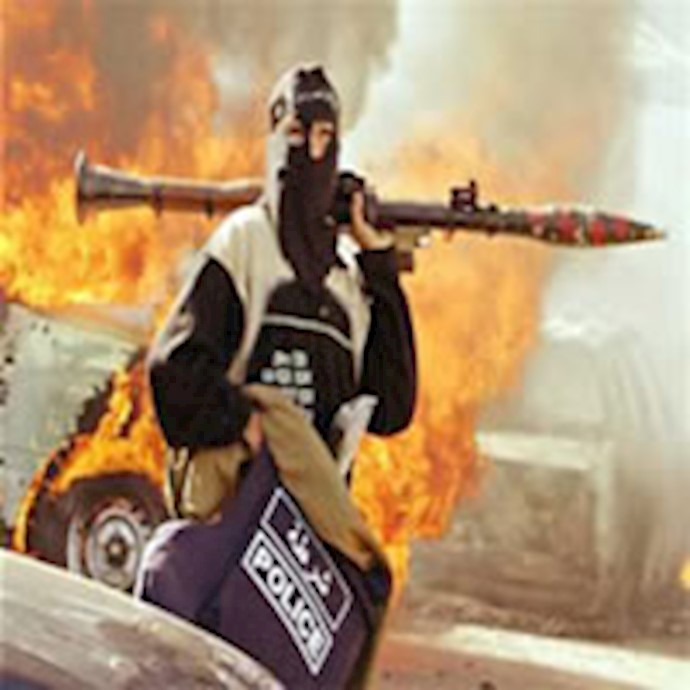
Senior U.S. Army commanders emphasized that the Shiite militias and “special groups” backed by the Iranian regime are the most worrisome part of war for U.S. Army in Iraq, The Washington Post pointed out on Sunday, Feb. 3, 2008. Post wrote:
“Three separate but related wars are being waged in this country now, and the third one, against Shiite extremists, is the most worrisome, according to the commander and senior staff of the U.S. Army division patrolling Baghdad.’
“The first, against al-Qaeda in Iraq, a Sunni group that U.S. officials believe is foreign-led, is going well despite occasional spikes in violence, such as Friday’s dual bombings of Baghdad marketplaces. Al-Qaeda in Iraq is “frustrated” but “not defeated,” Maj. Gen. Jeffrey W. Hammond, commander of the 4th Infantry Division, said in an interview last week.
“The second fight, against the domestic Sunni insurgency, has become dormant in many places in the past year, as about 80,000 armed men, many of them former insurgents, switched sides and came onto the U.S. payroll with groups that officers here call “Concerned Local Citizens.
“The third conflict, and perhaps the most vexing for U.S. commanders, is with Shiite extremist militias. More than two-thirds of U.S. casualties are caused by roadside bombs, particularly by high-tech anti-armor devices, planted by those groups.
“The U.S. government believes that the special groups are heavily supported by Iran. The groups have been especially effective in using explosively formed projectiles, or EFPs, sophisticated bombs designed to destroy armored vehicles.
Attacks using those bombs were a near-daily occurrence in mid-2007… “From April through October, detonations of the powerful weapons happened nearly every day, on average, with a peak of 36 in July.”