’Significant quantities’ of arms uncovered over past two years
The Ottawa Citizen
Friday, May 23, 2008
Weapons from Iran have turned up in Afghanistan in ’significant quantities’ over the last two years, which NATO says is causing it great concern.
That means Afghanistan, and the western troops, including Canada’s 2,500-strong contingent in Kandahar charged with protecting the country, are feeling the squeeze on two frontiers.
Last week, NATO sounded the alarm over Afghanistan’s southern neighbour, Pakistan, for providing ’safe havens’ for the Taliban through deals struck with the Pakistani government.
Pakistan remains the biggest external security headache for NATO, which leads the 40-country International Security Assistance Force for Afghanis-tan, because Taliban and al-Qaeda militants are able to regroup, rearm, rest and train in its lawless tribal belt across what is a porous and unmanageable border.
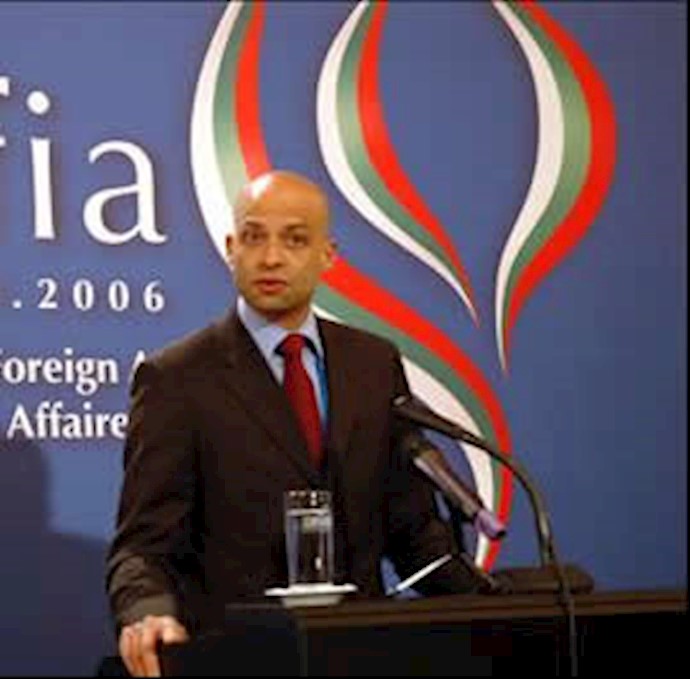
Threats from inside Iran are also undermining the rebuilding efforts in Afghanistan, said NATO spokesman James Appathurai in a wide-ranging interview on the regional security threats to Afghanistan.
’What we know is that weapons of Iranian origin have turned up in significant quantities inside Afghanistan and that is of significant concern to us,’ said Mr. Appathurai, who was in Ottawa this week to meet with Canadian officials about Afghanistan. ’I cannot speak to the origin or the design behind that. But I can say we would like it to stop. There is no doubt about that.’
Mr. Appathurai said signs of Iranian weapons emerged ’in the last two years’ and that the military is watching this ’relatively recent phenomenon’ very closely.
Over that time, there have been reports of shipments of arms, with apparent links to Iran, being seized by coalition forces inside Afghanistan.
During a visit to Canadian troops in Kandahar this past Christmas, Defence Minister Peter MacKay said weapons from Iran are a threat in Afghanistan.
Mr. MacKay and others have been careful not to point fingers at the Iranian government, suggesting that elements within the Shia country are seeking to maintain good relations with Iran, while attempting to make mischief for the western troops, particular American forces, inside Afghanistan.
Iran opposed Afghanistan’s former Taliban rulers and did not recognize their government.
Mr. MacKay did not offer specifics on the Iranian involvement, nor did U.S. assistant secretary of state Richard Boucher earlier this month, when he repeated the allegation against Iran at a press conference in Paris.
’Iran is interfering in a variety of ways,’ Mr. Boucher said, but ’not as violently as in Iraq.’
Iran is a signatory to the international efforts to rebuild Afghanistan. President Hamid Karzai, in fact, has praised Tehran for helping refugees and fighting drug smuggling.
Mr. Boucher suggested that although Tehran is supporting the Karzai government, it may also be ’hedging its bets’ by supporting its enemies in the Taliban insurgency.
Mr. Appathurai said the key to maintaining long-term security in Afghanistan is strengthening the Afghan government, army and police force.
’No matter what happens outside the borders, when the Afghan government is strong enough to be legitimate in the eyes of its people, to have effective security structures, to have an economy that gives people alternatives, then what happens outside will be more of a nuisance than a strategic menace,’ he said.
Mr. Appathurai reiterated NATO’s concern about the havens being afforded to militants inside Pakistan, which he said led to a 50-per-cent spike in violent incidents along the eastern border region last month, equalling the most violent period of the previous year in August 2007.
While there has been no spillover to the southern region that includes Canada’s area of responsibility in Kandahar province, ’you can never predict what will happen; if you squeeze the toothpaste tube, things squirt,’ he said.