By Alice Fordham
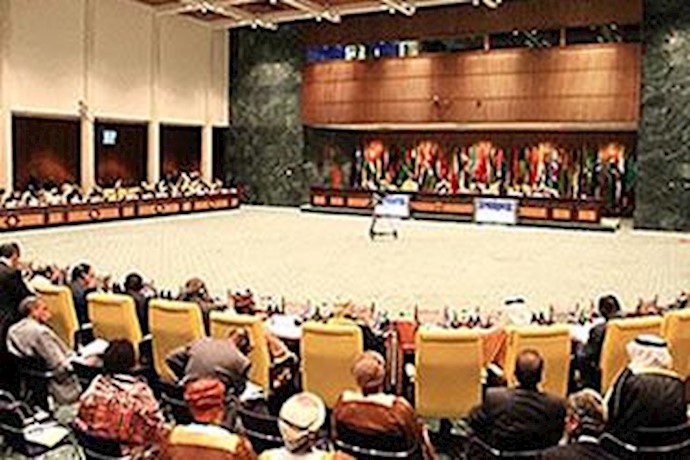
The Washington Post, Beirut, 20 Nov 2011 – Syria faced growing international condemnation Sunday as the Arab League said it would meet this week to consider new moves against the country, after a deadline for the government to end a crackdown on protesters and admit international monitors expired Saturday.
The group of Arab states on Sunday rejected Syria’s request for modifications to a proposed program for monitors to enter the country, saying Syria’s requests would change the nature of the mission of the monitors. The Arab League said it planned to meet Thursday to discuss measures that could include heavy sanctions on Syria and exclusion from the League.
Syrian foreign minister Walid Muallem, speaking at a press conference in Damascus, called the deadline unimportant and said that he would send further questions to Arab League chief Nabil el-Araby before deciding whether to agree to the demands of the group.
Muallem was dismissive of international pressure, saying that the Arab League, in its condemnations of the government of President Bashar al-Assad, was ignoring the presence of armed gangs operating in the restive city of Homs and threatening the sovereignty of Syria.
He added that comments by U.S. Secretary of State Hillary Rodham Clinton in Indonesia last week that there could be a civil war with a very determined and well-armed and eventually well-financed opposition, were wishful thinking.
Comparing Clinton’s remarks with an increasingly strong line taken by Turkish officials against Syria, Muallem complained that foreign powers were trying to incite sectarian conflict in Syria, which has seen growing divides between Christian, Sunni and the Alawite faith of the ruling family and many of their supporters.
But on CNNs State of the Union, former Secretary of State Condoleezza Rice echoed Clintons point, saying Assad is driving his country to the brink of civil war.
Syria is the handmaiden of the Iranians throughout the region, Rice said. And so the fall of Bashar al-Assad would be a great thing, not just for the Syrian people – that’s first and foremost — but also for the policies of the United States and those who want a more peaceful Middle East.
The headquarters of the ruling Baath party in Damascus was attacked on Sunday morning, the first attack within the city and the latest in a series of strikes indicating that some members of the uprising against the government have turned to violence.
The details of the attack were unclear. According to Rami Abdulrahman of the Syrian Observatory for Human Rights, based in London, people riding motorbikes attacked the building with grenades, hitting an external wall, and then launched two rocket-propelled grenades, which fell to the ground, before riding away.
However, another eyewitness reported seeing a car with machine guns firing from the windows, and the Agence France Presse news agency sent a correspondent to the scene, who reported no signs of damage.
The foremost group conducting armed operations in Syria is the group of defected members of the military known as the Free Syrian Army (FSA), but a spokesman denied any involvement in Sundays attack.
The Baath party headquarters and all its branches are owned by the Syrian people and not by the regime, and therefore we do not target them, said Maher Naimi, alleging that regime forces had conducted the attack, with the intention of implicating and discrediting the FSA
He added that the organization was still in defense mode, but that it was planning to move to the attack phase, during which it could strike Assad’s presidential palace and other government institutions.
The groups movement toward a new, more aggressive stance stood in contrast with a political program released Sunday morning by the Syrian National Council, a group of political opponents to the government.
In the manifesto, the opposition council focused on peaceful revolution and acts of civil disobedience, and garnering the support of the Arab and international communities.
It pledged to create a transitional government in the event that Assad’s rule ends, and sought international protection for Syrian civilians.