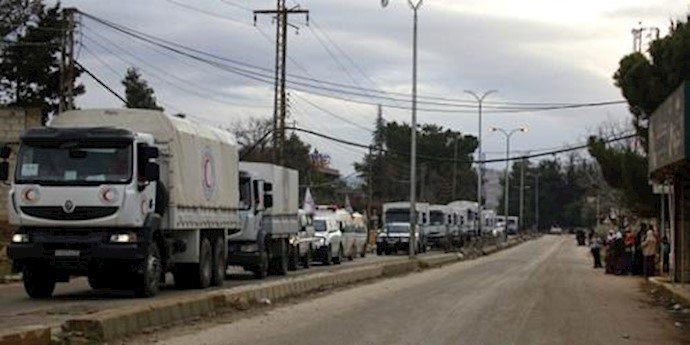
BEIRUT – January 13, 2016 – Siege and starvation have left the rebel-held Syrian town of Madaya in a nightmarish state not seen elsewhere in the country, a UN official who travelled there said Tuesday, as some 300 residents fled and desperately needed humanitarian aid arrived Associated Press reported.
The former mountain resort, besieged since last summer by forces loyal to Bashar Assad, came to international attention in recent weeks as reports of starvation emerged and activists shared images of emaciated children and old men widely on social media.
Sajjad Malik, the UN refugee agency’s chief in Damascus, told journalists that the “very grim” picture was the result of a blockade of food, medicine and other supplies that left the town in a “desperate situation.”
• At least 3 aid trucks enter besieged Syrian town of Madaya
• Aid to besieged Syrian towns must be repeated, UN says
“There is no comparison to what we saw in Madaya,” he said from Damascus by telephone to Geneva. “It is a place where you could see there are people, but there is no life… What we saw is something that was pretty horrible.”
Malik described seeing shivering, malnourished children and young adults, saying “most of them had not had bread or rice or vegetables or fruit for months.” He said a kilogram of rice would sell there for $300, and noted one account of one person selling a motorcycle to buy 5 kilos of rice.
A day earlier, the UN said that about 400 people in the town’s hospital needed to be evacuated immediately for medical treatment as starvation and other factors had left them on the brink of death. Syrian authorities, rebels and aid groups have yet to respond. The UN goal was to obtain safe passage to evacuate the 400 later on Tuesday.
Doctors Without Borders has said that 23 people died of starvation at a health center it supports in Madaya since Dec. 1, including six infants and five adults over 60.
Various UN officials have described how locals had been forced to forage for food, such as risking walks in minefields to collect grass or cooking up “leaf soup,” and were burning cardboard to stay warm in their homes.
Madaya is not the only place in Syria suffering from siege, an age-old tactic of war that belligerents continue to use despite international laws banning it. The UN says some 15 municipalities across Syria are currently blockaded, with no one able to get in or out.
On Monday, convoys carrying food, medical and other supplies reached Madaya around the same time as another convoy arrived in the twin Shiite villages – called Foua and Kfarya – which are far more remote and difficult for media to access.
The operation marked a small, positive development in a bitter conflict now in its fifth year that has killed a quarter of a million people, displaced millions of others and left the country in ruins.
The harshness of the recent starvation reports have underscored the urgency for new Syria peace talks that the UN is hoping to host in Geneva on Jan. 25.
The UN says 4.5 million Syrians are living in besieged or hard-to-reach areas and desperately need humanitarian aid, with civilians prevented from leaving and aid workers blocked from bringing in food, medicine, fuel and other supplies.
The situation for over 1 million refugees in neighboring Lebanon meanwhile appears to be worsening because of new residency laws.
Human Rights Watch said the Lebanese laws are putting the refugees in danger by preventing them from renewing their residency, arguing that the policies “set the stage for a potentially explosive situation.”
The regulations, adopted a year ago, have forced refugees to either return to Syria, where they are at risk of persecution, torture or death, or to stay in Lebanon illegally, leaving them vulnerable to exploitation and abuse, the New York-based rights group said in a report published Tuesday.
Of the 40 refugees interviewed for the report, only two have been able to renew their residencies since January 2015.
Last week, Lebanon forcefully repatriated 407 Syrians after they were left stranded at Beirut airport. Amnesty International called the action “an outrageous breach of Lebanon’s international obligations.”