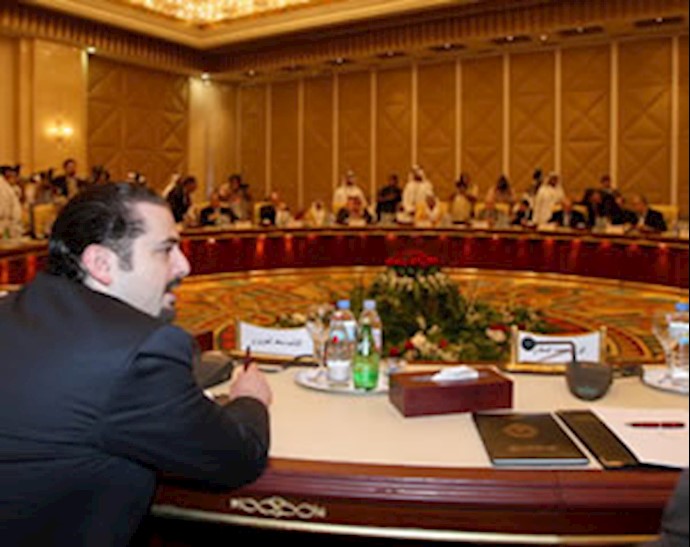
Rival Lebanese leaders clinched a deal on Wednesday to end an 18-month political feud that exploded into deadly sectarian fighting this month and nearly drove the country to a new civil war.
The agreement, announced by Qatari Prime Minister Sheikh Hamad after days of tense talks in Doha, will see the election of a president for Lebanon within 24 hours.
The two sides have been negotiating since Friday in an Arab-mediated bid to end a political standoff that erupted into deadly street battles earlier this month, the worst sectarian unrest in Lebanon since the 1975-1990 civil war.
“The achievement of Doha: A new page for Lebanon,” was the triumphant headline on the pro-opposition Al-Akhbar newspaper, while the pro-government An-Nahar said: “Congratulations for the agreement on Lebanon.”
The deal covers the election of army chief Michel Sleiman as president, the formation of a national unity government and a ban on the use of weapons in internal disputes.
The rival factions had agreed last year on electing Sleiman as a successor to Damascus protege Emile Lahoud, who stepped down at the end of his term in November, leaving the deeply divided nation without a head of state.
But the Sunni-led government and the mainly Shiite Muslim OPPOSITION have long differed over power-sharing in a proposed unity government and a new electoral law.
Under Wednesday’s deal, the ruling majority would have 16 cabinet seats and be able to choose the prime minister, As-Safir said.
The opposition would have 11 ministerial posts while another three would be nominated by the elected president, who under Lebanon’s multiconfessional system must be a Maronite Christian.