
Recent protests in Baghdad and southern cities in Iraq provide an opportunity after 12 years to prove that peaceful reforms can prevail over violent extremism.
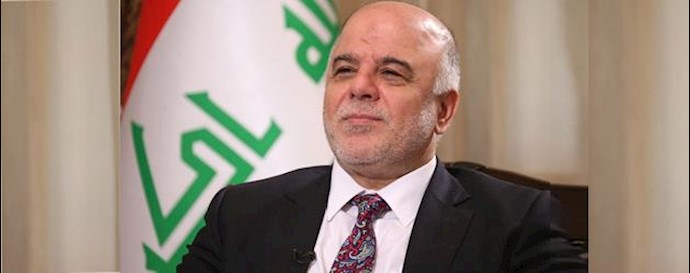
By Iraqi Prime Minister Dr. Haider al-Abadi
In the midst of a sweltering summer, Iraqis are showing that a free society in the heart of the Middle East can emerge from decades of despotism and despair.
In recent weeks, Iraqis from all walks of life have taken to the streets in peaceful demonstrations calling on their political representatives to bring about meaningful change that will end the cycle of nepotism and corruption that has stifled our country’s ability to meet its full potential.
Inspired by the daily sacrifices of our countrymen on the front lines in the fight against the terrorists of ISIS—known in Iraq by its Arabic acronym Daesh—the protesters have convincingly challenged three views commonly held by outsiders: that Iraq’s disparate communities lack a common sense of identity; that the country is irredeemably divided along ethno-sectarian lines; and that Iraq is not conducive to democracy.
Iraqis of all backgrounds have mobilized under one flag—calling for sweeping reforms that would, in essence, fulfill the democratic aspirations that are enshrined in our Constitution. The demands cut across ethno-sectarian lines and seek to raise living standards for all Iraqis.
Iraqi protesters chant slogans as they carry a large national flag during a demonstration against corruption in Tahrir Square in Baghdad, Iraq, Friday, Sept. 4, 2015. Iraq’s top Shiite cleric said on Friday the government must start hunting the “big heads” as part of its anti-corruption drive, calling for “convincing and assuring steps” as proof of the government’s seriousness in implementing its highly-touted reform plan.
Our government is responding not with repression but with far-reaching reforms intended to reinforce a program of political and economic renewal.
Taking office a year ago after free elections and a peaceful transition of power, and in the thick of the struggle against Daesh, our government understands the urgency of change. From “ghost soldiers” who collect paychecks far from the battlefront to “no-show” employees who enrich themselves on the home-front, corruption robs Iraq of the resources needed for national defense and basic services.
Iraq needs an honest and effective government that delivers services to all Iraqis. With the approval of Parliament, the support of the protesters and wise counsel from the religious establishment in Najaf, we are streamlining the government, replacing costly ceremonial positions and divisive sectarian quotas with a new insistence on meritocracy and accountability.
We are adopting radical measures to address the fiscal crisis that was exacerbated by an overreliance on oil revenues. We are broadening the tax base and making billions of dollars’ worth of investments in the industrial, housing and agricultural sectors to stimulate growth so that Iraq’s economy will no longer be beholden to fluctuating oil prices. We seek to privatize inefficient state-owned enterprises and offer incentives for entrepreneurship and domestic and international private investment.
With this leaner government we will rebuild infrastructure, including roads, highways, hospitals and schools. Another aim is to reduce unemployment, especially among the young people who may be attracted to extremism, and restore basic public services such as electrical power and safe drinking water. We will also be better able to assist the millions of internally displaced persons who have fled Daesh’s brutality and barbarism.
We are pursuing these reforms while respecting the rule of law and upholding the Iraqi Constitution. Bypassing the system of checks and balances would only cause chaos and undermine the legitimacy of the state.
While Iraqis overwhelmingly support these much-needed and long-overdue reforms, some observers have expressed anxieties about abolishing the sectarian quota system, arguing that it would threaten the rights of minorities.
But most Iraqis, from every background, understand that the rights of all are guaranteed not through institutionalizing clientelism but rather by upholding the rule of law, with equal justice for all, regardless of ethnic origin or religious confession. Competent professionals who are chosen on merit and motivated by public service, not self-service or sectarian affiliations, will best serve the interests of all Iraqis. And as we take major steps toward decentralization, including the approval last month of the amended provincial-powers law, communities are being further empowered on the local level so that they can determine where resources are most needed.
All Iraqis suffer from poor public services, and all Iraqis will benefit from better government. The aspiration for honest, effective and law-abiding government is unifying, not divisive. By fulfilling this promise, our government will deny the terrorists the space that they need to operate.
Americans and our other international partners, who share our interest in defeating Daesh and building a stable and democratic Iraq, can also help by offering expertise in streamlining bureaucracy, combating corruption and improving public services.
By strengthening the national, regional and local connections within our country, including the security forces, these reforms will create a more unified Iraq that can and will defeat Daesh.
But these reforms can only succeed if political leaders from every constituency put aside their narrow interests and pursue a common interest in an Iraq that serves all our citizens and is worth defending against Daesh.
Today, a historic opportunity for national reconciliation presents itself. If all parties can commit to abiding by the democratic process and reject violence as a means of extracting political gains, then it may be possible to reach a comprehensive settlement that could secure a prosperous future for successive Iraqi generations. Together, we can prove that peaceful reforms can prevail over violent extremism and ensure that the sacrifices of the past 12 years were not in vain.
Mr. Al-Abadi is the prime minister of the Republic of Iraq.