
June 04, 2015
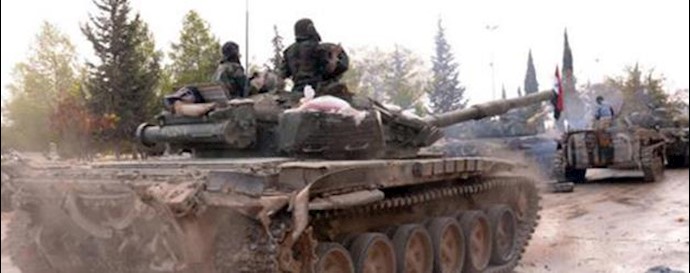
Recent gains by Syrian opposition forces in the north of the county, where they took control of the Idlib province and the city of Jisr Al-Shughour in April 2015, raised questions about Iran’s commitment to supporting Bashar Al-Assad, who has experienced a number of recent setbacks. But remarks on May 5, 2015 to Bloomberg News by Adib Mayalah, the governor of the Central Bank of Syria, dispelled these doubts. He announced that Iran has given “preliminary approval” for a new credit line to the Syrian government for $1 billion, which would be used to help finance imports.
This will be the third such loan since the uprising began in March 2011. The first loan, which amounted to $1 billion, came in January 2013 after government revenues had already plunged to 50 percent of their pre-war levels. Because of the conflict, Syria faced sanctions imposed by the European Union and the United States, an oil-related revenue decline by 90 percent, and a sharp decline in available funds from state-owned enterprises and taxes from the private sector. With this in mind, Syrian government dedicated this first loan to pay for imported food commodities and to prop up the Syrian regime’s official foreign reserves, which had been depleted by the increasing pressure of the military expenses since the beginning of the uprising. A second, more robust $3.6 billion loan came that August and was earmarked mainly for the purchase of oil products. This latest loan, however, is meant to offset the sharp drop in the value of the Syrian pound. This necessitated pumping more money into the market to avoid the collapse of the local currency.
But this is only one way in which Iran has reaffirmed its economic commitment to Bashar Al-Assad regime. Tehran also met with Syrian Defense Minister Fahd Jassem Al-Freij “to enhance strategic cooperation between the two armies to confront challenges which encounter the region,” Al-Manar Television reported. Iran also sent Alaeddin Boroujerdi, chairman of the Committee for Foreign Policy and National Security in the Iranian parliament, to Damascus to announce that Iran’s support for the Syrian regime is “stable and constant.” Speaking from the Syrian capital, he stressed that there were no “restrictions or limits to cooperation with Syria and providing support.” A few days later, on May 18, Syria and Iran signed several investment agreements in the oil, electricity, and industrial sectors, and they discussed “means to implement [further] cooperation between the two countries.”
Although Iran played a relatively small economic role in pre-war Syria, it has now grown accustomed to its economic interests there and deems them worth defending. It has a new place within Syria’s economic relationships with its neighbors, which have shifted dramatically since the war.
IRAN’S STAKES IN SYRIA’S ECONOMY
RELATED ARTICLES