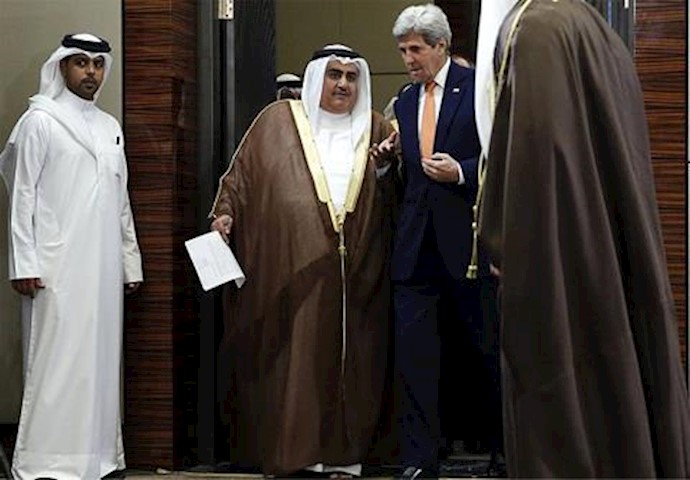
MANAMA, Bahrain— U.S. Secretary of State John Kerry and Bahrain’s foreign minister urged Iran on Thursday to stop escalating its provocative behavior across the Middle East and pursue a more constructive foreign policy three months into the implementation of the Iranian nuclear deal.
The U.S., Bahrain and other Gulf Arab countries have expressed increasing concern about Iran’s continued missile tests, its weapons shipments to Houthi rebels in Yemen, and the participation of its Islamic Revolutionary Guard Corps and Hezbollah fighters in the Syrian war in support of the Assad regime.
The chief U.S. diplomat is in Bahrain to consult with officials from Bahrain and other Gulf Arab countries frustrated by Tehran’s policies. Mr. Kerry was laying the groundwork for meetings between President Barack Obama and Gulf Arab leaders in Riyadh this month. Mr. Obama held a meeting in Washington last year with Gulf Arab leaders and senior officials to pledge military aid and calm allies’ nerves about Tehran as the nuclear deal neared completion.
On Thursday, about a year after Iran and six world powers agreed on the parameters of the final nuclear accord, Mr. Kerry and his counterpart in Manama, Sheik Khalid bin Ahmed Al Khalifa, told reporters after a meeting Thursday morning that Tehran is fueling conflicts across the region, including in Syria and Yemen.
“Today we are noticing two things that we kind have expected,” Mr. Al Khalifa said, outlining the views of Bahrain and the Gulf Cooperation Council, a regional alliance of six Arab countries. “The missile program is moving forward with full support of the leadership of the Islamic Republic and we are seeing the hegemonic interventions through proxies in several parts of our region continuing unabated.”
Iran didn’t immediately respond to a request for comment on the criticism in Manama.
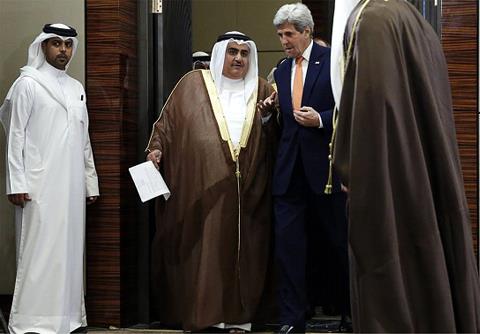
Bahrain’s Foreign Minister Sheikh Khalid bin Ahmed Al Khalifa and Secretary of State John Kerry arrive to speak to reporters in Manama, Bahrain, on Thursday.
Mr. Obama, Mr. Kerry and other senior U.S. officials have stressed that their first priority in completing the nuclear accord was to limit Iran’s ability to obtain a nuclear weapon, but said they also expected it could create an environment for Iran to become a more productive global player.
Messrs. Kerry and Al Khalifa also discussed the crises in Yemen and Syria on Thursday morning.
U.S. and allied navies since September have intercepted four shipments of weapons believed to be headed to Houthi rebels from Iran. A United Nations-brokered cease-fire is set to begin there on April 10, with a new round of political talks scheduled to start eight days later.
On Thursday, Mr. Kerry said he and officials from Bahrain, Saudi Arabia, Kuwait, Oman, the United Arab Emirates and Qatar would discuss ways to get the Yemen cease-fire and negotiation process back on track.
Mr. Kerry’s visit to Bahrain was the first by a secretary of state since a 2011 uprising, and human-rights groups have called on Mr. Kerry to confront Bahrain over its targeting and detention of human-rights activists and peaceful dissidents.
Source: The Wall Street Journal, April 7