Amnesty International’s written statement to the 22nd session of the UN Human Rights Council (25 February¬22 March 2013)
MDE 13/008/2013
12 February 2013
Amnesty International submits this statement to the 22nd session of the UN Human Rights Council in anticipation of the 25th anniversary, in August 2013, of the premeditated and coordinated mass summary execution of thousands of political prisoners in the 1988 “prison massacre”1 in the Islamic Republic of Iran.
Despite the growing breadth and depth of testimony about this terrible event, Iran has resolutely refused to acknowledge the “prison massacre” as a gross violation of human rights.
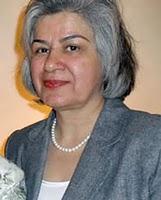
Even today, few relatives of those killed know where their loved ones are buried. Those who seek to remind the world about the “prison massacre” are persecuted. Most recently, Mansoureh Behkish, an activist on behalf of families of the victims is facing a six¬ month prison term after conviction of “spreading propaganda against the system” and “gathering and colluding against national security” for her activities in connection with the “prison massacre”.
No one has ever been held accountable for these killings. The ongoing impunity is a black stain in Iran’s history and contributes to the dire state of human rights in Iran today. Systemic weaknesses in the administration of justice coupled with a security sector that holds no respect for human rights and has no fear of being held accountable continue to erode the rule of law in Iran.
Despite this Council’s attention to the serious shortcomings in the human rights situation in Iran, that situation has continued to deteriorate in the two years since Iran’s UPR examination in February 2010.
Freedom of expression, association, and assembly remain severely restricted, and incommunicado detention, torture and other ill¬ treatment continue to be routinely used. There is extensive resort to the death penalty, mostly imposed for crimes which do not meet the criterion of “most serious” crimes. Women’s rights, already restricted in law and practice, are increasingly restricted including by limiting educational opportunities for female students.
The government has refused to cooperate with this Council’s Special Rapporteur on Iran, calling his appointment “political sabotage”. Instead of acting on his findings and providing redress for victims, the government dismisses the allegations of human rights violations as “fabrications” and “groundless”.
1 Called ‘The Massacre of 1988’ in the Amnesty International report, Iran: Violations of Human Rights 1987¬1990, December 1990, AI Index MDE 13/21/90, http://amnesty.org/en/library/info/MDE13/021/1990/en. In 1990 Amnesty International wrote that it was not clear how many people had been killed but that it had collected accounts of mass killings from different prisons all over the country, that suggested it was a ‘premeditated and coordinated policy […] authorized at the highest levels and often carried out. Estimates of those killed in the months after August 1988 range from 2000 to 5000.
Iran prevents independent assessments of the human rights situation in Iran by ignoring repeated requests made by UN human rights experts and NGOs to visit. Iran has not received a visit from a Special Procedure since 2005, despite its 2002 standing Invitation.
Amnesty International urges the Human Rights Council to ensure that Iran’s stated commitment to international human rights mechanisms be demonstrated by receiving visits by the Special Rapporteur on Iran in the near future and ensuring that state bodies extend full cooperation to him.
Freedom of expression, association, and assembly
UN bodies and human rights organizations have for decades called upon Iran to take the required steps in order to ensure the compatibility of its domestic laws with international human rights law and standards including the ICCPR. Yet, the draft revised Islamic Penal Code would, if adopted, continue to maintain vaguely worded national security¬ related provisions regularly used to impose limits on freedom of expression, assembly and association. Recent laws relating to the use of online information further limit these rights. Additionally, the draft Code of Criminal Procedure, currently under the consideration by the parliament, would do little to prevent arbitrary arrests and unfair trials, despite some positive amendments.
New waves of arbitrary arrests and harassment targeting media workers and bloggers are taking place in advance of the forthcoming presidential election scheduled for June 2013 – the first since the disputed election of 2009. These appear to be part of a strategy to cut Iran off from international scrutiny and to restrict free public debate.
On 27 January 2013, intelligence and security forces raided the offices of several publications in Tehran arresting 10 journalists in five simultaneous raids. Six other journalists were arrested between 26 and 30 January 2013.
Human rights organizations such as the Committee of Human Rights Reporters and the Centre for Human Rights Defenders remain shut and many of their members, including Shiva Nazar Ahari, Mohammad Ali Dadkhah and Abdolfattah Soltani, are now behind bars. Draft legislation aims at dismantling the Bar Association.
In September 2012 tens of university students were arbitrarily arrested or interrogated on account of their peaceful political or student activities. Leva Khanjani, a member of the Baha’i religious minority, Nasim Soltan Beigi, women’s rights activist, and Soroush Sabet, all university students, began serving prison sentences in 2012, imposed on them for their alleged participation in peaceful demonstrations after conviction of vaguely worded national security and public order “offences” which penalize acts not recognizably criminal under international law. The number of students banned from continuing their education continues to rise.
Women’s rights defenders who campaign for an end to ongoing and increasing discrimination against women in law and practice face harassment and sometimes arrest.
Opposition leaders, Mehdi Karroubi, Mir Hossein Mousavi, and the latter’s wife Zahra Rahnavard, herself a political activist, approach the second anniversary of their unofficial house arrest with no prospect of charge or trial. They should be released immediately and persecution of their families should cease.
Freedom of religion and belief
Religious and ethnic minorities including Baha’is, Arabs, Baluch, Kurds, Turkmen and others continue to face discrimination and persecution in law and practice.
Adherents of the Baha’i faith ¬considered a “heretical” sect by the authorities ¬are particularly at risk of persecution, with 110 individuals behind bars at the end of 2012. Seven Baha’i leaders continue to serve 20¬year prison sentences for their peaceful activities on behalf of their community.
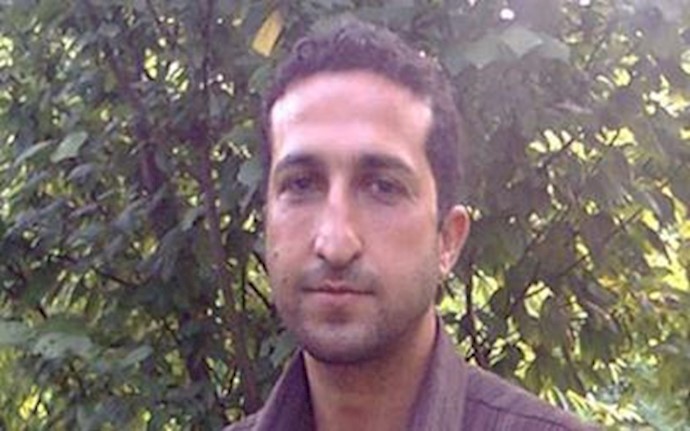
The acquittal, following a September 2012 re¬trial, of Yousef Naderkhani, originally sentenced to death for “apostasy” was welcome. Amnesty International remains concerned about the continued persecution of evangelical Christians, many of whom are converts from Islam. Converts may face the death penalty for “apostasy” under constitutional provisions whereby judges may refer to authoritative Islamic sources such as fatwas or religious rulings in cases where the law is silent.
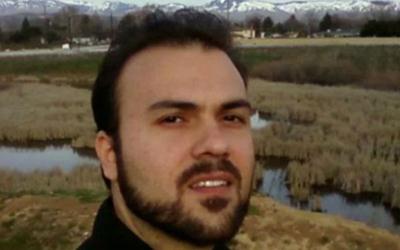
In January 2013, Pastor Saeed Abedini, a US ¬Iranian dual national, was sentenced to eight years’ imprisonment for his alleged role in “founding house churches” which the authorities deemed to constitute acts against national security.
Administration of justice
The draft Code of Criminal Procedure, mentioned above, includes some provisions that if implemented could ensure better compliance with Iran’s international human rights obligations.
The current draft would improve the ability of lawyers to represent their clients during initial investigation, but it would not enshrine in law the right of access to a lawyer from the moment of arrest. Access could be suspended for up to one week for detainees suspected of crimes against national security or drug ¬related offences.
The independence of the judiciary is being severely compromised with intelligence bodies increasingly involved in the administration of judicial cases.
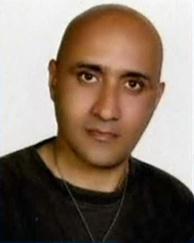
Torture and other ill¬ treatment continue to be routinely and widely used by the authorities. Sattar Beheshti, a blogger, died in custody in November 2012 allegedly as a result of torture and other ill ¬treatment while in Cyber Police custody. Although seven officials have been arrested, serious concerns remain regarding the impartiality and transparency of the investigation into his death.
Forced “confessions” made in incommunicado detention, which are frequently broadcast on state television before trial, are generally accepted by Iranian courts as evidence and have sometimes resulted in death sentences.
In August 2012, Maziar Ebrahimi, an Iranian businessman, appeared in a television documentary along with 11 others allegedly “confessing” to involvement in the killings of five Iranian nuclear scientists. All 12 were arrested in June 2012. Their whereabouts and legal status remain unclear to date.
Death penalty
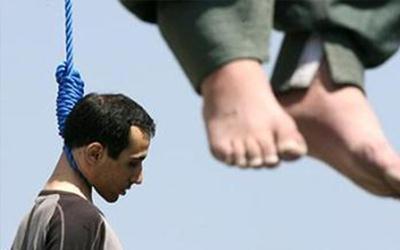
The draft revised Islamic Penal Code continues to provide for imposition of the death penalty, including for crimes that do not constitute “most serious crimes” as detailed in international law. These include drug trafficking, sexual relations outside marriage, “apostasy” and vaguely worded crimes such as “corruption on earth” and “enmity against God”. In 2012, the Iranian authorities executed over 500 people ¬most convicted of drug trafficking and sentenced after unfair trials. Over 180 of these executions were not officially announced. Credible reports in February 2013 suggest that secret mass executions are continuing in prisons such as Vakilabad, Mashhad.
Despite the absolute prohibition on the execution of juvenile offenders, at least one juvenile offender was executed in 2012.
In conclusion, Amnesty International urges members of the Human Rights Council to respond to the grave human rights situation in Iran by adopting a resolution that speaks to the widespread gross and systematic human rights violations in Iran and renews the mandate of the Special Rapporteur on the situation of human rights in Iran.