A group is apparently seizing upon the shifting policy sands regarding the Middle East to file a powerful lawsuit in federal court.
The thrust of the legal argument is that the Iranian government should be on the hook for deaths resulting from a bombing masterminded by a regime-backed militia in Iraq in 2005.
The complaint, filed in Miami propitiously on 9/11, features six plaintiffs: Saleh Ali Sanyyen Alshaar and his wife, Maha Shaban Ahmad Alfalough; Mushtaq Hakeem Jumaah and his wife, Ghaidaa Abdulwahid Jumaah; and one individual representing the estate of Majid Fadil Darweesh, another representing the estate of Mustafa Abdul Wahid Jumaah. All the individuals are citizens of Iraq, save Alshaar, who is Jordanian. Alshaar’s adult son, however, lives in the Miami area, according to plaintiffs’ attorney Paul Jon Layne.
In the mid-2000s, the four men were working as “civilian security officers” for the Ronco Consulting Corporation., a Maryland-based military contractor specializing in “Explosive Remnants of War (ERW) services [like land mines], canine operations, and specialist training in post-conflict areas,” according to the company’s website.
“They were just noble Iraqi guys,” Layne explains. “They wanted to live in a free country.”
Typically, foreign governments can’t be sued in U.S. federal court: They’re protected under the Foreign Sovereign Immunities Act. However, under the act’s terrorism exemption, governments are open targets if they’ve provided “material support or resources” for an act of terror through “an official, employee, or agent of such foreign state while acting within the scope of his or her office, employment or agency.”
Iran, which is still on the official list of state sponsors of terror, fits the bill. “The information that we have indicates that this is one attack of many that don’t get a lot of news coverage because there were a lot of them,” Layne says. “It’s been widely discussed by ambassadors and military leaders that because of the type of equipment that was used in the explosive, it traces back to the Iranians.”
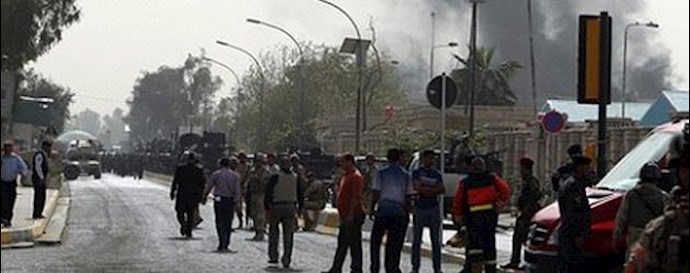
On September 13, 2005, in Al-Zubair, Basra, in southeast Iraq, the four men were part of a convoy returning to their compound. “An improvised explosive device (‘IED’) on the road exploded under their vehicle,” the lawsuit states. “As a result, the two surviving Plaintiffs sustained serious personal injuries, and the two decedents ultimately died from their injuries.”
The lawsuit claims that the attack was the work of “an Iraqi insurgent group” and that “Following the attack, one or more members of the caravan saw some of the insurgents who deployed and/or detonated the device, and the materials used in the device were inspected,” the complaint states. This evidence suggested that whoever planted the IED had been “materially supported, directed, controlled, trained, equipped, enabled, and otherwise sponsored by The Islamic Republic of Iran through its agents, including… its Ministry of Information and Security, its officers, employees and/or other agents,
Layne explains that because the men were working for American interests at the time, the law allows them to seek relief in the courts on U.S. soil. “The government awarded the contract — that’s why they have an opportunity to sue under that federal act even though they are citizens of another country.”
There is precedent for people going after Iran. In 2014, a U.S. federal court upheld a $1.75 billion judgment against Iran for the country’s tie to the 1983 bombing of a U.S. Marine barracks in Beirut; the families of the 241 dead soldiers waited 13 years for litigation to be complete. In 2012, a Weston family won a $323 million judgment against Iran for the country’s support of a 2006 bus bombing that killed their son in Tel Aviv.
“There are probably tens of billions of dollars of judgments that have been entered against Iran in the federal courts,” says Layne.