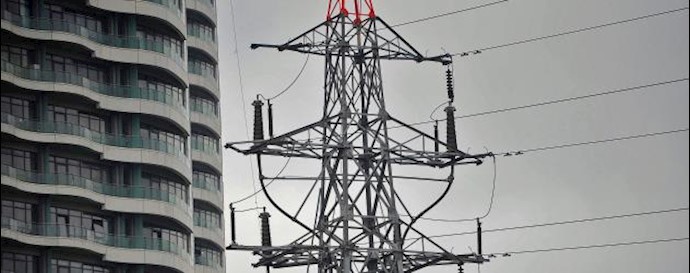
Half of Turkey—44 of 81 provinces, 40 million people including those living in Istanbul and Ankara, suffered a massive power outage that lasted a solid twelve hours. It happened on Tuesday, March 31st.
The blackout in Turkey was caused by a cyber-hack that originated in Iran.
Everything went down. Computers, airports, air traffic, traffic lights, hospitals, lights, elevators, refrigeration, water and sewage, everything simply stopped.
Attacks like this one are caused by malware inserted into computers via an email or a thumb drive that is attached to a computer that is somehow connected to the electric grid. The invading codes respond to commands and are activated by a message—often something as simple as an email. And it doesn’t even have to be an opened email. The program can be automatic or it can be controlled by an operator, it all depends on the type of hack. That’s how sophisticated these attacks can be.
Iran’s cyber army has probably inserted malware into the electric grids of many, many, other countries—probably even the United States. Over the past twelve months we know that Iran has successfully and repeatedly broken into the defensive systems networks of several Western nations.
As far back as September 27, 2013 The Wall Street Journal reported on an Iranian hack against US naval computers. And this week the American Enterprise Institute and the Norse Corporation (a cyber-security company) released a study entitled “The Growing Cyber Threat from Iran.”
USA Today, on December 2, 2014, described a highly sophisticated coordinated hack that had just taken place and explained that Iran attacked 50 targets in 16 countries.
An Iranian hacker team responsible for other attacks has been nicknamed “Cutting Kitty.” The kitten reference is an allusion to the Persian cat.
The Iranian team working on this and similar cyber-attacks is called the Ashiyane Digital Security Team. Ashiyane means “nest” in Farsi. This team has such a reputation among hackers that there are websites dedicated to their exploits and their hacks. The team chose not to attack Turkey’s well-guarded electric power system – instead, they hit the distribution network. That was deliberate. In that way Iran was able to shut down and then reopen the power sources when they decided
It is safe to assume that Iran has already infiltrated the electric grids and other vital targets across Europe where cyber security is often very lax. Like in Turkey, they probably have not insinuated their malware into the various main reactors but instead have found the weakest of cyber links which is the distribution side of the electric grid.
This attack on Turkey is the first time that Iran shut down a country through a cyber-attack. This kind of an attack can bring the enemy to its knees very quickly.