
“We have contained inflation”…
“We have stopped negative economic growth”…
“We have decreased unemployment”…
These are the remarks made Hassan Rouhani and his officials to claim they are actually successful in saving the sinking ship of Iran’s economy. However, these claims are so baseless and deceiving that even the regime’s own officials are denying them. To describe Iran’s crumbling economy under the mullahs’ regime, one must refer to the regime’s die-hard efforts to obtain nuclear weapons and all the country’s fortune it has wasted in this regard which has led to crippling sanctions; the colossal cases of embezzlement, theft, bribes, blackmailing and administrative corruption. This disastrous policy has in turn led to a bull-run on inflation and escalating liquidity, which has resulted to a nearly cross country halt on all industries, factories and production lines. And last but definitely not least, the political instability at the top of the regime’s hierarchy prevents this regime from allowing any kind of economic stability in the country.
On inflation and unemployment, the state-run ‘Siyasat-e Ruz’ (Politics Today) cited university professor Mehdi Taghavi as saying, “Inflation currently stands at 40% and the rate of unemployment is increasing by the day….if the price of gasoline rises to 10,000 rials for each liter and the second phase of the Targeted Subsidies Law is implemented, we will witness even higher inflation…”
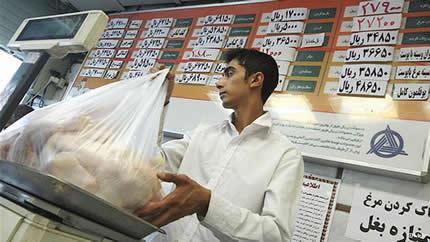
Keyhan daily, Khamenei’s mouthpiece, wrote on April 9th, “Prices of electricity, gas, kerosene and stove oil, LPG and telephones have increased up to 25% and in some price lists this is the second increase in the past few months.”
The state-run Etemad daily wrote on April 6th, “From February 20th to March 22nd urban living costs increased… statistical estimates show that the standard prices of all goods and services for urban families increased 0.7% in comparison to the period of January 21st to February 19th, and 19.6% increase in comparison to the previous month.”
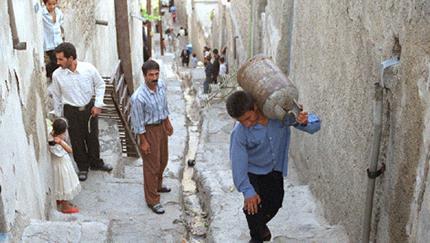
Poor conditions in Iranian cities, towns and villages alike
The state-run ‘Doniyae Eghtesad’ (Economic World) on April 5th expressed no hope in Rouhani’s wishful thinking of the nuclear negotiations leading to foreign investments. The paper wrote, “… The third problem is direct foreign investment, in which Iran stands at 67th in the world and behind countries such as Egypt, Cuba, Vietnam, Angola and Cyprus, and it is less than the investments attracted by Saudi Arabia, Turkey, Qatar, Kuwait and even Azerbaijan. Therefore, Iran’s current trend of negotiations with the P5+1 is not much to be hopeful of. These talks will not pave the path for foreign investments into Iran in the near future.”
The state-run Javan daily, associated to the paramilitary Basij force, wrote on April 5th citing an economic expert that “Iran’s economy is in a condition where it has reached a point of no return… the system is automatically producing corruption…”
Iran Economic Policies; “Iran’s economy is ill” says Parliament Speaker
Iran Majlis (parliament) speaker Ali Larijani described Iran’s dire economic conditions as ‘ill’.
“Today the country is in sensitive conditions… for various reasons the country’s economy is suffering from problems and production is facing major problems. Many families are facing the challenge of unemployment. The country’s economy is ill,” he said.
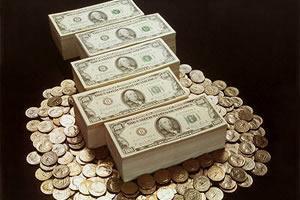
Economic crises slowly crippling Rouhani and Iranian regime in general
Iran Economic Policies: Disillusioned Experts Lose Hope in Future Improvement
Independent economic experts not associated to any of the internal factions of the regime forecasted Iran’s economy as being very dire and in crisis, and that the government of Hassan Rouhani will not be able to miraculously save the country’s economy from bankruptcy, as he boasted in the June 2013 presidential elections masquerade. These very experts have described the regime’s pathetic economic status as ’inflammatory stagnant’, saying the regime’s economy creates corruption from within and is headed in a path of no return.
“The Rouhani government has no clear strategy,” economy expert Mehdi Taghavi affiliated with Mohammad Khatami’s foundation says. “Currently, the status quo is in such a condition that the middle class is unable to make ends meet and therefore slides in the ’poor’ category.”
The New York Times wrote, “More than six months after Rouhani took office, hopes of a quick economic recovery are fading among ordinary Iranians, business owners and investors, while economists say the government is running out of cash… Even those close to the Rouhani administration are saying they are hoping for a “miracle” to avoid the political damage from the cuts, the report said.
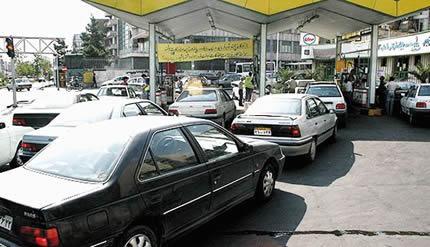
Long fuel lines in Tehran before prices went up
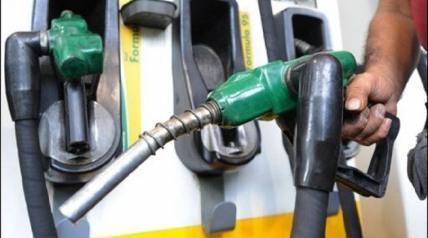
Rising gas prices across Iran under Rouhani policies
Iran Economic Policies: Protesting the Rise of Fuel Prices
A group of Tehran residents boycotted the gasoline purchase, according to independent reports from Iran, to show their frustration and opposition. They decided, as a negative resistance, to boycott any gas purchase on April 30th. This was after a similar move by Isfahan and Khorram-Abad residents. They had also called for a one day boycott of gas purchase.

Gas stations across Iran on high alert
Rouhani’s government in Iran has carried an unpopular move of increasing gasoline prices across the country. From now on, the official rates for one liter of gasoline will be 7,000 Rials and gasoline on the black market will be up to 10,000 Rials per liter.
This price hike is taking place under the framework of the second phase of discontinuing subsidies.
The increase in gas prices will also lead to an increase in prices of goods and public services, exerting ever more pressure on the poor and the lower income section of the society.
This measure by Rouhani’s government has raised a wave of unrest across Iran and the mullahs’ regime has placed all gas selling stations in across the country on high alert in fear of massive uprisings.
Reports from various cities across Iran, such as Shahr-e Kord, indicate that Rouhani has imposed an unannounced martial law.
Iran Economic Policies; Admission of Failure by Rouhani’s Economy Minister
The regime’s so-called Assembly of Experts summoned Tayeb Nia, Rouhani’s economy minister, to provide explanations on the country’s economic situation. Tayeb Nia in his admission to the Assembly said production and services during the previous year have decreased 5.8%, meaning the average income for each citizen lowered around 7% during the past year adding that the situation is very critical.
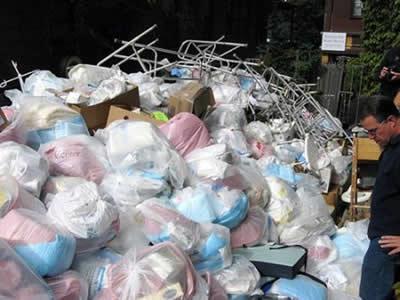
Back-breaking prices of medical goods in Iran
Iran Economic Policies; Failure in Social and Medical Care
The state-run IRNA news agency, linked to Rouhani’s government, issued a report revealing the government’s failure in medical care in government-run hospitals. By pouring the country’s budget into nuclear projects and increasing the budget of repressive organs, the mullahs’ regime is depleting Iran’s medical sector and depriving the Iranian people of basic medical needs more and more each year.
Rouhani’s minister of health said government-run hospitals in Iran are all bankrupt.
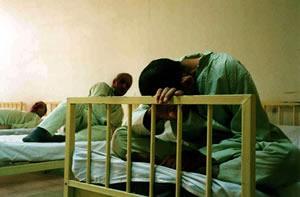
Iran’s state-run hospitals are truly crumbling
Iran Economic Policies; lack of basic services
“Most of the state hospitals are renting out their units due to being financially bankrupt, thus placing pressure on the people,” said Hassan Ghazizadeh in an interview with the IRGC-run Fars news agency. “Due to such conditions we cannot open any new hospitals”.
On 25 November 2013, this same official said the ministry of health is completely ‘ill’ and the government is left ‘empty-handed’ with a budget deficit of $224 billion and 140,000 personnel of this ministry have no legal stature.
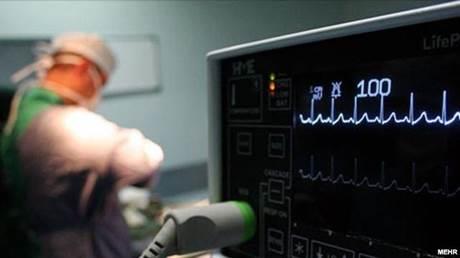
This is while according to the state-run Mehr news agency (affiliated to the Ministry of Intelligence), the budget allocated for the IRGC, army and police force have actually increased significantly. According to this news agency next year’s budget of the regime’s army has witnessed a 50% increase, reaching around 52 trillion rials (around $2.13b). Furthermore, the IRGC’s 37 trillion rial budget of last year has seen a 30% increase and a bill of 44,556,686,000,000 rials (around $1.822b) proposed to the parliament.
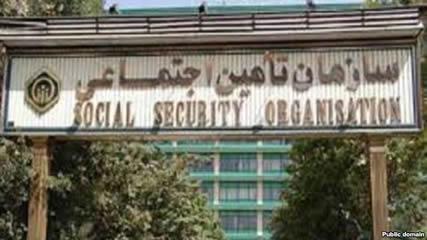
Iranian regime’s bankrupt Social Security Organization
Iran Economic Policies; Social Security Organization
The so called Insurance and Treatment Committee of the regime’s House of Labor revealed that due to embezzlement and colossal misuse of funds, the Social Security Organization is “in a downfall heading towards complete crumbling and a crisis cliff.”
The revelation, published by the state-run ILNA news agency on 14 Jan 2014, states that the government’s debt “to this day according to officials has reached over 600 trillion rials” (around $24.5b), yet “the government unwilling to pay back this debt” and this is while the Social Security Organization is covering over 47% of the population and over 60% of the employed workers of the country, having the responsibility of nearly half of the country’s population to provide for their living needs and medical necessities – which is usually on the shoulders of governments”.
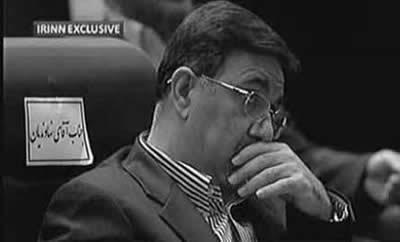
Abbas Akhoundi, Rouhani’s minister of road and construction
Iran Economic Policies; Banks and Treasury
Abbas Akhoundi, the regime’s minister of road and construction, said “Bank of Housing is broke and has given loans three times its capacity, making it 100% bankrupt. Furthermore, the conditions of other banks are no better than this”, he added.
Mullah Hassan Rouhani once said the treasury is completely empty and the agriculture branch is also completely bankrupt. Tayeb Nia, the regime’s minister of economy admitted there is a credit deficit of 280 trillion Rials (around $11.45b) to pay for the subsidies, adding with construction projects being called off just 110 trillion Rials (around $4.5b) of this deficit will be provided for, but there is no credit for the remaining 170 trillion Rials (around $6.95b).
Iran Economic Policies; Funds allocated for Export of Terrorism
While the Iranian people are facing serious shortages in housing, billions of dollars are being provided to build homes in Venezuela and other Latin American countries for the sole reason of gaining international support in the face of international condemnation, and for Iran to be able to carry out its terrorist plots outside its borders.
The mullahs’ regime is also spending billions of dollars to export terrorism in the Middle East and African countries, including Kenya and Nigeria where such plots were discovered and terrorist elements arrested admitted their association to the Iranian regime.
The Gross Domestic Product (GDP) in Iran was 548.89 billion US dollars in 2012. The GDP value of Iran represents 0.89 percent of the world economy. GDP in Iran is reported by the World Bank. From 1965 until 2012, Iran GDP averaged US$133.2B reaching an all-time high of US$548.9B in December of 2012 and a record low of US$6.2B in December of 1965.