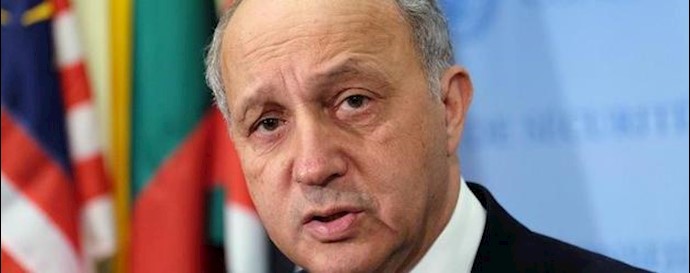
Deal would be ‘useless’ if Tehran blocks military sites, foreign minister tells The Wall Street Journal
French Foreign Minister Laurent Fabius said a possible nuclear deal with Iran risks sparking a nuclear arms race in the Middle East unless the agreement grants international inspectors access to Iranian military sites and other secret facilities.
In an interview with The Wall Street Journal, Mr. Fabius insisted the ability to inspect such sites be part of a final agreement with Iran to ensure Tehran doesn’t covertly try to build a nuclear weapon. The warning highlights a persistent divide between Western negotiators and Tehran, which has demanded Iranian military sites remain off-limits to international inspectors.
“The best agreement, if you cannot verify it, it’s useless,” said Mr. Fabius. “Several countries in the region would say, OK, a paper [has been signed] but we think it is not strong enough and therefore we ourselves have to become nuclear.”
Mr. Fabius, who was in Nigeria to attend the inauguration of the country’s new president, has emerged as the most outspoken skeptic among the six nations in talks with Iran to curb its nuclear program in exchange for an easing of economic sanctions. At times, Mr. Fabius has taken a harder line than officials in Washington, warning in 2013 that the West risked being suckered into a “fool’s game.”
Mr. Fabius said the coalition needs to review its strategy after recent military advances in Iraq by Islamic State, also known as Daesh. France has been conducting airstrikes in Iraq against the group, but Mr. Fabius remains opposed to bombing the group in Syria, where doing so would inevitably help the forces of Syrian strongman Bashar al-Assad.
“We think that Bashar and Daesh are two faces of the same coin,” Mr. Fabius said.
Mr. Fabius’s comments on Iran suggest that negotiators still have big differences to bridge before reaching a final agreement. After settling on the broad outline of a deal at the beginning of April, Iran and the six nations—China, France, Germany, Russia, the U.K. and the U.S.—gave themselves until June 30 to fill in the details.
U.S. and European officials are under pressure to reassure Saudi Arabia and other Sunni Muslim nations in the region that a final deal lifting sanctions on Iran would be stringent enough to prevent Shiite-ruled Iran from building a nuclear weapon.
Mr. Fabius said if Tehran wants to build a nuclear weapon in violation of the agreement, it would inevitably do so at a military site or other secret facility.
“Therefore, if you say you cannot check any military site, then there is no [real] agreement,” he said.
Mr. Fabius said a potential accord should also specify how much time should be allowed between the request to inspect a site and access actually being granted to inspectors. “If it is too long a delay, they have enough time to change everything,” he said.