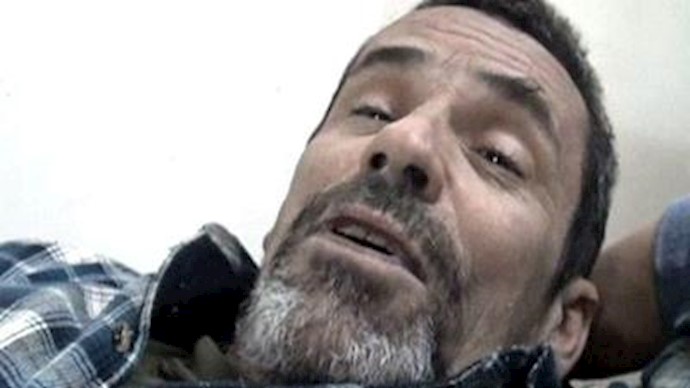
By Al Arabiya with Reuters, 28 Feb 2012 – British journalist Paul Conroy, who was wounded by a Syrian Army bombardment on the city that killed two other Western journalists on Feb. 22, was “safe and sound” in Lebanon on Tuesday, a diplomat following his case said.
But French journalist Edith Bouvier, who was with Conroy, is yet to safely arrive in Lebanon after being smuggled out of the besieged Syrian city of Homs, according to Al Arabiya reports.
Avaaz rescue operation
Global campaign organization Avaaz reported that, along with a network of Syrian activists, the organization helped the journalist Paul Conroy escape into Lebanon.
Conroy had been injured and trapped in Baba Amr, Homs for six days under continuous Syrian government shelling. The three other journalists Javier Espinosa, Edith Bouvier and William Daniels remain unaccounted for,” said Avaaz.
The organization apparently worked with over 35 Syrian activists who volunteered to help in the rescue.
Avaaz also declared that “while Paul Conroy successfully escaped the city, ten activists died bringing relief supplies into Baba Amr. This operation was carried by Syrians with the help of Avaaz. No other agency was involved. “
Ricken Patel. Executive Director of Avaaz said: “Paul Conroy’s rescue today is a huge relief but this must be tempered with the news that three remain unaccounted for and with our respects for the incredibly courageous activists who died during the evacuation attempts. The rescue is ongoing and we are deeply disappointed that sections of the media broke this story before all the journalists are safe. The world must now listen carefully to the human horror stories that Paul will tell and act to end this bloodbath and deliver the urgent relief and protection to the people of Syria.”
Meanwhile, the United Nations’ main human rights body was set to condemn Syria on Tuesday for “brutal” use of heavy weapons on residential areas and persecuting opponents, its fourth rebuke to President Bashar al-Assad since an uprising began last year.
The urgent debate at the U.N. Human Rights Council comes at the request of Turkey and three Gulf countries, Qatar, Kuwait and Saudi Arabia, with Western backing.
The 47-member forum, which has moral authority but no legal force, looked set to back a resolution condemning Syria’s “continued widespread and systematic violations,” diplomats said.
Drafted by the Arab countries and Turkey, with strong support from the European Union and United States, the resolution condemns “the use of heavy artillery and tanks to attack residential areas … that have led to the death of thousands of innocent civilians.”
It also voices alarm at the humanitarian crisis in areas lacking food, medicine and fuel and calls for aid agencies to be allowed to deliver vital supplies to civilians in heavily-hit areas, especially Homs, Deraa and Zabadani.
“There will be a wide majority of states in favor. It will pass easily,” an Arab diplomat told Reuters ahead of the emergency debate due to start at 10:30 GMT.
“We should expect Russia, Cuba and Ecuador to vote against it. On China, is not clear,” he added.
The Syrian Arab Red Crescent managed to enter the embattled Homs district of Baba Amro on Monday and evacuate three people.
The rights session was convened after Russia said it had no formal objections but warned that any written record of the talks would be “counterproductive.”
Iran, Syria’s ally in the region, also raised objections to holding the emergency debate but, as an observer and not a member, could not block a consensus decision to go ahead.
The Council opened its annual four-week session on Monday, days after U.N. investigators accused the highest levels of the Syrian government and army of ordering crimes against humanity including murder, rape and torture.
“The commission of inquiry clearly established that crimes against humanity are being committed,” French Foreign Minister Alain Juppe said in an interview with Swiss television.
“As long as we have not halted the massacres, we are impotent, but we are not inactive,” Juppe said, but downplayed any possibility of military intervention which, he said, could have “catastrophic consequences in the region.”
Juppe told the forum on Monday the Assad government should be referred to the International Criminal Court (ICC).
U.N. High Commissioner for Human Rights Navi Pillay and Esther Brimmer, U.S. assistant secretary of state, were among more than 70 speakers due to address the Geneva-based forum on Tuesday.