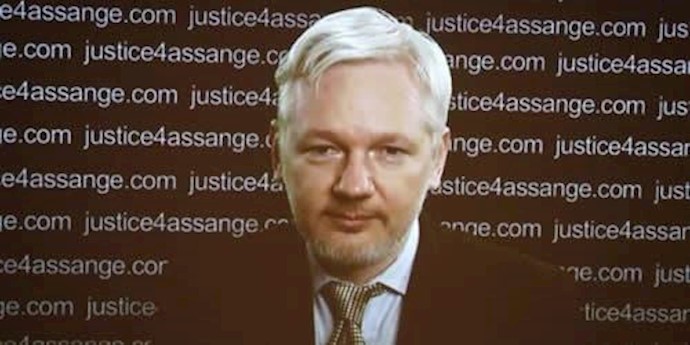
LONDON, REUTERS, Fri Feb 5, 2016 – WikiLeaks founder Julian Assange called on Britain and Sweden on Friday to let him freely leave the Ecuadorian embassy in London after a U.N. panel ruled he had been arbitrarily detained and should be awarded compensation.
U.N. panel ruled on Friday that Julian Assange should be allowed to go free from the Ecuadorian embassy in London and be awarded compensation for what amounts to a three-and-a-half-year arbitrary detention.
Assange, a computer hacker who enraged the United States by publishing hundreds of thousands of secret U.S. diplomatic cables, has been holed up in the embassy since June 2012 to avoid a rape investigation in Sweden.
Both Britain and Sweden denied that Assange was being deprived of freedom, noting he had entered the embassy voluntarily. Britain said it could contest the decision and that Assange would be arrested if he left the embassy.
Assange, an Australian, appealed to the U.N. panel, whose decision is not binding, saying he was a political refugee whose rights had been infringed by being unable to take up asylum in Ecuador.
It ruled in his favor, although the decision was not unanimous. Three of the five members on the panel supported a decision in Assange’s favor, with one dissenter and one recusing herself.
Speaking via video link from his cramped quarters at the embassy in the Knightsbridge area of London, Assange called on Britain and Sweden to implement the U.N. panel’s decision.
“We have today a really significant victory that has brought a smile to my face,” Assange said. “It is now the task of the states of Sweden and the United Kingdom … to implement the (U.N.) verdict.”
“The Working Group on Arbitrary Detention considers that the various forms of deprivation of liberty to which Julian Assange has been subjected constitute a form of arbitrary detention,” the group’s head, Seong-Phil Hong, said in a statement.
“(It) maintains that the arbitrary detention of Mr Assange should be brought to an end, that his physical integrity and freedom of movement be respected, and that he should be entitled to an enforceable right to compensation.”
Ecuador’s foreign minister, Ricardo Patino, said Assange must be allowed to go free. “What more do they want to be accused of before they start to rectify their error?” he told South American broadcaster Telesur, in reference to Britain and Sweden. Patino said Ecuador was analyzing its next steps.
The decision in his favor marks the latest twist in a tumultuous journey for Assange since he incensed Washington with leaks that laid bare often highly critical U.S. appraisals of world leaders from Vladimir Putin to the Saudi royal family.
The U.N. Working Group does not have the authority to order the release of a detainee – and Friday’s ruling in unlikely to change the legal issues facing Assange – but it has considered many high-profile cases and its backing carries a moral weight that puts pressure on governments.