

Baghdad (AFP) – Washington on Sunday accused Iraqi forces of lacking the will to fight the Islamic State group, which scored a resounding victory a week earlier with the capture of Ramadi.
The loss of Ramadi, capital of Iraq’s largest province of Anbar, raised questions over the strategy adopted not only by Baghdad but also by Washington to tackle IS.
Pentagon chief Ashton Carter told CNN the fall of Ramadi, Baghdad’s worst military defeat in almost a year, could have been avoided.
“What apparently happened was the Iraqi forces showed no will to fight. They were not outnumbered, and they vastly outnumbered the opposing force, and they failed to fight and withdrew from the site,” he said.
“That says to me, and I think to most of us, that we have an issue with the will of the Iraqis to fight ISIL and defend themselves,” he said, using an alternative name for the group.
But in response to the US criticism that the Iraqi Army lacks the will to fight, Iraqi Prime Minister, Heidar al-Ebadi told BBC News that his forces would recapture the city of Ramadi from IS.
“Baghdad is now secure… Few months ago, Baghdad or Baghdad airport was threatened, but now we have pushed this back…” said Prime Minister Heidar al Ebadi
He insisted that despite recent defeat in Ramadi, there was no danger of Baghdad going the same way.
The US-led coalition air war that began two months after IS seized swathes of Iraq in June 2014 has led to more than 3,000 strikes.
“Air strikes are effective but neither they, nor really anything we do, can substitute for the Iraqi forces’ will to fight,” Carter said.
Analysts usually argue that while air strikes cannot ensure territorial re-conquest, they have at least prevented IS from spreading even further to key cities such as Baghdad or the Kurdish capital Arbil.
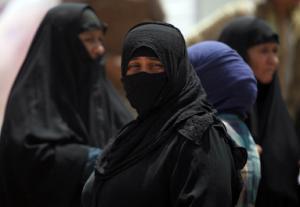
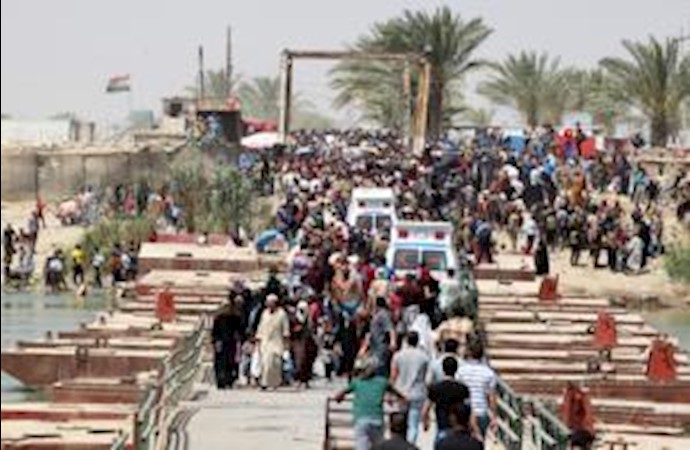
Iraqi families, who fled the city of Ramadi after it was seized by Islamic State group
The Anbar police chief has already been replaced and Prime Minister Haider al-Abadi promised an investigation.
The fall of Ramadi, which lies about 100 kilometres (60 miles) west of Baghdad, was reminiscent of the complete collapse of federal forces in Mosul a year ago, when jihadists took the country’s second city almost without a fight.
On Sunday, IS forces crossed from Syria with two suicide car bombs to attack the Iraqi side of the southern border crossing.
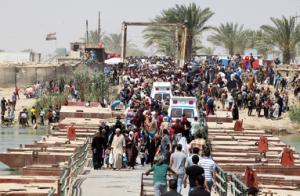
Iraqi residents from the city of Ramadi, who fled their homes as Islamic State group militants advanced
Iraqi border guards promptly retreated to a nearby crossing with Jordan, arguing they had repeatedly called for reinforcements, in vain.
“We were ready to withdraw. We had decided that we would stay if any reinforcements reached us and that we would withdraw at the first attack we are exposed to if we received no reinforcements,” one of them, Marwan al-Hadithi, told AFP.
Also Sunday, Syrian state television reported what it called a “massacre” in Palmyra, with 400 “mostly women, children and elderly people” killed by IS.
But the Syrian Observatory for Human Rights said there was no evidence of such mass killings and added that no more than 35 people accused of ties to the regime had been killed