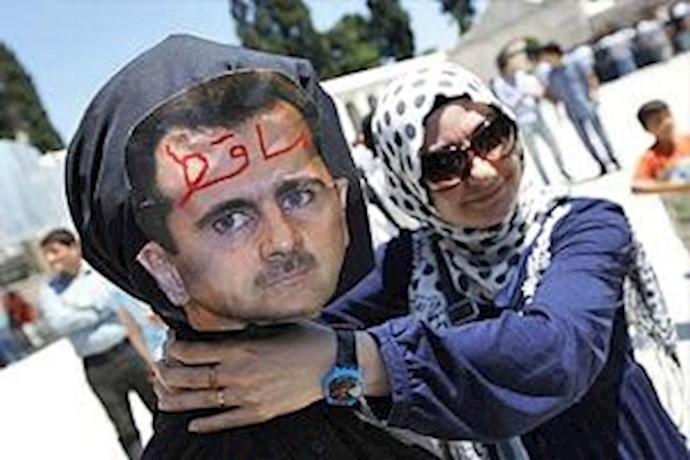
The New York Times, Washington, 19 Sept 2011 — Increasingly convinced that President Bashar al-Assad of Syria will not be able to remain in power, the Obama administration has begun to make plans for American policy in the region after he exits.
In coordination with Turkey, the United States has been exploring how to deal with the possibility of a civil war among Syria’s Alawite, Druse, Christian and Sunni sects, a conflict that could quickly ignite other tensions in an already volatile region.
While other countries have withdrawn their ambassadors from Damascus, Obama administration officials say they are leaving in place the American ambassador, Robert S. Ford, despite the risks, so he can maintain contact with opposition leaders and the leaders of the country’s myriad sects and religious groups.
Officials at the State Department have also been pressing Syria’s opposition leaders to unite as they work to bring down the Assad government, and to build a new government.
The Obama administration is determined to avoid a repeat of the aftermath of the American invasion of Iraq. Though the United States did not stint in its effort to oust Saddam Hussein, many foreign policy experts now say that the undertaking came at the expense of detailed planning about how to manage Iraq’s warring factions after his removal.
Syria is sure to be discussed when President Obama meets Tuesday with Prime Minister Recep Tayyip Erdogan of Turkey on the periphery of the United Nations General Assembly meeting in New York, administration officials say. A senior administration official said the abandonment of Mr. Assad by Turkey, Saudi Arabia and European nations would increase his isolation, particularly as his military became more exhausted by the lengthening crackdown.
Another Obama administration official said that with 90 percent of Syria’s oil exports going to Europe, shutting the European market to Damascus could have a crippling effect on the Syrian economy and could put additional pressure on Mr. Assad’s government.
“Back in the 1990s, if Syria wanted credit and trade and loans that they couldn’t get from the United States, they went to the Europeans,” said Ray Takeyh, a senior fellow for Middle Eastern studies at the Council on Foreign Relations and a former Obama administration official. Now, Mr. Takeyh said, Europe has joined the United States in imposing sanctions on Syrian exports, including its critical oil sector.
Aside from Iran, he said, Syria has few allies to turn to. “The Chinese recognize their economic development is more contingent on their relationship with us and Europe than on whether Assad or Qaddafi survives,” he said, referring to the deposed Libyan leader, Col. Muammar el-Qaddafi.
Eight months ago, the thought of Syria without a member of the Assad family at the helm seemed about as far-fetched as the thought of Egypt without Hosni Mubarak or Libya without Colonel Qaddafi.
But intelligence officials and diplomats in the Middle East, Europe and the United States increasingly believe that Mr. Assad may not be able to beat back the gathering storm at the gates of Damascus.
Mr. Obama’s call last month for Mr. Assad to step down came after months of internal debate, which included lengthy discussions about whether a Syria without Mr. Assad would lead to the kind of bloody civil war that consumed Iraq after the fall of Mr. Hussein.
The shift moved the administration from discussing whether to call for Mr. Assad’s ouster to discussing how to help bring it about, and what to do after that.
“There’s a real consensus that he’s beyond the pale and over the edge,” the senior Obama administration official said. “Intelligence services say he’s not coming back.”
To be sure, Mr. Assad may yet prove as immovable as his father, Hafez al-Assad, was before him. Many foreign policy analysts say that the longer Mr. Assad remains in power, the more violent the country will become. And that violence, they say, could unintentionally serve Mr. Assad’s interests by allowing him to use it to justify a continuing crackdown.