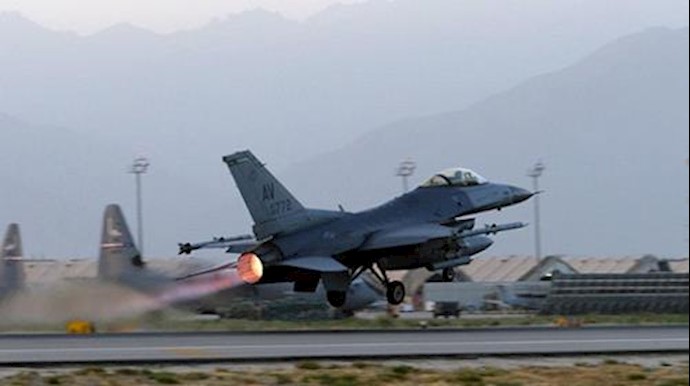
BAGRAM AIRFIELD, AUGUST 25, 2017— Afghanistan (Reuters) – For the fighter pilots at the largest U.S. military base in Afghanistan, President Donald Trump’s new strategy for the war should mean escalating an already surging air campaign, and possibly including an unrestrained offensive against the Taliban.
The number of U.S. air strikes in Afghanistan has already dramatically spiked since Trump took office in January, from 1,074 in all of last year to 2,244 as of August 20 this year.
After a months-long review of his Afghanistan policy, Trump committed the United States last week to an open-ended conflict in the country and promised a stepped-up campaign against the Taliban insurgents.
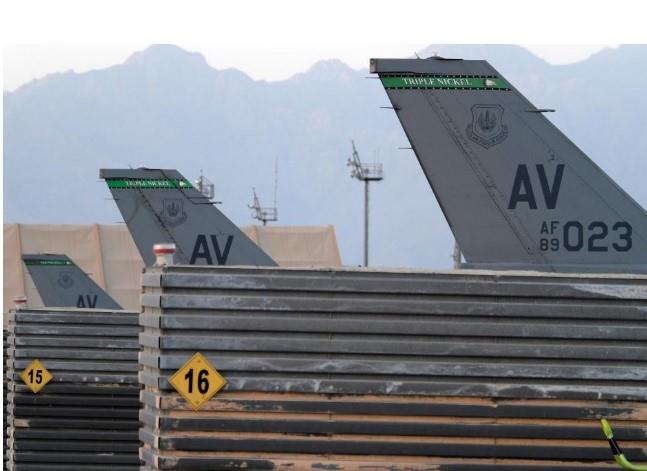
U.S. Air Force F-16 Fighting Falcon aircrafts belonging to the 555th Expeditionary Fighter Squadron sit at Bagram Airfield, Afghanistan August 22, 2017
Few details have emerged, but the pilots in Bagram are preparing for the possibility they’ll be taking the fight to the Taliban in a way they haven’t since the U.S.-led “combat mission” in Afghanistan was called off at the end of 2014.
Among their targets since then have been Islamic State militants, who are also active in the country.
“Between the two groups, the Taliban are definitely smarter,” F-16 pilot Maj. Daniel Lindsey told Reuters. “The Taliban are much harder to kill.”
While Islamic State has launched a series of deadly attacks around the country, it has nowhere near the influence, reach, and community ties that the Taliban has.
It’s those factors that pilots say make the Taliban a more challenging target, and one that has outlasted years of heavy bombardment.
“The Taliban is often embedded in the community, but nobody likes the Islamic State, so they are often separate,” Lindsey said.
NEW PARAMETERS
In many ways, Trump’s policy is less a new plan than the continuation of a slow slide back into combat for American troops, although officials are quick to say their mission will remain focused on training and advising Afghan forces.
On Thursday, the commander of U.S. troops in Afghanistan, Gen. John Nicholson, confirmed that his forces would increase air support for Afghan troops.
“We know the enemy fears air power,” he told reporters in Kabul.
White House officials have said that rolling back territorial gains by the Taliban will be one of the key objectives of the new strategy.
For a time after former president Barack Obama declared America’s combat mission over in Afghanistan at the end of 2014, U.S. forces were restricted from attacking the Taliban in most circumstances except self-defense.
As the group expanded its hold in Afghanistan, however, Obama began to loosen some of those rules and Trump has gone further in sending U.S. troops back into battle with their old adversaries.
Asked about the recent effects of U.S. air strikes, Taliban spokesman Zabihullah Mujahid said the group’s fighters had become used to dodging American bombs.
“In 2010, 2011 and 2012 the U.S. air strikes were successful and we lost many Mujahideen,” he told Reuters. “But now we have enough experience to avoid casualties during their strikes by hiding in mountain holes and other places.”
Still, forcing the Taliban to hide and preventing them from massing fighters has in some cases been credited with helping Afghan security forces hold on to some cities and blunt Taliban offensives.