UNITED NATIONS (Reuters) May 5, 2015 – Washington wants to be certain that any nuclear deal between Iran and major powers includes the possibility of restoring U.N. sanctions if Tehran breaks the agreement without risking Russian and Chinese vetoes, a senior U.S. official said on Tuesday.
United Nations sanctions and a future mechanism for Iran to buy atomic technology are two core sticking points in talks on a possible nuclear deal on which Tehran and world powers have been struggling to overcome deep divisions in recent days, diplomats said on condition of anonymity.
Negotiators were wrapping up nearly a week of talks in New York on Tuesday, the latest round in 18 months of discussions aimed at clinching a long-term deal by June 30 to curb Iran’s nuclear program in exchange for an end to sanctions. Expert-level negotiations are expected to continue for several days.
The current talks have been taking place on the sidelines of a conference on the nuclear Non-Proliferation Treaty. The negotiations between Iran, the United States, Britain, France, Germany, Russia, China and the European Union will resume in Vienna next week.
The latest discussions revolved around a future Security Council resolution that would endorse a deal and render invalid all previous sanctions resolutions, while keeping U.N. bans on ballistic missiles, an arms embargo and some other restrictions.
U.S. and European negotiators want any easing of U.N. sanctions to be automatically reversible – negotiators call this a “snapback” – if Tehran fails to comply with terms of a deal. Russia and China traditionally dislike such automatic measures.
The “snapback” is one of the most important issues for Western governments who fear that, once any U.N. sanctions on Iran are suspended, it could be hard to restore them because Russia and China would veto any such attempt.
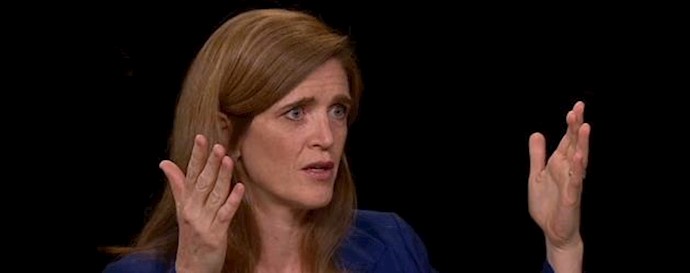
U.S. Ambassador to the United Nations Samantha Power made it clear that Washington did not want Russia’s and China’s recent slew of vetoes on resolutions related to Syria to be repeated with an Iran nuclear agreement.
“We’re going to do so in a manner that doesn’t require Russian and Chinese support or a vote for snapback … because we are in a different world in 2015 than we were when the sanctions architecture was put in place,” Power said in an interview with Charlie Rose on Bloomberg television.
She offered no details.
Power said Washington hoped the conclusion of a nuclear deal with Tehran would lead to a change in Iran’s posture on Syria, where it has supported President Bashar al-Assad in a four-year civil war against rebels seeking to oust him.