BERLIN- A top United Nations official warned of a new tide of refugees from Syria if world powers didn’t succeed in calming an outbreak of hostilities in and around the northern Syrian city of Aleppo.
Staffan de Mistura, the U.N.’s special envoy for Syria, said after meeting with European diplomats and Syrian opposition officials Wednesday that the priority in moving forward with a peace process for Syria was to stop the fighting around what was once Syria’s most populous city.
“The alternative is truly quite catastrophic,” Mr. de Mistura said. “We could see 400,000 people moving toward the Turkish border.”
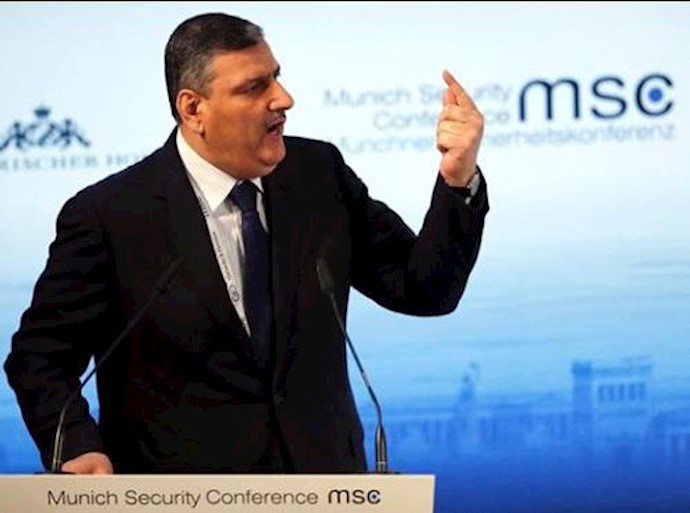
The talks in Berlin centered on ways to return to talks in Geneva on Syria’s political future. The opposition’s High Negotiations Committee, headed by Riad Hijab, pulled out of those talks on April 18 as a cessation of hostilities agreed to in February disintegrated.
“Everyone knows and understands that it isn’t possible to return to Geneva, to political talks, if the cease-fire isn’t respected in and around Aleppo,” German Foreign Minister Frank-Walter Steinmeier, the meeting’s host, said alongside Mr. de Mistura.
The talks come amid a renewed offensive by the Assad regime and its allies against rebel groups in and around Aleppo, which has been under intense bombardment and shelling.
Short-term truces have been put into effect in northern parts of the western province of Latakia as well as parts of the capital, Damascus, to help buttress a nine-week cease-fire that is faltering across much of the country.
Russian and U.S. officials have been trying to arrange one in and around Aleppo. The U.S. has said talks were continuing.
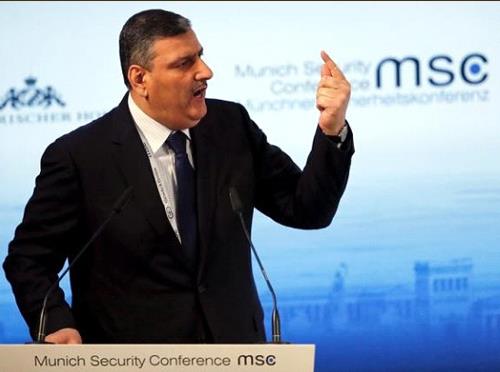
In Berlin, Mr. Hijab said that his group, the High Negotiations Committee, was sticking to its demand that Bashar al-Assad couldn’t be part of any political solution to the five-year conflict, which has killed more than 250,000 people.
“One principle that is not negotiable is that there is room for Assad,” Mr. Hijab said. “The return to a political process also requires an improvement of the humanitarian situation, an easing of the suffering of the Syrian population, and the bloodshed must of course be ended.”
U.S. Secretary of State John Kerry said earlier this week that the cessation of hostilities for Syria—hammered out two months ago in Munich—“has fallen apart completely” in some areas.
Mr. de Mistura this week met with officials from the U.S. and Russia in an effort to salvage the cease-fire. To reinforce a potential new agreement, the U.N. has organized a new operations center with U.S. and Russian representatives to monitor a cease-fire.
U.S. and Russian officials say they hope that the Geneva political talks can resume if a fresh cease-fire is achieved and some humanitarian demands from the opposition—such as lifting of sieges and release of detainees—are met.
Russian air power has been used to support operations by Syrian government forces and their allies since late last year.
Source: Wall Street Journal, 4 May 2016