By Louis Charbonneau
REUTERS, UNITED NATIONS, 14 May 2012
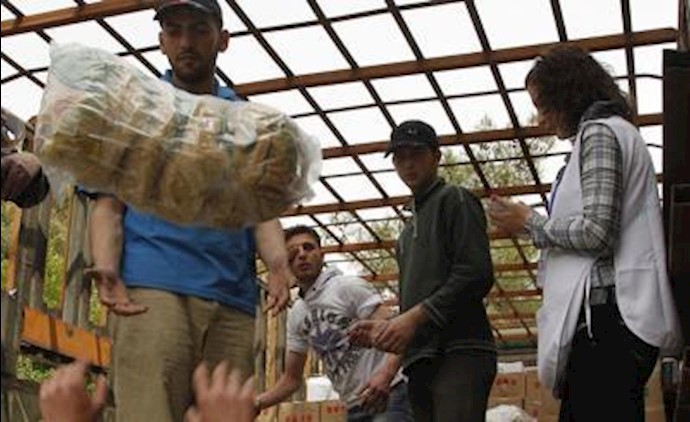
Damascus wants to manage the delivery of all humanitarian aid to a million people in need of assistance as a result of the 14-month-old conflict in Syria, but the United Nations insists on having some control, envoys say.
The U.N. Office for the Coordination of Humanitarian Affairs (OCHA) and Damascus have been negotiating for weeks on a plan for the distribution of aid throughout Syria, but U.N. envoys familiar with the talks said the government and OCHA are deadlocked on the issue of who will be in charge.
“The Syrians want to maintain control of the distribution networks,” a diplomat told Reuters on condition of anonymity.
“That position is a non-starter for OCHA, as it should be,” he said. “OCHA can’t allow the Syrian government to use it as a way to get people (they want to arrest) or to deliver aid only to government supporters.”
OCHA has sent a letter to the Syrian government emphasizing the importance of the United Nations being at least partly in charge of the aid operation, diplomats said. It has not turned to U.N. member states to intervene on its behalf and put pressure on Damascus, but could do so if necessary, they added.
The most obvious choice would be to call on Russia to help, as it has the most influence on Damascus, envoys added.
A U.N.-backed peace plan between Syria’s government and rebels determined to oust President Bashar al-Assad calls on the government and opposition to “ensure timely provision of humanitarian assistance to all areas affected by the fighting.”
That plan, which was brokered by former U.N. Secretary-General Kofi Annan, has failed to bring an end to the fighting despite promises from Damascus and opposition groups that they would respect a cease-fire announced on April 12.
A U.N. official said OCHA chief Valerie Amos was keen to avoid linking the aid issue to political disputes on other aspects of the Annan plan. “She wants to keep aid separate from politics.”
Maintaining neutrality
U.N. aid groups remain active in Syria, but they lack the kind of unfettered access throughout the country that they need to carry out their work effectively, diplomats said. The envoys all declined to be identified due to the confidential and sensitive nature of the talks between OCHA and Damascus.
Syria is insisting that the Syrian Arab Red Crescent (SARC) be in charge of aid distribution, but OCHA is against that. Having the SARC in charge would jeopardize U.N. neutrality, diplomats said, adding that it was not up to the task of coordinating aid distribution to more than a million people.
U.N. officials and diplomats say OCHA would be willing to compromise by managing aid distribution jointly with SARC, but the U.N. aid office is determined to maintain a measure of control over the delivery of aid throughout Syria.
Without U.N. oversight, they say, aid distribution could be hijacked by those in the Syrian government who would like to use it as a means of getting access to opposition strongholds currently off-limits to government forces or for punishing rebel-held areas by denying them access to humanitarian aid.
There had been other sticking points in the talks between OCHA and Syria, but those have largely been resolved. The Syrian government had been concerned about U.N. demands that the human rights of aid recipients would be guaranteed, that they should have freedom of movement and would not be arbitrarily arrested.
Despite compromises on those and other issues, Damascus has refused to budge on the question of who will be in charge of distributing aid, diplomats said.
“We hope to reach an agreement on this question, too, soon,” an envoy said.