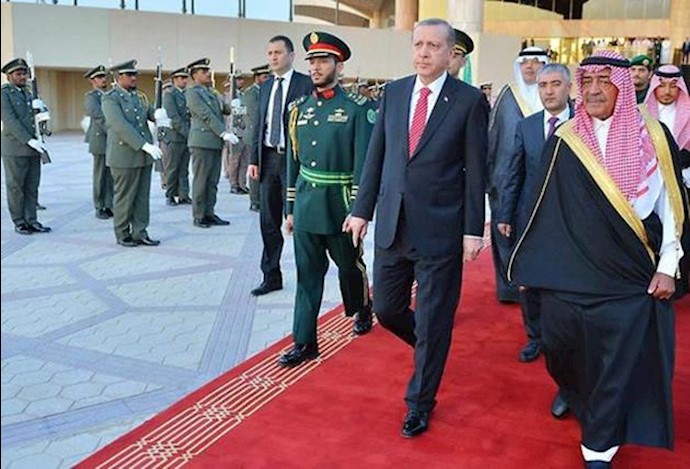
AFP – 2 March 2015 – Turkish President Recep Tayyip Erdogan arrived Monday in Riyadh for a visit at the king’s invitation in what is seen as a Saudi bid to unify Sunnis against Iran and jihadists.
Erdogan’s meeting with King Salman comes a day after Egyptian President Abdel Fattah al-Sisi held talks with the monarch, and precedes a visit by Pakistan’s Prime Minister Nawaz Sharif later this week.
The Turkish and Saudi leaders discussed “means of enhancing bilateral cooperation in various fields, issues of common interest” and external developments, said the official Saudi Press Agency.
Top officials from neighboring nations Qatar, Kuwait, Jordan and the United Arab Emirates have already visited Salman since mid-February, and other Arab heads of state will follow, said Nawaf Obaid, a visiting fellow at the Belfer Center at Harvard University in the United States.
“Saudi Arabia is drastically going to re-energize its foreign policy to bring the kingdom back to its natural role as the main unifier of the Sunni world because of its unique attributes,” Obaid told AFP.
He was referring to the kingdom’s hosting of Islam’s holiest sites, the size of its economy, and its position as the world’s largest oil exporter.
“Clearly, things are shaping up in a very different way than they have been in the last several years.”
Salman acceded to the throne in January after the death of King Abdullah, aged about 90.
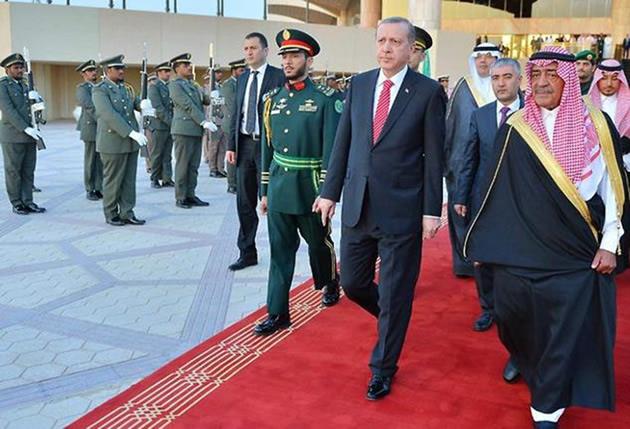
Saudi Crown Prince Muqrin bin Abdulaziz al-Saud escorts Turkish President Recep Tayyip Erdogan
Erdogan arrived in Riyadh after performing a weekend pilgrimage in the Muslim holy city of Mecca and visiting Medina.
“So as long as you can start having a serious sustained discussion between the major Sunni powers then you can come up with some form of policy at some point down the road, dealing with Iran and dealing with ISIS,” Obaid said, referring to the Islamic State group jihadists who have seized large parts of Iraq and Syria.
Saudi Arabia and its Sunni Arab neighbors are part of a US-led military coalition conducting air strikes against the jihadist group.
Shiite-dominated Iran competes with Saudi Arabia for influence in the region.
An official from nuclear-armed Pakistan confirmed Sharif would make a two-day visit to the kingdom this week for talks.
“Pakistan and Saudi Arabia have been coordinating their positions for a long time”, said the official who asked for anonymity.
He added that, with about 20 percent of its population Shiite, Pakistan avoids “anything sectarian”.