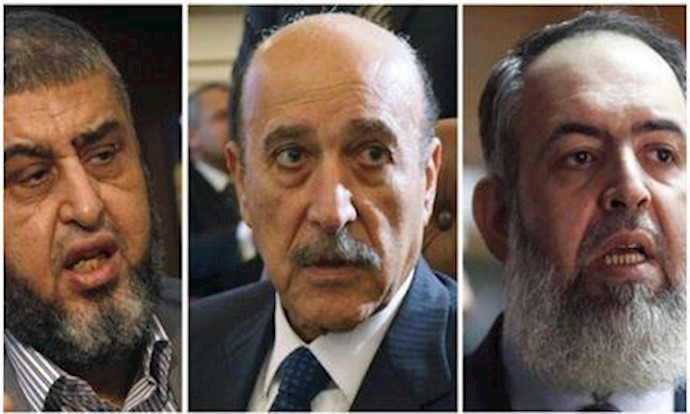
AL ARABIYA , 16 April, 2012- Egypt’s Presidential Elections Commission is set on Monday to examine the appeals it has received from the candidates barred from participating in the presidential race, Egyptian mass media reported.
The commission said that it already held initial sessions on the appeals, and would make its final decisions by Tuesday and all results will be announced by Wednesday at the latest, a report by Egypt’s al-Masry al-Youm said citing a statement by the commission.
On Saturday, the commission barred 10 presidential contenders, including three prominent candidates: Muslim Brotherhood senior adviser Khairat al-Shater, Salafi lawyer-turned-preacher Hazem Salah Abu Ismail and former intelligence chief Omar Suleiman.
The disqualifications add to the drama of a transition marked by spasms of violence and bitter political rivalries between Islamists, secular-minded reformists and remnants of the Mubarak order.
The three top contenders were scrambling to stay in the election race after the authorities disqualified them on technical grounds, prompting one to say that a “major crisis” threatened the landmark vote.
The election is seen as the last step to democracy after more than a year of unstable army rule since Hosni Mubarak was overthrown by a street revolt. The generals are due to hand power to the new president by July 1 but the latest drama saw new accusations they were trying to prolong their influence.
Mubarak’s former spy chief Suleiman drew an outcry from opponents of the old regime when he entered the race last week, only to be told late on Saturday that he had failed to secure enough signatures in one province to run.
The two leading Islamist candidates, Shater and Abu Ismail, were also disqualified, one because he has a criminal record — dating from what was widely seen as a political trial under Mubarak — and the other because his mother had taken U.S. citizenship, state media said.
“We will not give up our right to enter the presidential race,” said Murad Muhammed Ali, campaign manager for the Muslim Brotherhood’s Shater, according to Reuters.
“There is an attempt by the old Mubarak regime to hijack the last stage of this transitional period and reproduce the old system of governance.”
A lawyer for Salafi preacher Abu Ismail, the most hardline of the various Islamists running for the post, said there would be a “a major crisis” now that his client was barred from the race.
On Friday, his supporters besieged the headquarters of the election commission, forcing it to evacuate the premises and suspend its work. Abu Ismail said the accusation that his mother held U.S. citizenship was fabricated by his political opponents.
“The presidential committee has violated all the rules of law,” Abu Ismail said in remarks published on his Facebook page. “If the official decision is to violate the constitution, they should be able to deal with the consequences.”
Military police and state security were guarding the headquarters of the election committee in Cairo on Sunday, state media reported.
Meanwhile, the commission announced Suleiman had collected only 969 signatures from Assiut Governorate, less than the 1,000 required.
Suleiman’s campaign said the remaining signatures would be submitted to the commission, and would be dated before candidate registration ended.
In an interview with Reuters on Saturday, before his exclusion was announced, Suleiman said the domination of politics by the Brotherhood would hold the country back. But he said if he became president, the party could serve in his government and would be a vital part of Egyptian political life.
Suleiman, 74, said he was running for office in response to public demands for a counterweight to Islamist influence.
“This is why they sought me, as a balance between Islamists and civilian forces,” said Suleiman.
He describes himself as a devout Muslim but said that Egyptians fear their country is being turned into a theocracy.
The Brotherhood, in addition to dominating parliament, chairs an assembly that was formed to write a new constitution before a court suspended its activities last week. Liberal groups had walked out of the assembly, saying it failed to reflect Egypt’s diversity.
“Many people felt that the state is going to the Muslim Brotherhood — in parliament, in government and now the presidency,” Suleiman said, while conceding that the Brotherhood was “a very important segment of Egyptian society.”
Frontrunners still in the race include Amr Moussa, a former Arab League Secretary General and Egyptian foreign minister, and Abdul Moniem Abul Fotouh, who was expelled from the Brotherhood last year when he mounted his own presidential campaign.
(Additional writing by Abeer Tayel)