
An echo of the 1930s in the budding alliance of Russia, Iran, Turkey and China.
In the fall of 1940 the governments of Japan, Italy and Germany—bitter enemies in World War I—signed the Tripartite Pact, pledging mutual support to “establish and maintain a new order of things” in Europe and Asia. Within five years, 70 million people would be killed in the effort to build, and then destroy, that new order.
The Pact was the culminating act in a series of nonaggression, friendship and neutrality treaties signed by the dictatorships of the day, sometimes to deceive anxious democracies but more often to divvy up the anticipated spoils of conquest. So it’s worth noting our new era of cooperation between dictatorships—and to think about where it could lead.
The era began in July 2015, when Iran’s Quds Force commander Qasem Soleimani paid a visit to Moscow to propose a plan to save Bashar Assad’s regime in Syria from collapse. Iran and Russia are not natural allies, even if they have a common client in Damascus. Iranians have bitter memories of the Soviet occupation of Afghanistan in the 1980s, and the Kremlin has never been fond of Islamists, even of the Shiite variety.
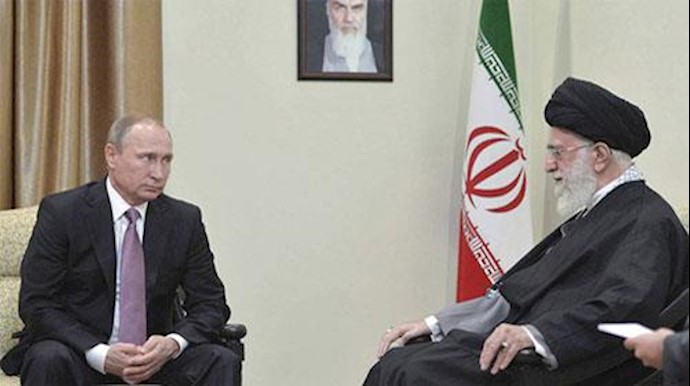
But what tipped the scales in favor of a joint operation was a shared desire to humiliate the U.S. and kick it out of the Middle East. “America’s long-term scheme for the region is detrimental to all nations and countries, particularly Iran and Russia, and it should be thwarted through vigilance and closer interaction,” Supreme Leader Ali Khamenei told Vladimir Putin during the Russian’s visit to Tehran last November.
Since then, Tehran has agreed to purchase $8 billion in top-shelf Russian weapons and is seeking Moscow’s help to build another 10 nuclear reactors—useful reminders of how the mullahs are spending their sanctions-relief windfall. The two countries have also conducted joint naval exercises in the Caspian Sea. Just last week Russia used Iranian air bases (a little too publicly for Tehran’s taste) to conduct bombing raids on Syria.
Then there’s China. On Monday, a Russian military spokesman announced that his country’s Pacific fleet would conduct joint operations with the Chinese navy in the South China Sea. This follows an apparently coordinated effort by the two navies in June to encroach Japanese territorial waters near the disputed Senkaku islands.
Mr. Putin’s relations with Beijing haven’t always been smooth—China is as adept at stealing Russian military technology as it is at hacking U.S. secrets, and the Russians don’t appreciate being treated as junior partners. But the drills in the South China Sea are another reminder that the Kremlin’s overriding foreign policy goal is to hobble and diminish the U.S. It’s a goal Beijing appears to share.
And why not? President Obama and his advisers continue to insist that the world has never been a better, safer, happier place than under their benign stewardship, meaning they no longer even register the continuous embarrassments of their foreign policy. The administration has become the Black Knight from “Monty Python and the Holy Grail,” comically indifferent to his own dismemberment. Arms and legs all hacked off? “Tis but a scratch!”
Perhaps it’s in every strongman’s nature to seek and admire his political reflection wherever he finds it, whether it’s in a czar, an ayatollah, a sultan or a general secretary. Then again, what mainly unites the leaders of the new dictators’ club is the shared perception that they stand to lose very little in working against a country they detest and a president they contemn.
That’s a perception that is unlikely to change with the next U.S. administration. Readers searching for historical analogies with the present would be wrong to reach for the Tripartite Pact. But the ingredients from which that foul soup was made have now been laid on the table.
Source: Extracted From, The Wall Street Journal, Aug. 22, 2016