A well-intended effort to help victims of the Sept. 11, 2001 terror attacks threatens to dilute the power of one of our most effective national security tools in the fight against global terrorism—the state sponsor of terrorism designation—and, in turn, the ability to secure justified compensation for victims of crimes sponsored by the world’s leading terrorist state actor—the Islamic Republic of Iran.
Under U.S. law, foreign governments are generally immune from legal action in U.S. courts, just as other governments, through their legal systems, treat the U.S. as immune. However, in the United States, a narrow exception to the principle of ‘sovereign immunity’ applies in cases where designated state-sponsors of terrorism cause “personal injury or death … by an act of torture, extrajudicial killing, aircraft sabotage, [or] hostage taking.” In such instances, victims are able to sue and seize the assets of the designated state-sponsor for compensation.
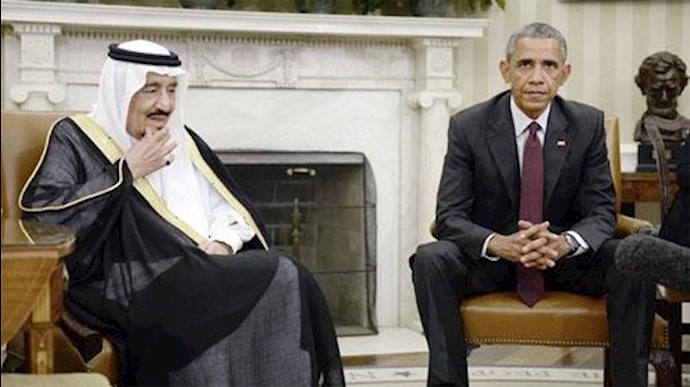
The Justice Against Sponsors of Terrorism Act or JASTA, which was vetoed by President Obama last Friday after passing both the House and Senate, would allow private citizens to sue foreign governments they believe have played a role in a terrorist attack, irrespective of whether that foreign government is a designated U.S. sponsor of terrorism, or a U.S. ally.
Created in 1979, the State Department’s state sponsor of terrorism designation is meant to single out and stigmatize countries that have “repeatedly provided support for acts of international terrorism.” It imposes substantial trade and financial restrictions on the ‘worst of the worst’ state actors. Alumni of this notorious group read like a who’s who of past and present terror states, including Libya, Iraq, and North Korea. Among today’s members is Syria, which, according to the State Department, has only doubled down in its alliance with sanctioned terror proxy Hezbollah in recent years.
But one nation—Iran—stands head and shoulders above the rest. Iran’s policy of backing terrorism stretches back decades and continues unabated to this day: Government officials or agents aligned with the regime have orchestrated countless terrorist attacks. These include the 1996 Khobar Towers attack in Saudi Arabia, the 1983 Marine barracks and U.S. Embassy bombings in Lebanon, a 2011 attempt to assassinate Saudi Arabia’s ambassador to the U.S. in Washington, D.C., and the 1994 bombing of a Jewish community center in Buenos Aires, just to name a few examples. In fact, current leading Iranian government officials—including Chairman of the Expediency Council Akbar Hashemi Rafsanjani and Senior Advisor to Iran’s Supreme Leader Ali Akbar Velayati—reportedly were involved in terror attacks carried out abroad, including the murder of Iranian Kurdish dissidents in Berlin in 1992.
By expanding the scope of allowable lawsuits against sovereign nations to include countries not explicitly designated as state-sponsors of terrorism, JASTA would effectively create a false equivalence in U.S. courts between the ‘worst of the worst,’ like Iran, and every other ally or partner. Indeed, under the precedent set by JASTA, any country in the world could potentially be a target of U.S. lawsuits. The Iranian regime would like nothing more than to see U.S. courts effectively apply a “terror-sponsor” label to an ever-expanding pool of states that includes U.S. allies.
Also at stake are the hard-won and long-standing damage awards secured by victims of Iranian terrorism. In April, the U.S. Supreme Court upheld a decision that permitted American terror victims to use seized Iranian regime funds to satisfy legal judgments against Iran. This just decision was only possible because of Iran’s singular standing as the world’s leading state-sponsor of terrorism and the view that Iran’s long record of terrorism sets it apart from almost every other nation in the world. In short, the existing U.S. law that waives sovereign immunity for Iran has diplomatic and legal legitimacy only because it focuses on a distinct and limited set of nations—“state sponsors of terrorism”—that are recognized as the ‘worst of the worst.’
JASTA will lump all countries—even our allies—together as potential litigation targets. Moreover, by weakening the credibility of U.S. exceptions to sovereign immunity, JASTA could inadvertently weaken the credibility of all U.S. judgments held against sovereign states, even if those judgments are against a state, like Iran, that the world largely agrees is a state sponsor of terrorism. JASTA will only invite delays, confusion, and uncertainty for Iranian terror victims working to fight for just compensation.
Let me be clear: victims of the Sept. 11, 2001 terrorist attacks should be compensated as much as possible for their grave loss. We also must ensure that our most powerful and effective national security tools are not undermined.
By Mark Wallace
Mark Wallace is CEO of United Against Nuclear Iran and former U.S. Ambassador to the UN for Management and Reform.
Source: The Hill, September 27, 2016,