

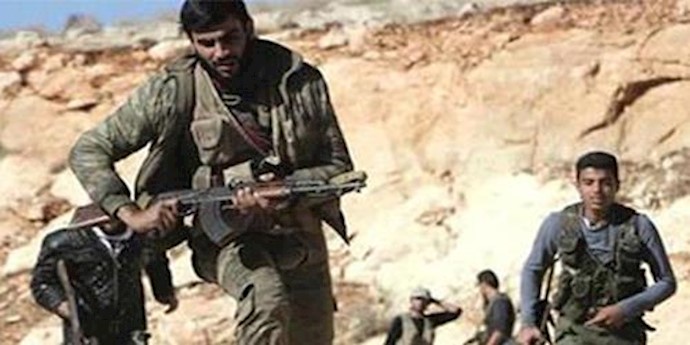
WASHINGTON—The Central Intelligence Agency and its regional partners have drawn up plans to supply more-powerful weapons to moderate rebels in Syria fighting the Russia-backed regime in the event the country’s six-week-old truce collapses, according to U.S. and other officials.
The preparations for a so-called Plan B center on providing vetted rebel units with weapons systems that would help them in directing attacks against Syrian regime aircraft and artillery positions, the officials said.
The Wall Street Journal first reported in February that President Barack Obama’s top military and intelligence advisers were pressing the White House to come up with a Plan B to counter Russia in Syria. Since then, fresh details have emerged on the nature of the new weaponry that could be deployed under the covert program.
The preparations were discussed at a secret meeting of spy chiefs in the Middle East just before the cease-fire took effect on Feb. 27 and in follow-on exchanges between intelligence services.
In those meetings, officials briefed on the deliberations said, coalition members received provisional assurances from the CIA that they would be given approval to expand support to Syria’s moderate opposition. Coalition members have agreed on the outlines of Plan B, but the White House must still approve the list of specific Plan B weapons systems before they can be introduced to the battlefield.
Officials said the CIA has made clear to its allies that the new systems, once agreed upon, would be given to the rebels only if the truce and the concurrent political track toward a lasting peace—Plan A—fall apart and full-scale fighting resumes.
“The agreement is to up the ante, if needed,” a senior U.S. official said of the CIA’s message to the coalition supporting antiregime rebels, adding that the administration’s main focus now was to find ways to make the cessation of hostilities and political negotiations stick.
A CIA spokesperson declined to comment on the deliberations.
The discussions of Plan B come as representatives from the regime of Bashar al-Assad and the opposition prepare to resume U.N.-brokered negotiations in Geneva this week.
Development of the weapons list is part of a broader behind-the-scenes effort by the Obama administration to deter its adversaries in the Syrian conflict while preventing the U.S.’s coalition partners who are supporting the moderate opposition from taking matters into their own hands.
The private message conveyed by U.S. officials to their Russian counterparts, who have backed the Assad regime with air power since last year, has been that the moderate opposition isn’t going away and that a return to full-scale fighting could end up putting more Russian pilots in danger, according to U.S. officials.
To coalition partners including Turkey and Saudi Arabia, the CIA has twinned assurances that the U.S. will allow the anti-Assad coalition to supply more weapons with warnings that they would be mistaken to go behind Washington’s back to provide weapons systems that Mr. Obama has decided so far not to introduce to the battlefield.
The agency’s principal concern focuses on man-portable air-defense systems, known as Manpads. The CIA believes that rebels have obtained a small number of Manpads through illicit channels. Fearing these systems could fall into terrorists’ hands for use against civilian aircraft, the spy agency’s goal now is to prevent more of them from slipping uncontrollably into the war zone, according to U.S. and intelligence officials in the region.
Coalition partners have proposed ways to mitigate the risk. They have suggested tinkering with the Manpads to limit how long their batteries would last or installing geographical sensors on the systems that would prevent them from being fired outside designated areas of Syria. But Washington has remained cool to the idea.
U.S. and Middle Eastern officials declined to specify the precise systems that could be introduced on the battlefield due to the sensitivity of the program and because disclosing details could help regime forces and their allies, Russia, Iran and the Lebanese Hezbollah guerrilla group, prepare countermeasures.
Secretary of State John Kerry stressed the importance the White House has placed on maintaining the cease-fire during private meetings last week with his counterparts in the Gulf. Specifically, Mr. Kerry urged Saudi, Qatari and other regional partners to use their influence with the rebel groups they support to continue to abide by the truce and remain engaged in the U.N.-brokered political negotiations, according to U.S. officials.
The cease-fire, which has held far longer than officials in Washington and in the region had expected, has reduced the overall level of violence in Syria and brought about a pause in the proxy fight between Russia and the U.S. on the Syrian battlefield, buying time for the former Cold War adversaries to consider their next steps there and, in some cases, work together.
U.S. and Russian diplomats, for example, have been working together to craft an interim Syrian constitution, though it remains unclear whether Russian President Vladimir Putin is willing to break with Assad, or has the leverage to compel the regime’s compliance with a diplomatic solution. The Obama administration has called for Assad to be pushed from power, if not immediately then at least within a finite period.
Violations of the truce have increased in recent weeks, raising fears that it could fall apart at any moment and spurring intelligence agencies to ready the Plan B package. Obama administration officials acknowledge that the cessation of hostilities has become increasingly shaky. But these officials say they don’t think it is on the verge of collapse.
In private meetings with their Russian counterparts, Mr. Kerry and CIA Director John Brennan have warned the alternative to the truce could be a dangerous escalation on the battlefield, U.S. officials said.
“If the cease-fire collapses, if the negotiations don’t go anywhere, and we’re back to full throttle civil war, all bets will be off,” a senior Obama administration official said of the message to Moscow. “The outside patrons will double and triple down, throwing everything they can into Syria, including much more lethal weaponry.”
In contrast to Mr. Putin’s aggressive intervention with air power last year on behalf of Assad, Mr. Obama has been cautious about expanding U.S. support to the moderate opposition, much to the chagrin of Turkey, Saudi Arabia and some other U.S. partners in the region.
The CIA’s covert program has grown gradually since it was launched in 2013 with limited supplies of small arms and ammunition. In 2014, the CIA introduced advanced antitank TOW missiles on the battlefield, helping the rebels gain ground on the regime, until Russia’s intervention last year drove the fighters back.
More recently, the CIA has allowed some rebel groups to receive Soviet-era BM-21 “Grad” multiple rocket launcher systems, though the quantities have been relatively small, according to officials in the region.
Deciding which weapons systems to introduce on the battlefield, and to whom, has always been a difficult balancing act for the Obama administration.
Saudi Arabia and Turkey have increased pressure on Washington to up the ante in support of the moderate opposition in part by calling for the introduction of weapons systems that they know are a red line for Mr. Obama, such as Manpads.
To get U.S. allies to back off their demands, U.S. officials have proposed alternative systems that Washington believes would pose less of a proliferation danger. That is how the U.S. has responded to calls by Turkey and Saudi Arabia for the introduction of a limited number of Manpads in Syria during the Plan B discussions.
Officials say the CIA and its regional partners are looking at different types of antiaircraft weapons, including Soviet-era systems that would be less mobile. But alternative systems, such as anti-aircraft batteries which come mounted on vehicles, may be easier targets for Syrian and Russian aircraft, according to officials involved in the deliberations.
Source: Wall Street Journal, April 13