As yet unclear whether opposition will attend peace talks in Geneva, spokesman says Syria’s unity a ’red line’
DAMASCUS – The Syrian government has been invited to a new round of peace talks with the opposition in Geneva from March 14, a source close to the regime delegation said Monday.
“The delegation received an invitation on Sunday from the United Nations, asking us to take part in negotiations starting March 14 in Geneva,” the source told AFP, speaking on condition of anonymity.
The source did not specify when the government delegation would arrive in the Swiss city for the latest round of indirect negotiations aimed at ending the nearly five-year conflict.
The negotiations will be the first held since an unprecedented ceasefire took hold on February 27 following an agreement between Russia and the United States.
The UN’s Syria envoy Staffan de Mistura had said the new talks would begin from Thursday.
The opposition’s position on attending was unclear.
A spokesman for the High Negotiations Committee, the body representing Syria’s opposition, said early Monday that the HNC’s delegation to the talks would arrive on Friday.
“After consultations, the High Negotiations Committee agreed to go to Geneva. The delegation is expected to arrive on Friday,” Riad Naasan Agha, a spokesman for the group, told AFP.
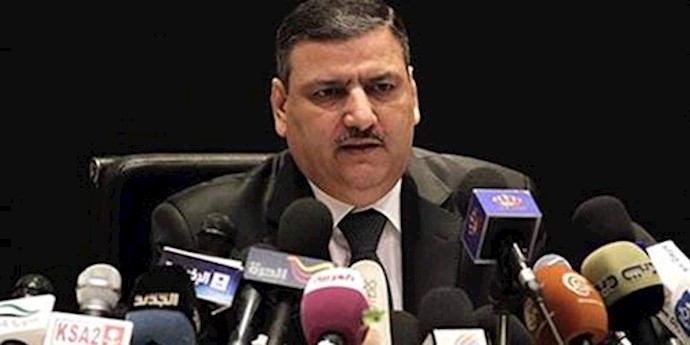
But in a conference call later with reporters, HNC head Riad Hijab said his group would announce its decision later this week.
“The HNC will assess the situation in the coming days and we will take the appropriate decision (on attending),” Hijab said by telephone from Riyadh.
The HNC has said it represents nearly 100 rebel factions that have signed on to the truce for an initial two weeks.
The truce will reach its two-week mark on March 12.
Asked if the HNC would extend its commitment to the ceasefire, Hijab said the body would discuss the situation on the ground with opposition fighters “and based on this, we will make our decision.”
Hijab also rejected the prospect of putting in place a federal system in the war-torn country, warning that it would lead to partition.
“Syria’s unity is a red line. This issue is non-negotiable and the idea of federalism is the prelude to the partitioning of Syria,” Hijab told reporters.
“This is completely unacceptable,” he said. “We agreed on the idea of administrative decentralization” at the Riyadh conference in December 2015 when the HNC was formed.
On February 29, Russia’s deputy foreign minister Sergei Ryabkov said he could not rule out establishing a federal system in Syria if that could help safeguard its unity.
“I cannot assess how likely it is that a federal state would be created in Syria, because the process of defining Syria’s future has not yet begun,” he said in comments published by Russian news agency Ria Novosti.
“But if after negotiations and consultations on the future of Syria, the (warring) sides… come to the conclusion that this model suits them and that it can safeguard the unity of Syria as a secular, independent and sovereign state, who would object to that?”
Syria’s Kurds, who have set up three autonomous regions since the outbreak of the war in 2011, back the idea of federalism.
In January 2012, several Syrian Kurdish groups proposed that a referendum be held to give voters the choice between decentralization, autonomy or federalism.
Source: Middle East Online 2016-03-07