GAZIANTEP, Turkey – Syrian opposition coordinator Riad Hijab defended his body’s decision to walk out of peace talks in Geneva and criticized U.N. envoy Staffan de Mistura over the rise in violence, during a high level EU visit to the Turkish border province.
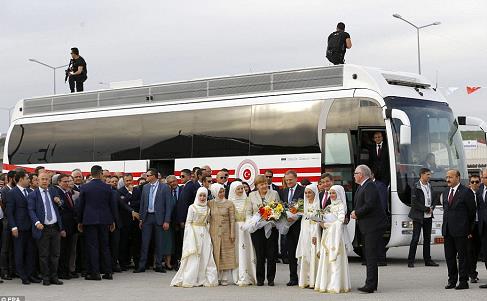
He talked to the reporters in Gaziantep where he was visiting a refugee camp alongside German Chancellor Angela Merkel and Prime Minister Ahmet Davutoglu.
Hijab’s public criticism of de Mistura, who must be seen as neutral while trying to negotiate peace in Syria, highlights the tensions and fragility of a peace process which has limped on despite the opposition declaring a “pause” in talks with nearly all of its delegation leaving Geneva.
“For two years, Mr de Mistura was appointed in his task as a U.N. envoy and during this period the killing was increased or doubled in Syria and also the number of villages and areas that were under siege also increased where is Mr De Mistura and his team,” Hijab told reporters in Gaziantep.
Despite a breakdown in a truce, the failure of which Hijab said must prompt a reevaluation by world powers, and signs that both sides are gearing up to escalate the five-year-old civil war, De Mistura vowed to plough on with peace talks. Some diplomats called on de Mistura to exert pressure to make the talks successful.
On Saturday Hijab, a former prime minister, defended the opposition’s decision to suspend the talks:
“We put our participation in the negotiations on hold to respect the Syrian blood that is shed under strike from the regime and its allies and to respect the Syrians who are killed of hunger following the siege and to respect Syrians who are killed under torture.”
Regime ’intensifying air strikes’
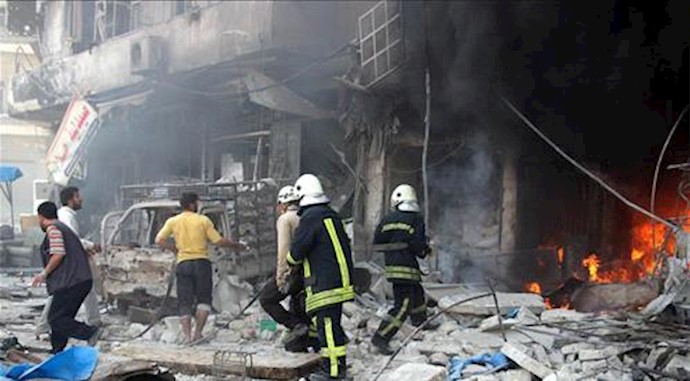
Twelve civilians were killed in air strike on the northern metropolis of Aleppo on Saturday, a local civil defence official said.
The Syrian Human Rights Observatory said 13 others died in shelling of the rebel-held town of Douma, east of Damascus, while two men were killed in regime air strikes on Talbisseh in central Homs province.
Damaged buildings in the Salah al-Din neighbourhood of the northern Syrian city of Aleppo .
The barrage of air strikes on Aleppo targeted several neighbourhoods, including the heavily populated Bustan al-Qasr district, an AFP correspondent in the city said.
The deadliest raid was on the Tariq al-Bab neighbourhood on the eastern edges of the city.
A civil defence volunteer was seen carrying a screaming woman down a ladder from a damaged building in the neighbourhood, as a pick-up truck removed the remains of a victim’s body.
Volunteers evacuate a family from a damaged building following bombardments on April 23, 2016 in the rebel-held neighbourhood of Tareeq al-Bab in Aleppo.
Another volunteer operating a crane brought down a young man cradling a baby from an upper storey.
It was the second day of deadly strikes on Aleppo, after 25 civilians were killed and another 40 wounded in air strikes on Friday.
Once Syria’s commercial hub, the northern metropolis has been divided by government control in the west and opposition groups in the east.
“The ceasefire ended when the first bomb hit the city,” Muhammed Mashhad, a civil defence volunteer, said.
“The regime is intensifying its air strikes, which have reached around 20 a day,” the 42-year-old said.
“This regime is criminal and doesn’t understand the language of political negotiations. All it gets is bombing, killing and destruction.”
The head of a Britain-based monitoring group said the escalating violence meant a ceasefire between the regime and non-jihadist rebels, in place since late February, had effectively collapsed.
The truce brokered by Russia and the United States had raised hopes that UN-backed talks in Geneva this month would lead to a solution to the five-year conflict.
In the rebel-held town of Douma, 13 people — including three women and two children — were killed in government shelling on the city. The Observatory said all the dead were civilians.
Douma lies in the Eastern Ghouta opposition bastion, where the Jaish al-Islam rebel group — also party to the truce deal — is dominant.
But Observatory director Rami Abdel Rahman said on Saturday that the truce had effectively collapsed.
“Most of the areas that were under the ceasefire are now seeing fighting again,” he said.
US President Barack Obama and the UN’s special envoy to Syria Staffan de Mistura on Friday said the ceasefire was in grave peril.
Source: News Agencies, 24 April 2016