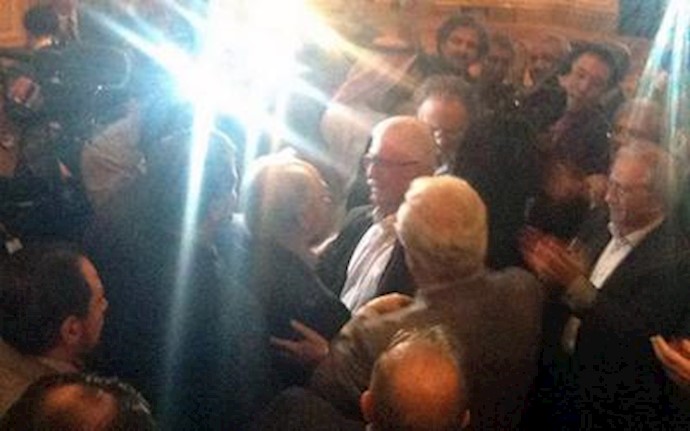
Al Jazeera, 9 Nov 2012 – The opposition Syrian National Council (SNC), has elected George Sabra, a leading Christian opposition figure, at its leader following discussions in Doha, Qatar.
The SNC has been vying to keep its leading role in the conflict and has come under US pressure to unify with other groups opposed to President Bashar al-Assad.
Earlier on Friday, the umbrella group elected 11 members to sit on its executive committee, having already elected a 41-member secretariat.
The executive committee members included Abdulbaset Sida (the SNC’s former head), Farouq Tayfour (a senior member of the Muslim Brotherhood and Sabra.
“We hope that these free and transparent elections will be a model for free elections in Syria,” Sabra told the AFP news agency, stressing that the new executive represents all sectors of society, including for the first time the tribes.
SNC representatives voiced reservations about the initiative, based on a proposal tabled by prominent dissident Riad Seif with apparent US support.
Seif’s initiative
The plan put forward at a meeting on Thursday, called by host Qatar and the Arab League, appeared to be a modified version of Seif’s initiative, proposing an umbrella body of some 60 members, representing the SNC, civilian groups active on the ground, armed groups, Muslim scholars and others.
This body would in turn form a transitional government of some 10 members, and a military council.
The SNC, formed six months after the anti-regime uprising began in March 2011, has proposed “holding a national congress of 300 members in liberated territories” in order to add “revolutionary legitimacy” to any executive, according to SNC member Najati Tayara.
Such a congress would form a transitional government that would run territories seized by the rebels, channel humanitarian aid and direct military operations, he said.
US Secretary of State Hillary Clinton last week called the SNC unrepresentative of opposition forces on the ground and said it “can no longer be viewed as the visible leader of the opposition.”
The SNC, which fears marginalisation in a new structure, in return accused Washington of undermining the revolt and “sowing the seeds of division.”
Burhan Ghalioun, a former SNC chief, said any accord “could boost the uprising” as it would enable the opposition to unite the different military groups battling regime forces.
Ahmed Ben Helli, deputy head of the Arab League, said delegates had been urged to overcome the divisions that have dogged their efforts to unseat Assad.
Qatar’s Prime Minister Sheikh Hamad bin Jassem al-Thani, on opening the meeting, had urged them to “unify their ranks and positions and to prioritise the interests of their nation and people over their own personal interests.”