
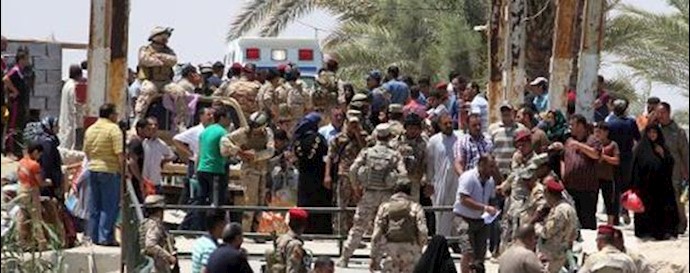
HABANIYAH, Iraq – Parading across a desert base, hundreds of Sunni tribesmen who graduated a crash-training course stood ready to take on the Islamic State group, Associated Press reported June 20, 2015.
Among them were tribesmen who watched as Iraqi forces abandoned Ramadi a month ago to the Islamic State group.
“For a year and a half we told them we need weapons, we need salaries, we need food, we need protection, but our requests were ignored until the disaster of Ramadi happened, ” said Sheikh Rafa al-Fahdawi, one of the leaders of the Al Bu Fahad tribe of Anbar province.
But money and weapons alone won’t be enough to repair the mistrust between Baghdad and the Sunni tribes it now needs to battle the Islamic State group, which holds about a third of the country and neighboring Syria in its self-declared “caliphate.” After Iraqi forces abandoned Ramadi and then turned to Shiite militias for help, both sides remain suspicious of each other, threatening any effort to work together.
Iraq’s Sunnis long have complained of discrimination and abuse since the 2003 U.S.-led invasion that toppled Saddam Hussein’s and replaced it with a government dominated by the country`s Shiite majority. But the collapse of Iraqi forces in Ramadi on May 17 crystalized the fears many Sunni tribesmen had when their pleas for help went unanswered.
That night, silence fell over Ramadi after weeks of Islamic State-launched suicide car bomb attacks and gun battles, said Sunni tribesmen who spoke to The Associated Press. The Iraqi forces there, including its vaunted Special Forces units, slipped out of the city, leaving Sunni tribesmen armed only with light weapons and their personal vehicles to battle the extremists, they said. The city quickly fell, forcing the tribesmen to flee.
“We felt there was no hope when the military left, ” said Omar al-Fahdawi, a member of the Al Bu Fahad tribe from Ramadi. “For a year and a half we have been begging for government support, for weapons, for help. But we were forgotten.”
A senior Iraqi intelligence official and operations commander in Anbar province confirmed that counterterrorism forces were the first to pull out of Ramadi, abandoning 89 Humvees and armored cars, as well as rifles and mortars.
The official said that the counterterrorism units were ambushed by some 200 militant fighters, breaking their line of defense and forcing them to withdraw, leaving the army and tribal fighters outnumbered and outgunned.
On Wednesday, 500 men from some of Anbar’s biggest tribes marched in formation at Iraq’s Habaniyah military base in the province’s western desert, part of a force the Iraqi government is quickly trying to make battle-ready.
As many as 80 U.S. advisers are now at Habaniyah, the first of a batch of 450 additional troops that President Barack Obama agreed to send to Iraq last week. The advisers declined to speak with journalists on hand for the ceremony.
Human rights groups have accused individual Shiite militias fighting within the structure of harassing or attacking Sunni civilians, as well as destroying their homes and businesses.
“They are Iranian militias – nothing more, ” said Majeed al-Fahdawi, Omar`s brother. “We`ve communicated our concerns to the government but they don`t listen. We`re seen as traitors if we speak against them.”