Satellite was part of effort to provide internet access to people in sub-Saharan Africa
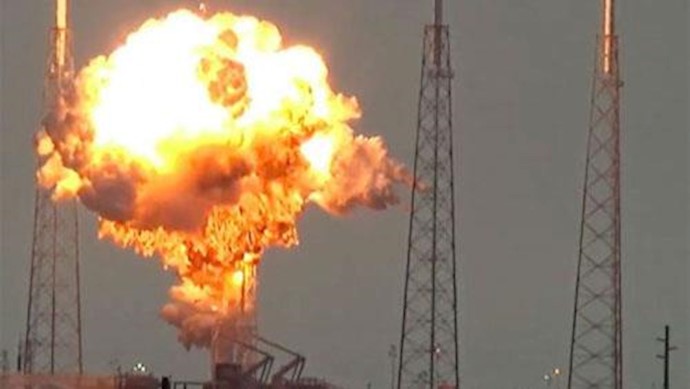
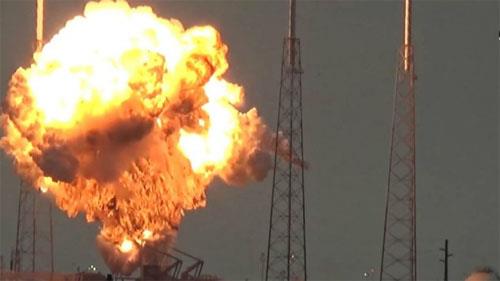
Cape Canaveral Florida. September 2, 2016 An explosion that destroyed a Space Exploration Technologies Corp. rocket and a satellite on the ground Thursday casts a pall over the pioneering space-transportation company run by entrepreneur Elon Musk.
In addition to worsening a backlog of delayed commercial launches, the explosion of the unmanned rocket and its aftermath are likely to complicate the company’s pursuit of additional manned and unmanned government contracts. It could take several months to determine the accident’s cause and take remedial action, according to industry officials.
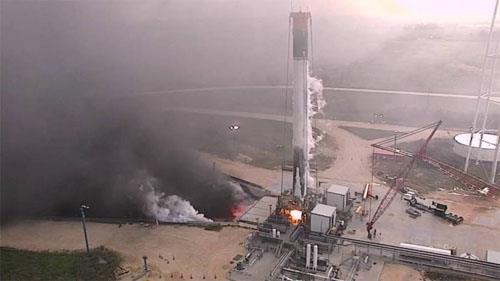
SpaceX Rocket Explosion Destroys Facebook Satellite
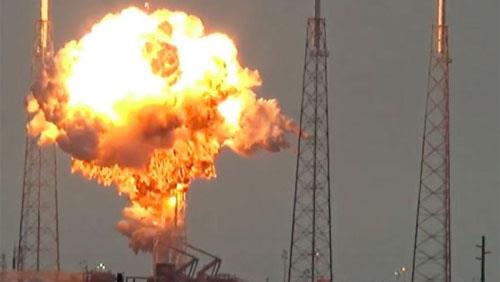
The incident occurred during preparations for a routine test firing about 9 a.m. at Cape Canaveral Air Force Station in Florida. Information was sketchy, but eyewitness accounts described a series of explosions that could be felt miles away and a plume of thick smoke.
A SpaceX spokesman said there “was an anomaly on the pad resulting in the loss of the vehicle and its payload. Per standard procedure, the pad was clear and there were no injuries.” Company spokesmen were still gathering details of what happened and didn’t elaborate.
Satellite was part of effort to provide internet access to people in sub-Saharan Africa
The destroyed Falcon 9 rocket had been slated to send Israel’s Space-Communications Ltd.’s Amos-6 satellite into orbit this weekend. It was part of an effort to provide internet access to people throughout large parts of sub-Saharan Africa by Facebook Inc. in collaboration with French satellite operator Eutelsat Communications SA.
“I’m deeply disappointed to hear that SpaceX’s launch failure destroyed our satellite,” Facebook Chief Executive Mark Zuckerberg said in a post while traveling in Africa.
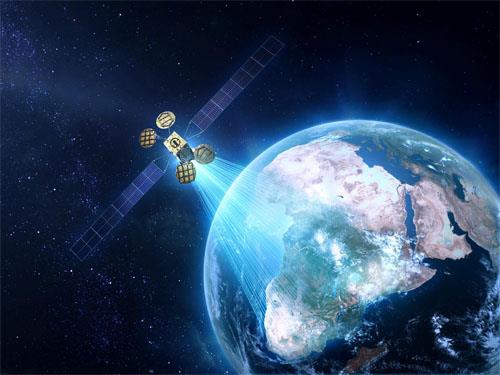
A major explosion during a SpaceX prelaunch test Thursday destroyed Facebook’s first satellite
Eric Stallmer, president of the trade association representing SpaceX and other participants in the budding commercial space industry, predicted that “very shortly, SpaceX will have a fairly precise idea of what happened, and they will move forward rapidly to address the problem.”
In his own tweet, Mr. Musk said the mishap at Launch Complex 40, adjacent to NASA’s Kennedy Space Center, occurred “during propellant fill operation,” and “originated around upper stage oxygen tank.” He added the cause was “still unknown.”
Despite the dramatic setback, the Falcon 9 has an admirable safety record with more than two dozen successful blastoffs, a single launch failure and one premature main-stage engine shutdown four years ago that stranded a prototype commercial spacecraft in the wrong orbit.
Over the past few decades globally, newly designed rockets malfunctioned on average once during their three first launches. SpaceX managed to avoid those odds partly because it developed highly automated launch sequences that detect problems before they can cause significant trouble.
But Thursday’s accident marks the second catastrophic failure of a Falcon 9 in 15 months, posing challenges for SpaceX and its management team just as they were maneuvering to strengthen the company’s position as the leading private launch provider.
SpaceX relies on the same version of its 15-story booster to send cargo to the international space station and plans to use it to transport National Aeronautics and Space Administration astronauts there within a year or two.
A SpaceX rocket exploded at a launch site in Cape Canaveral, Fla., on Thursday, destroying a satellite the company planned to launch into orbit on Saturday.
If the investigations find problems with the rocket’s fueling procedures, that could raise questions about the safety and dependability of SpaceX’s plans to start launching manned capsules for NASA.
Even before Thursday’s events, some industry critics and competitors had questioned the company’s apparent plans to have astronauts already seated in their Dragon capsule on top of the Falcon 9 while supercooled fuel is pumped into the rocket, an unusual prelaunch sequence. SpaceX has declined to comment on its plans.
In recent weeks, some NASA officials had privately grumbled that the company wasn’t spending enough effort and resources to quickly develop its manned space capsule, according to industry officials.
A June 2015 launch failure destroyed another unmanned Falcon 9 shortly after it lifted off the pad, along with a load of supplies headed for the orbiting international laboratory. The cause of the 2015 accident was found to lie with a faulty structural part, known as a strut. But it also raised some doubts inside NASA about the company’s overall engineering and testing safeguards. SpaceX management said it revamped quality-control procedures and reassessed basic safety assumptions.
Thursday’s blow comes as SpaceX, after more than a decade of being dismissed or kept out of launch competitions by U.S. Defense Department brass, was looking forward to finally vying for numerous national-security launches.
The Air Force is expected to conduct its own review, with a particular focus on the chain of events that ended with destruction of the satellite.
Senior Pentagon acquisition officials and Air Force brass have long worried about SpaceX’s safety and reliability. The military balked at certifying the Falcon 9 to carry national-security payloads until the booster demonstrated at least three consecutive successful launches.
The Amos-6 satellite, Israel’s largest ever, and the SpaceX Falcon 9 rocket
SpaceX has pushed hard to be able to compete for Pentagon launches across the board, even filing suit against the Air Force two years ago to protest being shut out of such business. The litigation was dropped after Pentagon officials pledged to open up competition for future launch contracts.
SpaceX suffered a series of launch failures with a much smaller and different rocket, called the Falcon 1, shortly after it was founded more than a decade ago. But once the Falcon 9 became the company’s workhorse booster, SpaceX engineers developed a reputation for their ability to analyze and react quickly to technical problems that cropped up.
Recent launch countdowns have played out like clockwork, without any technical glitches prompting temporary holds.
Until this year, the company had never launched successfully more than six times in a calendar year. This weekend’s launch would have been the ninth mission in 2016, including the last successful Falcon 9 voyage to send cargo to the international space station in mid-July.
Company officials had projected that a dozen or more launches were likely this year, with the interval between some only about two weeks. Depending on what investigators uncover, those ambitious goals may end up shredded.
—Doug Cameron, Robert Wall and Sarah E. Needleman contributed to this article.