


SEOUL (Reuters) DEC. 4, 2017 — South Korea and the United States launched large-scale joint aerial drills on Monday, officials said, a week after North Korea said it had tested its most advanced missile as part of a weapons programme that has raised global tensions.
The annual U.S.-South Korean drill, called Vigilant Ace, will run until Friday, with six F-22 Raptor stealth fighters to be deployed among the more than 230 aircraft taking part. The exercises have been condemned as a provocation by the isolated North.
F-35 fighters will also join the drill, which will also include the largest number of 5th generation fighters to take part, according to a South Korea-based U.S. Air Force spokesman.
Around 12,000 U.S. service members, including from the Marines and Navy, will join South Korean troops. Aircraft taking part will be flown from eight U.S. and South Korean military installations.
South Korean media reports said B-1B Lancer bombers could join the exercise this week. The U.S. Air Force spokesman could not confirm the reports.
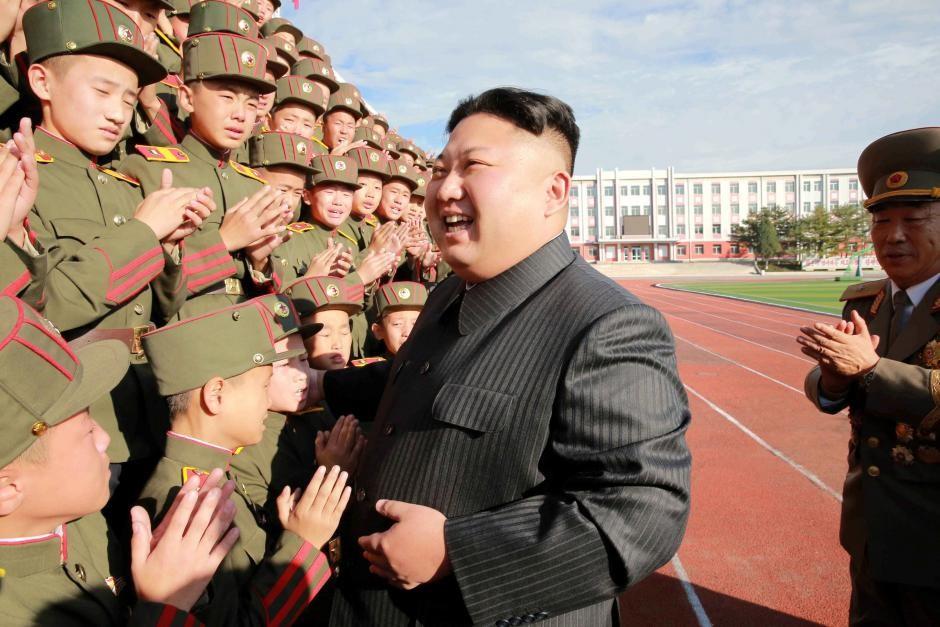
North Korea’s leader Kim Jong Un visits the Mangyongdae Revolutionary Academy on its 70th anniversary, in this undated photo released by North Korea’s Korean Central News Agency (KCNA) in Pyongyang October 13, 2017
The joint exercise is designed to enhance readiness and operational capability and to ensure peace and security on the Korean peninsula, the U.S. military had said before the drills began.
The drills come a week after North Korea said it had tested its most advanced intercontinental ballistic missile ever in defiance of international sanctions and condemnation.
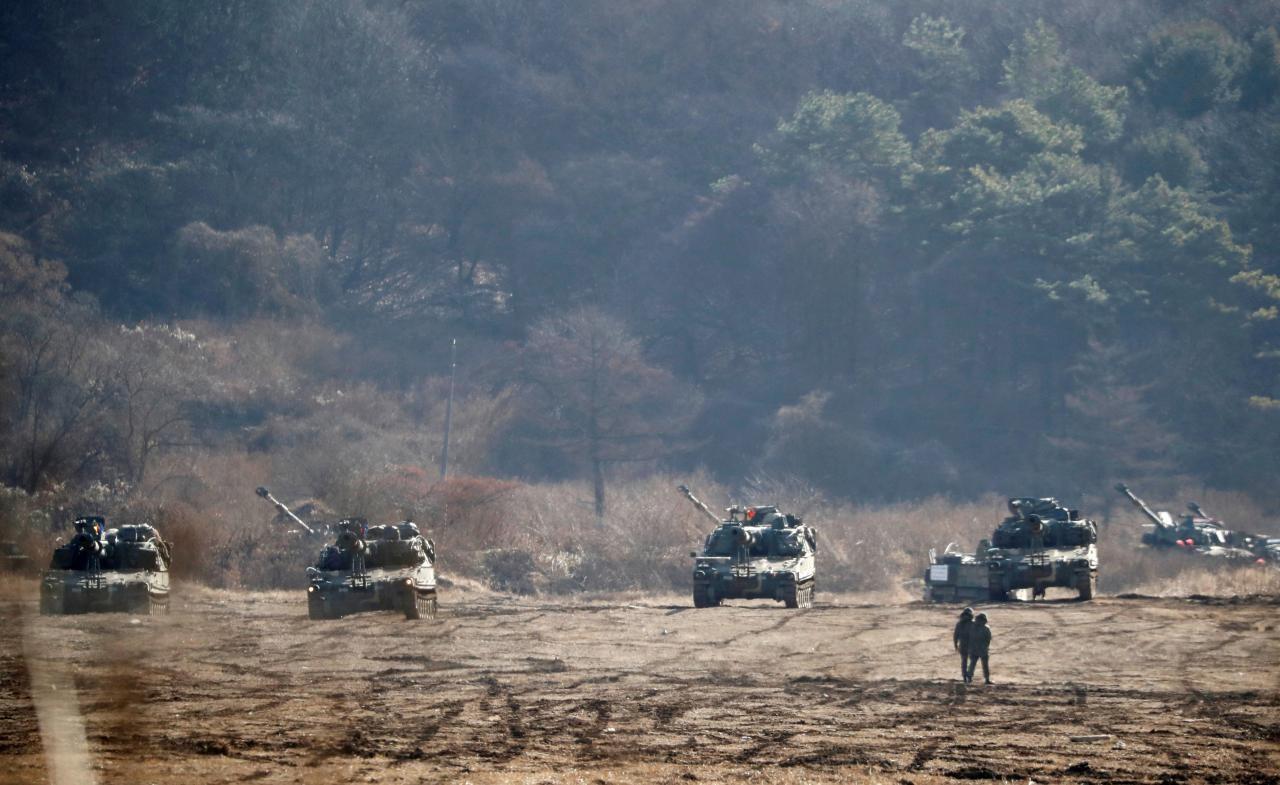
The South Korean army’s K-55 self-propelled artillery vehicles take part in a military exercise near the demilitarised zone separating the two Koreas in Paju, South Korea, November 29, 2017.
The joint exercise is designed to enhance readiness and operational capability and to ensure peace and security on the Korean peninsula, the U.S. military had said before the drills began.
The drills come a week after North Korea said it had tested its most advanced intercontinental ballistic missile ever in defiance of international sanctions and condemnation.
The North’s KCNA state news agency, citing a foreign ministry spokesman, also said on Saturday the Trump administration was “begging for nuclear war by staging an extremely dangerous nuclear gamble on the Korean peninsula”.
North Korea regularly uses its state media to threaten the United States and its allies.