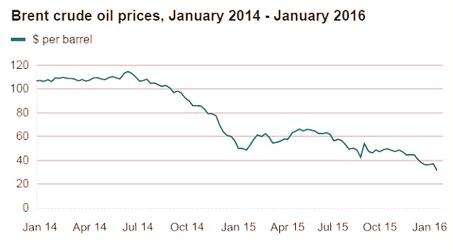
Global share markets tumbled as the prospect of an end to the Iranian oil export ban sent oil below $30 a barrel for the second time this week, according to The BBC.
London shares fell 2.2% to 5788.2, while France’s Cac 40 fell 2.4% and Germany’s Dax was 2.5% lower.
Wall Street opened down sharply, with the Dow Jones index sinking 2.33% to 15,997.94 points.
It came as concern grew that Iran could restart oil exports, flooding an already over-supplied market.
The oil benchmark Brent crude fell 4.7% to $29.43.
US West Texas intermediate oil fell 5% to $29.51.
Shares in mining firm Anglo American were the worst hit, falling by more than 11%. Glencore was down 7%, and BHP Billiton and Antofagasta lost 6%.
Rangold Resources rose by 5%. Gold prices tend to do well in times of investment uncertainty. The gold price held steady with a gain of 0.5% at $1093.75 an ounce.
“With sanctions on Iran likely to be lifted, more oil is flooding the markets,” Commerzbank analysts wrote in a note.
“Although the additional supply had been imminent for some time, current sentiment ought to send prices further south.”
Commerzbank cut its 2016 forecast for oil prices, changing its year-end expectation for Brent to $50 per barrel, down from a previous forecast of $63.
Iran’s oil exports were already on target to hit a nine-month high in January, with 1.10 million barrels a day of crude, to load.

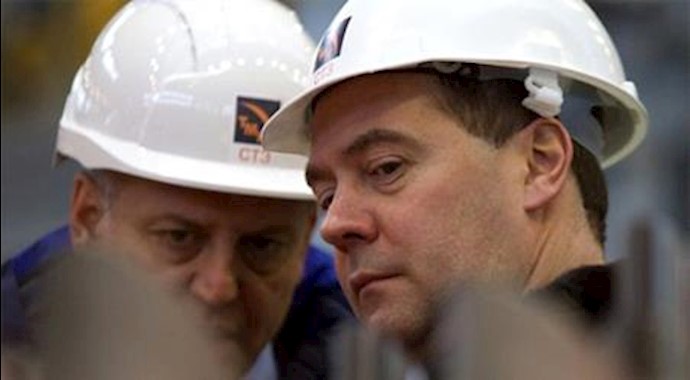
Russian Prime Minister Dmitry Medvedev on a visit to a factory that makes steel pipes for the oil and gas industry in the Urals
The continuing collapse in oil prices has also added to pressure on oil producing nations that rely on exports including Algeria, Venezuela, Nigeria and Russia.
Earlier this week, Russian Prime Minister Dmitry Medvedev warned tumbling oil prices could force his country to revise its 2016 budget.
He said that the country must be prepared for a “worst-case” economic scenario if the price continued to fall.
Taxes from oil and gas generates about half the Russian government’s revenue.
The 2016 federal budget that was approved in October was based on an oil price of $50 a barrel in 2016 – a figure President Vladimir Putin has since described as “unrealistic”.