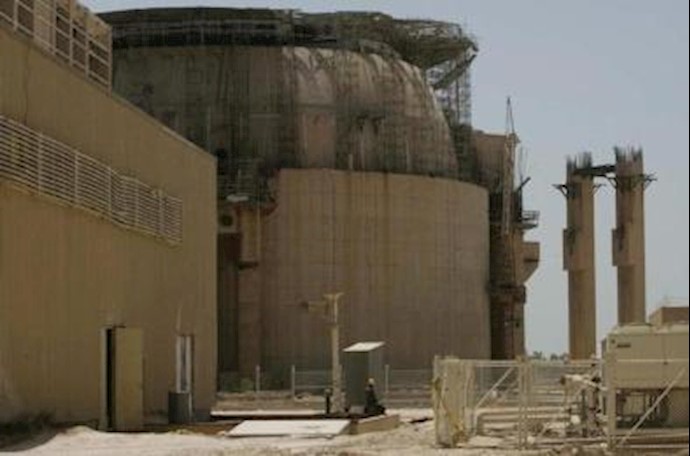
Al Jazeera, 12 Sep 2012- After days of diplomacy, Russia and China have agreed to support a US-backed resolution demanding that Iran stop activities that could be used to make nuclear arms.
Diplomats said on Wednesday the agreement sent a unified message to Iran, but also convinced Israel that diplomacy was a real alternative to military force in preventing a nuclear confrontation.
The resolution cannot be enforced by the 35-nation board of the International Atomic Energy Agency (IAEA), even if approved by vote or consensus as expected on Thursday. But with Israel threatening war against Iran, the agreement is a significant progress after months of diplomatic deadlock.
Israel views a nuclear-armed Iran as a strategic threat, citing Iran’s persistent calls for the destruction of the Jewish state, its development of missiles capable of striking Israel, and Iranian support for Arab armed groups.
Iran’s stand
Iran insists its nuclear programme is for peaceful purposes only.
But it refuses foreign offers of reactor fuel if it stops making its own through uranium enrichment – a process that worries the international community because it could also be used to arm nuclear warheads.
Concerns also focus on nuclear watchdog’s suspicions that Iran has worked secretly on nuclear arms – allegations Iran dismisses as based on fabricated US and Israeli intelligence.
The new resolution singles out Iran’s defiance of UN Security Council resolutions to suspend uranium enrichment, its refusal to allow IAEA inspectors into the Parchin military base and the suspected removal of evidence of nuclear weapons research.
According to a draft seen by AFP, it stresses “once again its serious concern that Iran continues to defy the requirements and obligations contained in the relevant IAEA Board of Governors and UN Security Council Resolutions”.
It is significant that Western nations were able to get Moscow and Beijing on board as they are traditionally more lenient on Tehran, with China a major buyer of Iranian oil and Russia having close commercial ties with Iran.
The draft resolution comes as the European Union is considering imposing more sanctions on the Islamic republic.
The timing is also important since it follows weeks of growing speculation that Israel may bomb the Gulf country’s atomic facilities, said Mark Hibbs, analyst at the Carnegie Endowment for International Peace.
The resolution “reflects the desire of member states to underscore that diplomacy is paramount and it warns Israel in two separate paragraphs that the diplomatic process should be supported,” Hibbs told AFP.
Israeli frustration
Israeli frustration has grown at what it sees as a failure by the international community to take seriously the threat posed by Iran or to stop it inching closer to “break-out capacity.”
In particular, Benjamin Netanyahu, the Israeli Primae Minister, has been pressing US President Barack Obama to identify “red lines” for when it would take action.
“The world tells Israel: Wait, there’s still time. And I say: wait for what? Wait until when?” Netanyahu said on Tuesday in comments clearly aimed at the White House.
Obama, running for re-election in November and keen to avoid being depicted as soft on Iran by Republican challenger Mitt Romney, spoke to Netanyahu for an hour by phone in the early hours of Wednesday.
The IAEA’s latest report on August 30 said Iran had doubled since May the capacity at the underground Fordo site by installing about 1,000 new centrifuges, although the number of machines operational was unchanged.
Enriched uranium can be used for nuclear power generation or medical purposes but also, when highly purified, in the fissile core of an atomic bomb.
Intense fighting rages in Syrian cities
Deadly clashes in Idlib and Aleppo signal no let-up in the violence driving waves of refugees into neighbouring nations.
Last Modified: 12 Sep 2012 15:35
Syrian rebels have killed at least 18 soldiers in the northwestern town of Saraqeb, in Idlib province, by setting off a car bomb outside a military position and then attacked it, according to a watchdog group.
Rami Abdul Rahman, head of the UK-based rights group Syrian Observatory for Human Rights (SOHR), said on Wednesday the details of the incident were still sketchy, and that he could not say whether the car bombing was a suicide attack.
“There were 70 to 100 soldiers there when the attack occurred” in Saraqeb, he said.
“Twenty soldiers escaped, and clashes are still going on.”
Outside Aleppo, Syria’s second city, fighting erupted at dawn in the Nayrab area, around 5km from the airport,which remained fully operational.
Over the past several weeks, rebels have taken to attacking military airfields in an attempt to prevent them from being used for launching air raids while commercial facilities have been left alone.
However, this is not the first time there has been fighting around Aleppo airport, which serves the country’s commercial capital, where the army shelled a string of neighbourhoods.
Elsewhere, a boy and a girl were killed and dozens of civilians wounded when the army shelled the rebel village of Latamneh in Hama province, according to the SOHR, which gathers its information from a wide network of activists.
Also in Hama, the SOHR reported that eight bodies had been found in farmlands in Halfaya village, following an assault by government forces. It said the number of dead was expected to rise as many people were reported missing.
Deepening crisis
Against this backdrop of continued violence in Syria, Philip Hammond, UK defence secretary, said in the Qatari capital Doha on Wednesday that Western countries are not considering military intervention in Syria while Russia and China oppose such action.
“So long as two major powers are actively opposed to any intervention in Syria, that is a major impediment to Western nations contemplating such action,” he said in a clear reference to Russia and China.
Both powers have repeatedly opposed UN action against Damascus.
Meanwhile, Lakhdar Brahimi, international peace envoy, was in Cairo on Wednesday to meet exiled opposition leaders in advance of a planned visit to Damascus.
Ban Ki-moon, the UN chief, said Brahimi would meet Syrian President Bashar al-Assad in the Syrian capital on Thursday and insisted that “the violence must stop by both sides”.
He said in Bern that he understood the frustration felt by many in the face of the UN Security Council’s apparent paralysis in dealing with the spiralling crisis.
But “while we may be frustrated and troubled by not being able to address the situation in Syria, which has reached intolerable circumstances”, he said, “we should not be overly pessimistic about the strength and the commitment of the international community, especially the international organisations”.
Humanitarian crisis
Coupled with the violence is the humanitarian crisis caused by the large number of people fleeing the country or displaced within its borders.
The UN refugee agency says the number of civilians who have fled nearly 18 months of violence has reached more than 250,000. And it says more than 1.2 million civilians, more than half of them children, have been displaced inside Syria.
Angelina Jolie, Hollywood film star and UN special envoy, will travel to Turkey on Thursday to visit Syrian refugee camps near the border.
Jolie visited Syrian refugees in Lebanon on Wednesday as well as a refugee camp in Jordan on Tuesday, where she appealed to the world to “do everything they can to support these refugees” fleeing the escalating unrest.