Witnesses say NJ Transit train ‘plowed’ through Hoboken terminal during morning rush hour, killing one person and injuring 108 others
New Jersey, U.S. – The Guardian – Sept. 29, 2016-A train crash in Hoboken, New Jersey, has left at least one person dead and more than 100 people injured, officials said.
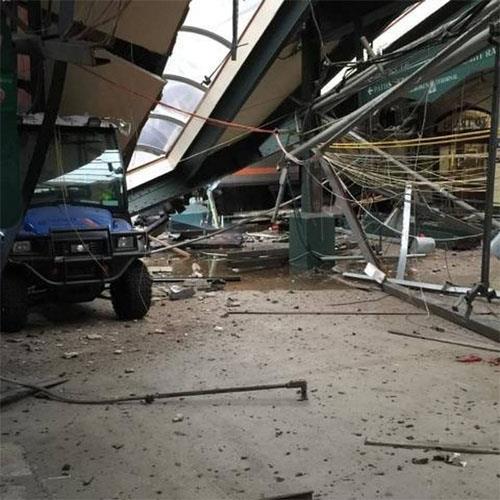
N.J. A commuter train has crashed into the rail station during the morning rush hour, causing serious damage. Julio Cortez AP. This Thursday, Sept.
A New Jersey Transit train derailed during rush hour on Thursday morning and crashed into Hoboken terminal, one of the busiest in the state, and a huge commuter hub for those traveling to and from New York City.
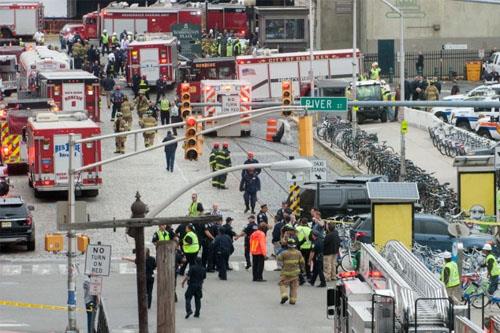
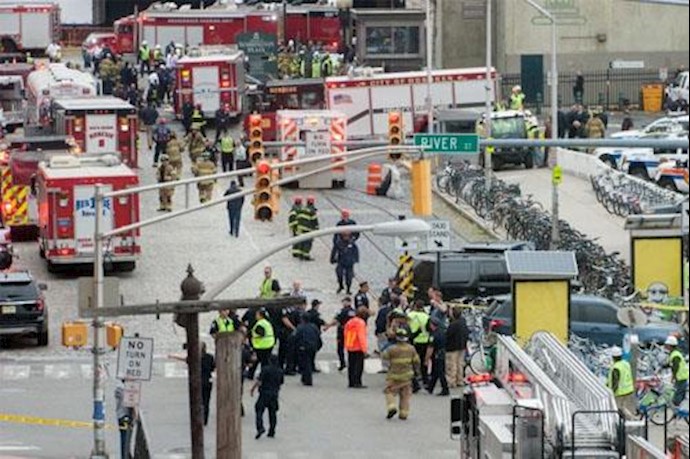
Emergency personnel work outside the rail station after a train crash in Hoboken, N.J
New Jersey governor Chris Christie did not identify the victim.
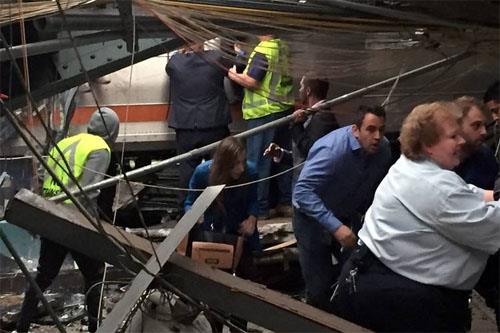
Michael Larson, a New Jersey Transit employee, said people were kicking out windows to try and escape the wreckage.
rush hour Thursday morning, a spokeswoman for NJ Transit said
He said he saw the train come into the station at a high speed, hop over the bumper block, and travel 40 feet before hitting the waiting room and coming to a rest.
“I couldn’t believe what I was seeing,” Larson told CBS. “It was initially, just a horrendous, horrendous exploding noise. Concrete dust, electrical wires and the train flying into the depot.”
Christie confirmed 108 people had been injured on the train, which was carrying 250 passengers..
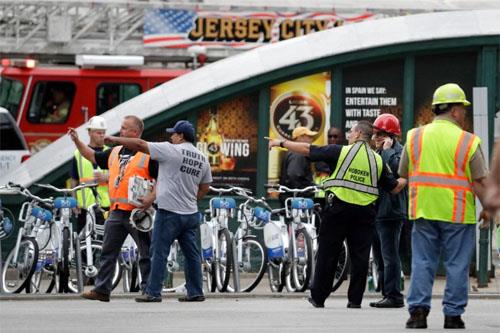
mergency officials stand outside of the Hoboken Terminal following a train crash, Thursday, Sept
Injured passengers have been transferred to both the Hoboken University medical center and Jersey medical center by New Jersey Transit buses, officials said. Each hospital had around 40 “walking” patients, with roughly 10 in emergency care in Hoboken, and eight in Jersey City.
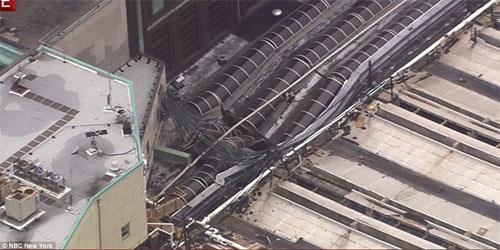
An aerial image of the terminal shows the devastating structural damage on the roof
“We’re all hands are on deck, all our surgeons, our specialty surgeons as well as our critical care nurses,” a spokesperson for the Hoboken University Medical Center said.
Hoboken train crash site
Near the station, first responders continuously pushed media further back down the Observer Highway, away from the station.
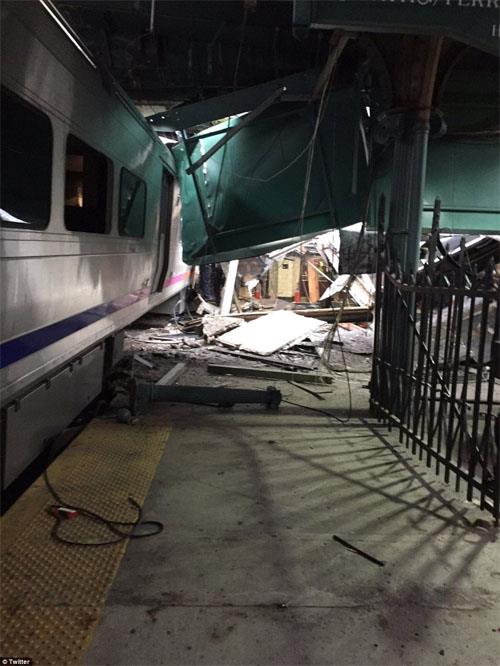
A green beam was brought down by the NJ Transit train Thursday morning
The scenes remained chaotic at 11am, with a mix of dozens of emergency vehicles, sirens flashing and media attempting to film evidence of destruction outside the station.
Freight train conductor William Blaine, 53, said he felt “death was following” him after he saw the train crash.
He said he was just outside of view of the train in a nearby Dunkin’ Donuts when he heard a “kaboom” and “the whole place shook”. He ran to the track, he said, to try and help.
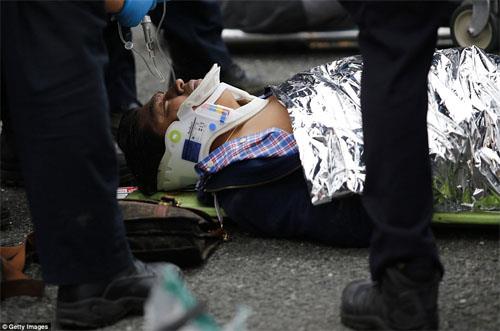
People are treated for their injuries outside after a NJ Transit train crashed in to the platform at Hoboken terminal. Photograph: Eduardo Munoz Alvarez/Getty Images
Blaine said the train came into Hoboken station fast – around 30mph. Typically, he said, a train would slow down as it pulled into the station at 30, then 20, 15, and then one or two miles per hour until it hits a bumper at the end of the platform.
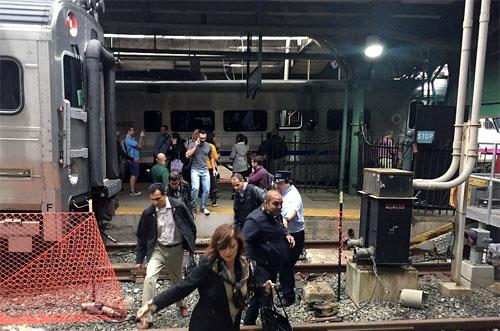
Blaine also said he stepped over the dead body of a woman, who may have been hit by falling iron and steel debris. Officials did not confirm this to the Guardian.
This marks the fourth train crash in the past three years in the Eastern Corridor, highlighting the dire state of infrastructure and safety technology on trains in the US.
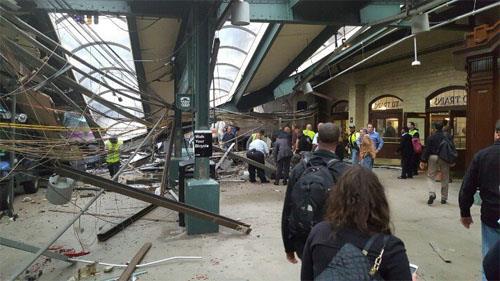
New Jersey Transit has consistently delayed installing safety technology that would prevent accidents by automatically slowing or stopping trains when they are going to fast, known as Positive train control. The federal government has consistently extended the deadline, which is now set to 2018, at the request of the railroads.
The most deadly was last year, when an Amtrak train derailed after going too fast around a curve. The crash left eight people dead and more than 200 injured. Federal investigators the National Transportation Safety Board (NTSB) ruled that it could have been prevented by PTC.
NTSB reached the same conclusion on a 2013 accident in New York, which left four people dead and 61 injured, New York’s deadliest train crash in more than two decades.
Federal and local investigators, from the Port Authority of New York and New Jersey, NTSB, and Federal Railroad Administration were on the way to the scene to investigate causes of the Thursday’s crash and extent of the damage.
Speaking from Washington DC, NTSB vice-chairman, Bella Dinh-Zarr, said the agency will be assessing the role that PTC could have played in the system.
“We are ready to hit the ground running,” Dinh-Zarr said.
Christie told CNN there was nothing to indicate the crash was anything more than an accident.
Witness have said that the driver of the train was passed out at the front of the first car when the train came into the platform. It remains unclear if the train was equipped with an “alerter” system, which sounds an alarm if the engineer is inactive for 25 seconds, and initiates brakes after a further 15 seconds.
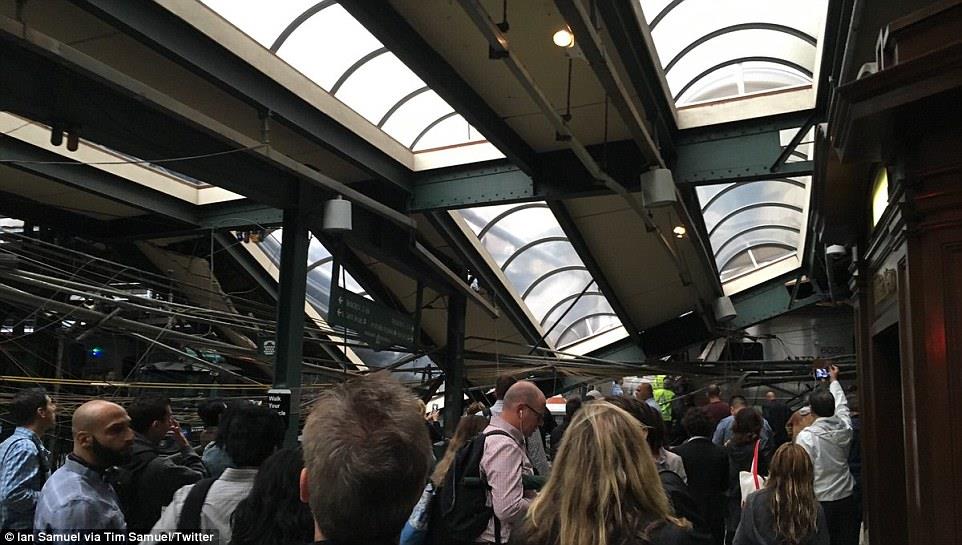
The crash left the terminal severely damaged with steel infrastructure exposed and hanging from the ceiling.
New Jersey Transit trains are not running into Hoboken and several roads leading to Hoboken were closed by police.
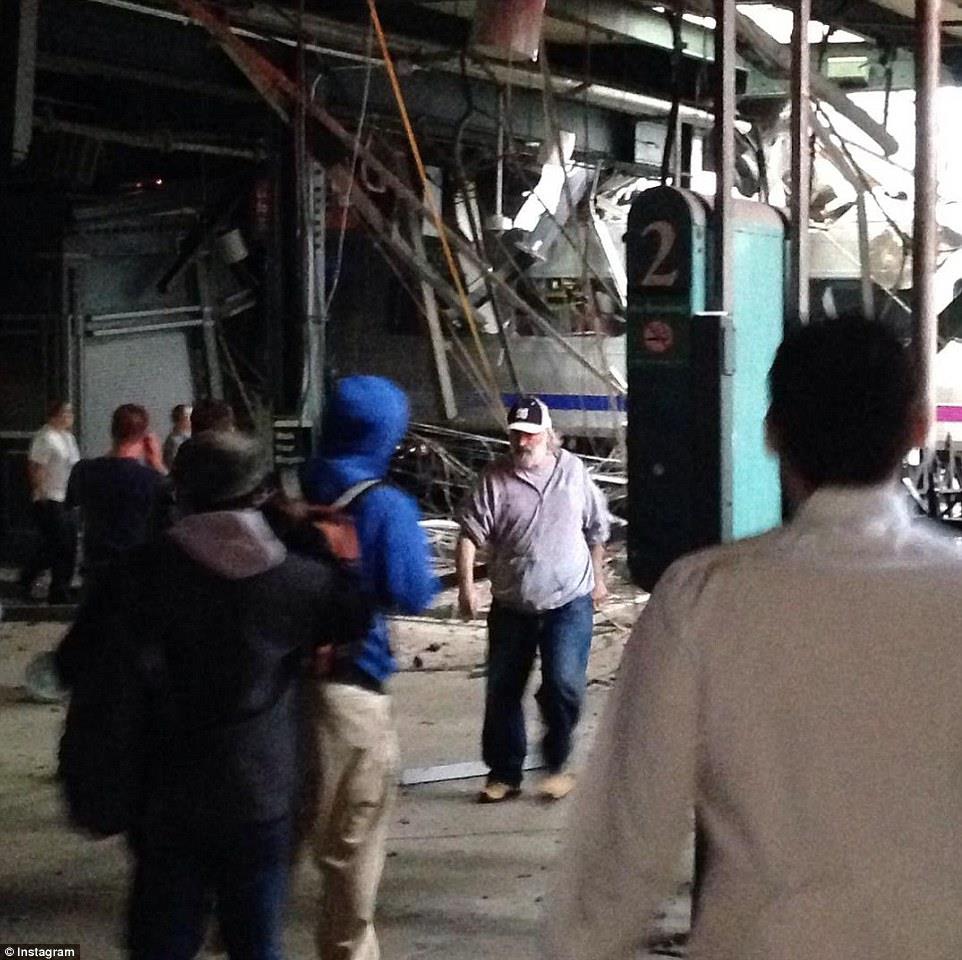
The train terminal is more than 100 years old, and repairs will likely be protracted. Given that Hoboken is major transit hub through which all major train, bus and ferry traffic that connects the states of New Jersey and New York runs, it could have a devastating impact on the region
New York Governor Andrew Cuomo cancelled a trip to Israel for Shimon Peres’ funeral because of the crash.
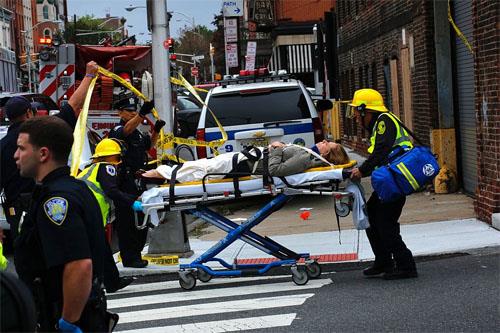
An injured woman is evacuated at New Jersey Transit’s rail station in Hoboken, New Jersey
Hoboken, which is NJ Transit’s fifth-busiest station with 15,000 boardings per weekday, is the final stop for several train lines and a transfer point for many commuters on their way to New York City.
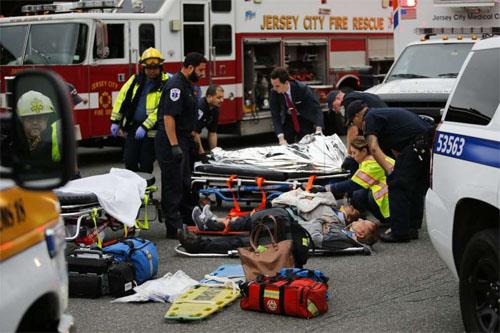
People are treated for their injuries outside after a NJ Transit train crashed
NJ Transit provides more than 200 million passenger trips annually on bus, rail and light rail lines. More than 100,000 people use NJ Transit trains to commute from New Jersey into New York City daily.