
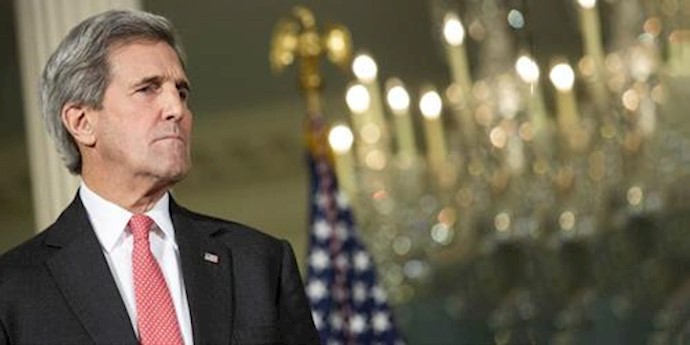
US Secretary of State John Kerry was due to meet in Paris on March 13 with the foreign ministers of France, Britain, Italy, and Germany – along with EU foreign policy chief Federica Mogherini.
A top item on the agenda is the UN-sponsored indirect peace talks due to begin in Geneva on March 14 between Syrian President Bashar al-Assad’s regime and representatives of Syrian opposition factions.
Those talks are aimed at capitalizing at a shaky truce between Syrian government forces and opposition fighters.
The negotiations are set to cover the formation of a new Syrian government, a fresh constitution, and the organization of UN-monitored presidential and parliamentary elections within 18 months.
The High Negotiations Committee, a Saudi-backed umbrella opposition group, said it will attend the Geneva talks and press for a transitional government with full executive powers that does not include Assad or any of his close associates.
Chief opposition negotiator Mohammad Alloush said in Geneva on March 12 that “the transitional period should start with the fall, or death, of Bashar al-Assad.”
Alloush said a transitional government “cannot start with the presence of the regime, or the head of this regime still in power.”
Syrian Foreign Minister Walid al-Moallem said Assad’s delegates would head to Geneva on March 13.
But Muallem said on March 12 that the oppoition’s calls for Assad’s ouster would be a “red line” and suggested that it would lead to the end of the indirect negotiations in Geneva.
Kerry’s visit to Paris follows his talks in Saudi Arabia with King Salman, Crown Prince Mohammed Bin Nayef , and senior Saudi ministers.
The Paris talks with Kerry and the European ministers on March 13 also were expected to focus on the migrant crisis facing Europe.
Sources: AP, Reuters, and AFP, 13 March 2016