

Oil prices pared gains on Wednesday as a bigger than expected gain in U.S. crude stocks tempered concerns about reduced production in Canada’s oil sands region due to a wildfire.
U.S. crude oil stockpiles rose more than expected to fresh record highs last week as imports ticked higher, while gasoline inventories posted a surprise build as refineries ramped up production, data from the Energy Information Administration showed on Wednesday.
Crude inventories rose 2.8 million barrels in the week to April 29 to 543.4 million barrels, building by about a million barrels more than analysts’ expectations.
Crude stocks on the East Coast and in the Midwest also reached their highest on record since at least 1990, according to the data.
Stocks at the Cushing, Oklahoma, delivery hub for U.S. crude futures rose 243,000 barrels.
Crude futures pared gains after the data was released.
U.S. crude traded at $44.13 a barrel, up 48 cents at 10:59 a.m. Eastern, after hitting a high of $44.88 earlier in the session.
Brent traded up 23 cents at $45.20 a barrel, after hitting a high of $46.01 earlier.
“If it was a bigger build, I think we’d come off a lot harder, but nothing has changed,” said Tariq Zahir, managing member at Tyche Capital in Laurel Hollow, New York.
U.S. crude imports rose last week by 110,000 barrels per day.
“The fluctuation in the imports is giving some volatility to the net crude oil number every week – that’s giving us variability,” said John Kilduff at Again Capital Management in New York. “The uptick in the refinery run-rate obviously helped with this gasoline build and the strength in diesel fuel looks to be correcting.”
Refinery crude runs rose 139,000 bpd as utilization rates rose by 1.6 percentage points to 89.7 percent of total capacity.
U.S. East Coast refinery utilization rose to the highest level seasonally last week since at least 2010, the EIA said.
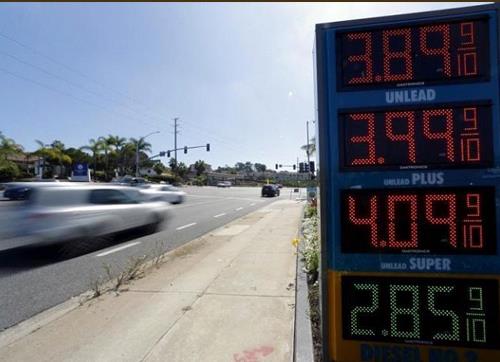
The current price of gasoline is shown on a gas station sign in Encinitas, California August 4, 2015.
Gasoline stocks rose 536,000 barrels, compared with analysts’ expectations a 144,000-barrel drop.
Distillate stockpiles, which include diesel and heating oil, fell 1.3 million barrels, versus expectations for a 83,000-barrel drop, the EIA data showed. U.S. East Coast stockpiles of distillate fuels reached their highest seasonally since 2010, according to the data.
“Oil prices could receive support from the wildfires in the Canadian oil province of Alberta,” said Carsten Fritsch, analyst at Commerzbank.
Brent crude has fallen more than 5 percent from Friday’s high in response to rising output from the Organization of the Petroleum Exporting Countries <OPEC/O>, signs of economic slowdown in the United States and Asia, and a stronger dollar.
“It would not come as any surprise if speculative financial investors were to take profits against this news backdrop,” Fritsch added.
Canada’s Suncor Energy (SU.TO), whose oil sands operations are closest to the city, said its main plant north of Fort McMurray, was safe, but it was reducing crude production in the region to allow employees and families to get to safety.
While total OPEC output rose in April, outages around the world have been supporting prices. The Canada disruption adds to supply losses in Nigeria and Iraq, concern about renewed losses in Libya and fears that Venezuela’s cash crunch could hit the OPEC member’s output.
Some believe the rally has further to go in 2016 as the supply glut eases.
“Investor optimism for oil has markedly improved,” said Nitesh Shah of ETF Securities. “We believe the gains in price are sustainable and not just driven by speculative gains.”
But inventories, particularly the latest from the EIA, suggest supply is more than ample for now.
Source: Reuters, 4 May 2016