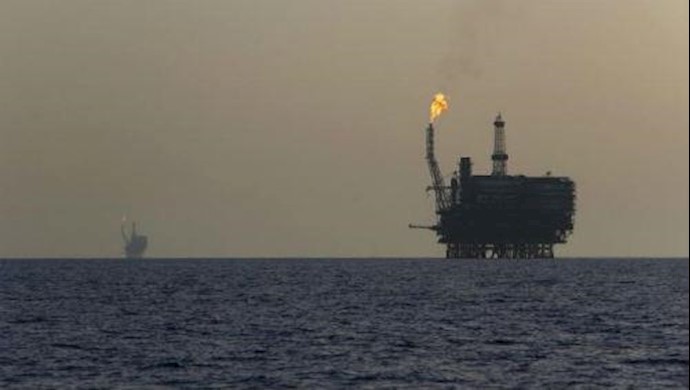
Crude futures fell on Wednesday as mounting concerns about Britain’s possible exit from the European Union and a surprise build in U.S. inventories left investors ignoring an IEA declaration that oil markets are now in balance.
U.S. crude fell to a three-week low of $47.55 as the contract dropped for a fifth day. It was trading down 52 cents at $47.97 a barrel at 0703 GMT.
Brent was also down for a fifth day to hit its lowest in around two weeks. The global benchmark was 52 cents lower at $49.29 a barrel.
Data from the American Petroleum Institute showed U.S. crude inventories rose by 1.2 million barrels in the week to June 10 to 536.7 million, compared with analyst expectations for a decrease of 2.3 million barrels. [API/S]
But the impending vote on the so-called Brexit is dominating everything from currency markets to German Bunds, yields of which fell below zero for the first time on Tuesday after polls showed the “Out” campaign gaining over “In”. [MKTS/GLOB]
“The broad picture at the moment is that oil is being swept up in a broad risk off move associated with Brexit primarily,” said Ric Spooner, chief market analyst at CMC Markets in Sydney.
The influential Sun newspaper, long a scourge of alleged European Union excess, also came out in support of Britain leaving the EU.
If Britain votes to exit the EU, investors fear the bloc could slip into a recession that would undermine oil demand.
The oil market is now in balance due to unplanned outages and robust demand, particularly from emerging economies, but this equilibrium will tip into surplus again early in 2017, the International Energy Agency (IEA) said on Tuesday.
But there is plenty of oil flowing into the market with Iran’s exports on track to hit the highest in almost 4-1/2 years in June, as shipments to Europe recover to near pre-sanctions level, a source with knowledge of the country’s crude lifting plans has told Reuters. Associated Press reported on Wednesday, June 15, 2016 that the price of oil is unlikely to rise much further after rallying almost 90 percent since January, as the global market shows signs of stabilizing, the International Energy Agency said Tuesday.
The Paris-based agency, which advises the world’s top oil consuming nations, nudged up its estimate for global oil demand this year in its monthly report. It noted, however, that supply and past inventories remain high.
“At halfway in 2016 the oil market looks to be balancing,” said the IEA in its monthly market report.
After touching a 13-year low in January, the international price of oil has rallied to trade above $50 a barrel in recent days and has struggled to advance any further. On Tuesday, the Brent benchmark for international oil was down 56 cents at $49.79 a barrel.
In its report, the IEA raised its forecast for world demand in 2016 to 96.1 million barrels a day, up 0.1 million barrels from its previous prediction. It expects demand to grow next year by 1.3 million barrels a day, the same as this year.
However, the IEA noted that large volumes of production remain affected by shutdowns. That’s true particularly in Nigeria, where regional militants have blown up pipelines, and Libya, which is struggling to emerge from conflict. When that oil starts returning to market, it would boost supply, weighing on prices.
Inventories are also high globally after three years of overproduction, the agency said. “This is likely to dampen prospects of a significant increase in oil prices,” its report concluded.
Source: Reuters, Associated Press 15 June 2016