
One of the arguments US President Barack Obama has made for his Iran deal is that “many of the same people who argued for the war in Iraq are now making the case against the Iran nuclear deal.” Essentially, Obama is asking us to contrast his judgment against (some) of his opponents, and endorse the position of the more sensible party, which the president clearly believes he is. It appears he has forgotten how Syrian dictator Assad crossed his “red lines”, and he has sat watching as many innocent civilians have perished.
The ad hominin attack by the president aside, I believe there is some merit in such an evaluation. Obviously, we should start our examination with the president, who is proposing this deal.
Obama has been in office for almost seven years. During this time, he has been involved in numerous Middle East focused foreign policy decisions. What do these examples demonstrate about his judgement?
In 2011, Obama chose to “lead from behind” the overthrow of Libyan dictator, Muammar Qaddafi.
There was, however, no planning by the administration for what would come next. A new government took power after elections, but never established control over the vast nation. Unfortunately, in their attempt to destabilize the Qaddafi regime, the Obama administration “secretly gave its blessing to arms shipments to Libyan rebels from Qatar” until “American officials later grew alarmed as evidence grew that Qatar was turning some of the weapons over to Islamic militants,” The New York Times reported. The new Libyan President begged Obama for security training assistance, but the U.S. “abandoned” him and Libya. In 2012, the American ambassador was sent to Benghazi, lacking adequate security protection, and was killed, along with three other Americans, by a Libyan militia. Weapons from Qaddafi’s arsenal spread across more than 12 countries, including Syria, the Sinai, and even Mali, where Islamists created a Sharia state until forced out by French forces. More recently, terror groups in Tunisia and Algeria have reportedly received arms and training from Libya sources to attack and kill Western civilians in their respective homelands.
In 2014, the Libyan civil war flared up again. Today, there are now three separate governments in Libya: one in Tripoli, led by the Muslim Brotherhood; one in Tobruk, the official government; and one in the city of Sirte, which has declared its allegiance to ISIS. There are also other areas of the country controlled by local warlords and other Islamist groups, including al-Qaeda. The entire country is in chaos. Over 4,000 Libyans have been killed. “Armed militias roam the streets. The electricity is frequently out of service, and most business is at a standstill; revenues from oil, the country’s greatest asset, have dwindled by more than ninety per cent…nearly a third of the country’s population has fled across the border to Tunisia.” An estimated 250,000 more Libyans have also sailed overseas to Europe, helping to create a major migrant crisis for Western Europe.
There are also hundreds of thousands of non-Libyan Africans who have joined the great migration.
Post-2011, these Africans have fled by the hundreds of thousands on boats to Western Europe. So far, during 2015, more than 250,000 migrants have risked their lives trying to cross the Mediterranean this year, and more than 2,000 migrants have drowned on the journey.
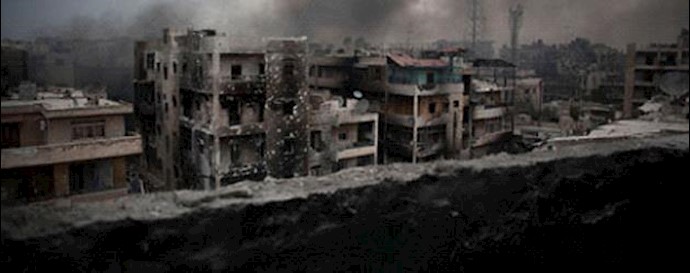
This Libya fiasco is not an isolated example of Obama’s foreign policy mis-judgement. In 2011, he chose to remove all the American troops from Iraq. He did this in contrary to the advice of the U.S. Joint Chiefs of Staff, and Secretary of Defense Leon Panetta. This decision led to the creation of the ISIS, which has in turn led to a vicious civil war, genocides, slavery, the murder of Iraqi and Syrian gays, the execution of American journalists, and new ISIS terror threats to the American homeland. In 2012, President Obama set his “red line” in Syria, and then, after it was violated, he caved, allowing the Syrian dictator Assad to remain in power and continue to use chemical weapons. Now, ISIS is also using its own chemical weapons, which may have been seized from Assad’s forces.
These decisions are all part of Obama’s track record on the Middle East. Those members of Congress and the Senate who endorsed his nuclear deal with Iran are putting their trust in both the deceptive and deadly Iranian radicals in Tehran, and in Obama’s “good” judgment. I don’t believe – in either case – this is a prudent decision.
Adam Turner serves as general counsel to the Endowment for Middle East Truth. He is a former counsel to the Senate Judiciary Committee, where he focused on national security law.
Obama’s Middle East policy described as trainwreck
RELATED ARTICLES