

The U.N. Security Council votes to impose sanctions against Iran over its weapons development program June 9
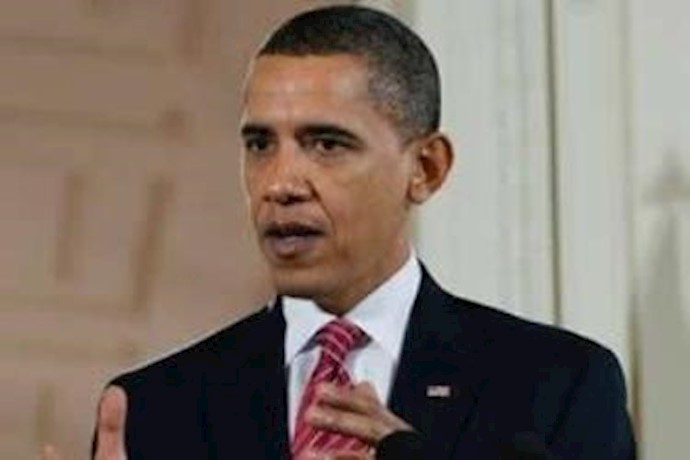
america.gov, Washington, 25June 2010 – President Obama welcomed new penalties approved by the U.S. Congress that strengthen sanctions against Iran over its nuclear weapons development program.
“We appreciate that House and Senate leaders have come together with a strong bill that builds upon the recently passed U.N. Security Council Resolution, grants the president new authority, and strengthens a multilateral strategy to isolate and pressure Iran,” White House press secretary Robert Gibbs said in a prepared statement June 21 after a U.S. Senate and House of Representatives joint conference committee reached final agreement.
The final measure passed the U.S. Senate without objection and passed in the U.S. House of Representatives by a vote of 408–8 on June 24.
Secretary of State Hillary Rodham Clinton said June 25 that the measure, approved overwhelmingly by Congress, shows that Iran’s nuclear weapons policies reduce its standing and further isolates it in the international community. At issue is the Iranian regime’s refusal to comply with international demands through the United Nations and the International Atomic Energy Agency to abandon its nuclear weapons program. Iran has also rejected diplomatic efforts from six nations — China, France, Germany, Russia, the United Kingdom and the United States — that offered alternatives for the regime and still would have provided the country with enriched nuclear fuel for a medical reactor in Tehran.
On June 9, the U.N. Security Council voted 12–2, with one nation abstaining, to impose a fourth set of sanctions (UNSC Resolution 1929) against Iran. The resolution prohibits member nations from selling or transporting heavy weaponry to Iran, including battle tanks, armored combat vehicles, large-caliber artillery systems, combat aircraft, attack helicopters, warships, missiles or missile systems. Among other measures in the resolution, the assets of more than 41 additional Iranian companies have been frozen, including 15 that are controlled by the country’s Islamic Revolutionary Guard Corps.
On June 16, the United States announced expanded financial measures to block U.S. transactions with listed businesses, banks and maritime companies, and a freeze on any assets of the listed entities held in U.S. jurisdiction, with a specific emphasis on Iran’s Islamic Revolutionary Guard Corps.
“These new measures, along with action by the European Union and Australia, build on United Nations Security Council Resolution 1929 and underscore the resolve of the international community to prevent Iran from developing nuclear weapons and to hold it accountable for its international obligations,” Clinton said in a prepared statement. “In addition to increasing pressure on Iran’s illicit nuclear activities, this legislation also addressed the Iranian government’s continued violation of the fundamental rights of its citizens.”
KEY PROVISIONS
• The legislation approved by Congress requires U.S. banks to prohibit or impose strict conditions on “correspondent” or payable through accounts of any foreign banks working with certain Iranian entities, especially Iran’s Islamic Revolutionary Guard Corps.
• Penalties would be imposed on U.S. banks if their foreign subsidiaries are doing business with the Revolutionary Guard Corps or any of its companies or affiliates.
• The legislation sanctions any company worldwide that exports gasoline or other refined petroleum products to Iran, or that provides Iran with goods or services that help it expand its own production of petroleum products. And any companies that finance, broker or underwrite the shipments, or deliver the gasoline or sell the production technology, also would be subject to U.S. sanctions.
• The legislation gives the president a number of choices of possible sanctions to impose that include restrictions on foreign exchange, banking transactions and property transactions.
• It also grants the president authority to waive sanctions on a company for 12 months on a case-by-case basis.
• The legislation also requires the president to compile a public list of individuals in Iran who are complicit in human rights violations — and would ban them from receiving U.S. visas and would freeze their financial assets held in U.S. banks.
• Any company that provides Iran with technology or equipment that would restrict free speech could not receive U.S. government contracts.
• Finally, the legislation imposes export controls to stop the illegal export of sensitive technology to Iran through other countries and would allow the president to impose severe export restrictions to countries that will not cooperate.