
U.S. President Barack Obama urged Russia on Sunday to stop bombing “moderate” rebels in Syria in support of its ally Bashar al-Assad, a campaign seen in the West as a major obstacle to latest efforts to end the war.
Major Powers agreed on Friday to a limited cessation of hostilities in Syria but the deal does not take effect until the end of this week and was not signed by any warring parties – the Damascus government and numerous rebel factions fighting it.
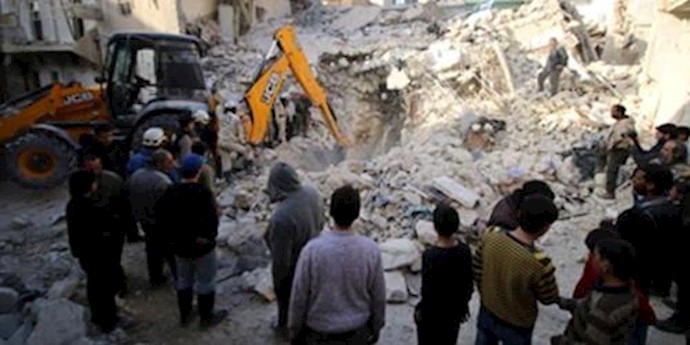
Russian bombing raids directed at rebel groups are meanwhile helping the Syrian army to achieve what could be its biggest victory of the war in the battle for Aleppo, the country’s largest city and commercial hub before the conflict.
The Kremlin said President Vladimir Putin and Obama had agreed to intensify cooperation to implement the agreement on Syria struck in Munich.
After a phone call between Putin and Obama, the Kremlin said both gave a “positive valuation” to the Munich meeting
Russia says the “cessation” does not apply to its air strikes
It says Islamic State and the al Qaeda-affiliated Nusra Front are the main targets of its air campaign. But Western countries say Russia has in fact been mostly targeting other insurgent groups, including some they support.
The White House said Obama’s discussion with Putin stressed the need to rush humanitarian aid to Syria and contain air strikes.
“In particular, President Obama emphasized the importance now of Russia playing a constructive role by ceasing its air campaign against moderate opposition forces in Syria,” the White House said in a statement.
Relief workers said efforts to deliver humanitarian aid were being threatened by the latest escalation of violence.
“We must ask again, why wait a week for this urgently needed cessation of hostilities?” said Dalia al-Awqati, Mercy Corps Director of Programs for North Syria.
U.S. Senator John McCain said he did not view the deal as a breakthrough. “Let’s be clear about what this agreement does. It allows Russia’s assault on Aleppo to continue for another week,” he said at security conference in Munich.
“Mr Putin is not interested in being our partner. He wants to shore up the Assad regime, he wants to establish Russia as a major power in the Middle East, he wants to use Syria as a live fire exercise for Russia’s modernizing military,” McCain said.
Norbert Roettgen, head of the foreign affairs committee in the German parliament, was skeptical about how Russia would behave in the days and weeks ahead, despite agreeing to a cessation of hostilities.
“Russia is determined to create facts on the ground,” Roettgen said.
“RECONCILIATION”
As the fighting continued, the Syrian army urged citizens in Deraa province, the Ghouta area east of Damascus, and in rural districts east of Aleppo to quickly seek out “reconciliation” with the government.
So-called local reconciliation agreements are often seen as a means for the government to force surrender on insurgents, and have typically followed lengthy blockades of rebel-held areas and the civilians living there.
Saudi Arabia confirmed it had sent aircraft to Turkey’s Incirlik air base to join the fight against Islamic State. But said any move to deploy Saudi Special Forces into Syria would depend on a decision by the U.S.-led coalition combating the ultra-radical militants.
U.S. Defense Secretary Ash Carter said on Friday he expected Saudi Arabia and the United Arab Emirates to send Special Forces to Syria to help local opposition fighters in their drive to retake the city of Raqqa, Islamic State’s de facto capital in Syria.