

President Barack Obama sought to manage expectations over a ceasefire due to take hold in Syria at the weekend as Damascus said it would be excluding an important rebel bastion from the truce.
“We are very cautious about raising expectations on this,” said Mr Obama, echoing comments made by his secretary of state, John Kerry, on Tuesday. “The situation on the ground is difficult.”
Under the terms of the US and Russian brokered deal, regime and rebel forces are required to cease hostilities at midnight on Saturday.
Russia’s defence ministry said on Wednesday that it had decreased the intensity of its air strikes in areas where local authorities and armed groups had “already submitted or are submitting declarations of willingness for a ceasefire and to begin talks on reconciliation.”
Sources on the ground suggested that Russian war planes were bombing at a diminished rate, but stressed that dozens of people were still dying everyday as a result of Moscow’s air strikes.
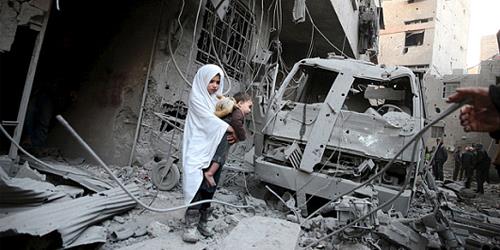
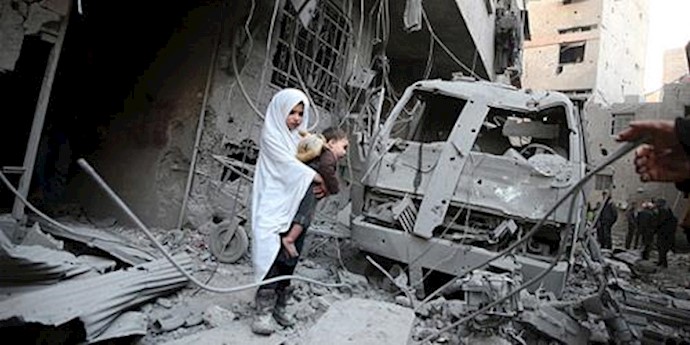
A girl carrying a toddler inspects damage, in a site hit by Russian airstrikes in Duma
“There are fewer attacks today but civilians are still dying,” said one Free Syrian Army commander in Idlib. “My men pulled a baby with no arms out of the rubble today.”
UN agencies are scaling up aid deliveries to besieged areas across Syria in an attempt to shore up the fragile prospects for peace. But confusion reigned on Wednesday night over the whereabouts of 21 tonnes of aid that had been over Deir Ezzor, an eastern city under Isil-blockade. While the UN’s most senior human rights official, Stephen O’Brian, initially said it had landed in the intended area, a spokesman later clarified that this may not have been the case.
“As you know, airdrops can be very challenging,” said Stephane Dujarric. “The pallets were dropped. They’re trying to reach local partners to ensure that the aid was received.”
Deir Ezzor, a largely government-held city of 200,000 people, links Isil’s de facto Syrian capital of Raqqa to territory it controls in neighbouring Iraq.
Residents say the regime is profiting from the siege by allowing merchants to sell goods at exorbitant prices and through extorting heavy bribes at city checkpoints. “If they’re not killing us with bombs, they’re pushing us to starvation,” said a refugee from Deir Ezzor, who gave his name as Ibrahim, now in Turkey after a 10-day escape from the city.
“The newspapers only talk about the governments in this war but it is us – the people – who are dying.”
Source: Telegraph, 24 Feb 2016