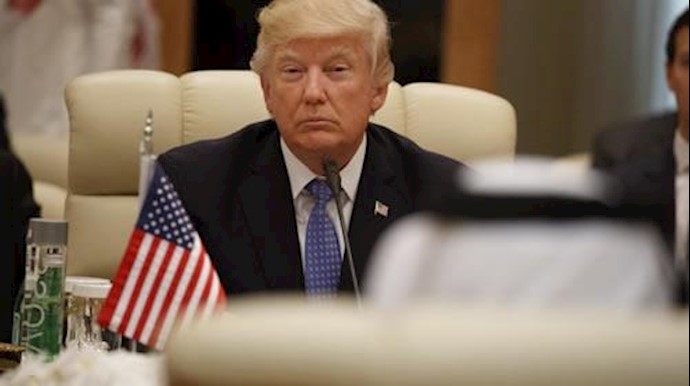
Alliance nears deal for new funding to fill military gaps
BRUSSELS, AP, May 21, 2017 —The North Atlantic Treaty Organization, under pressure from the administration of U.S. President Donald Trump, is planning a new spending initiative that will use the additional money to fill armament gaps, according to a draft of the proposal reviewed by The Wall Street Journal.
Officials said they expect the new program to be approved at a gathering of allied leaders here on Thursday that is to be attended by Mr. Trump—something that would mark progress on an important foreign-policy goal for the president as he contends with political controversies in Washington.
Under the plan, NATO’s members would be required to submit national blueprints detailing how they will meet alliance targets, which say each country should devote 2% of economic output to military spending.
In addition, they are to specify how the money will be used to fill existing gaps in weaponry identified by the alliance, such as shortages of warships, air-defense systems, and advanced tanks. The plans will also track commitments of troops to NATO missions.
During Mr. Trump’s election campaign, he criticized allies for not paying their fair share for defense. His administration has made increasing European military spending a central part of its agenda. Earlier this year, Defense Secretary Jim Mattis called on allies to adopt spending plans or risk unspecified changes in the American defense commitment to Europe.
The new NATO plan includes compromises. Some U.S. officials have said they wanted to toughen up current spending guidelines, which call for allies to hit the 2% target within a decade, and make them explicit requirements rather than goals.
But that isn’t part of the new proposal, and European diplomats said the U.S. wasn’t pushing for those changes in the run-up to Thursday’s meeting.
Some European politicians have argued the 2% goal is neither realistic nor wise. “Money is a contentious issue,” said Bruno Lété, a NATO expert at the German Marshall Fund in Brussels. “There is a trans-Atlantic gap.”
Only five countries now spend 2% of gross domestic product on defense: the U.S., U.K., Greece, Poland and Estonia. Romania, Latvia, and Lithuania are due to hit 2% by next year. Other alliance members are below the target.
Alliance diplomats have been trying to inject some muscle into NATO’s defense planning process, which establishes requirements for each country’s contributions. The current plans, due to be approved in June, have set some ambitious additional requirements for some countries, notably Germany, which was prodded to strengthen its heavy tank brigades.
While German military spending is well below the 2% target, it is increasing it by 8% annually, contributing billions of additional euros to its military each year.
NATO officials say one of the alliance’s primary goals is eventually to reduce Europe’s dependency on the U.S.—also a demand of the Trump administration.
“We rely on the U.S. at the moment to provide a large percentage of some key capabilities,” said a NATO official. “As part of our planning into the future, we’re looking to reduce the dependency on the U.S. for some of those key capabilities.”
At Thursday’s NATO meeting, Mr. Trump will meet for the first time with newly elected French President Emmanuel Macron. Mr. Macron has criticized Mr. Trump for his “aggressive” questioning but acknowledged he is right to prod Europe to take more responsibility for its own defense.
On a trip to Mali on Friday, Mr. Macron said France’s military operations there wouldn’t be possible without the support of the U.S. “Without the cooperation of the U.S., in particular with intelligence, we wouldn’t be able to operate effectively in this region, like in many others,” Mr. Macron said.
Mr. Macron says he would boost France’s military spending to 2% of economic output by 2025. The extra spending would be focused on France’s nuclear deterrent, modernizing existing equipment and maintaining troop levels, and bolstering cyber security.