Al Pessin
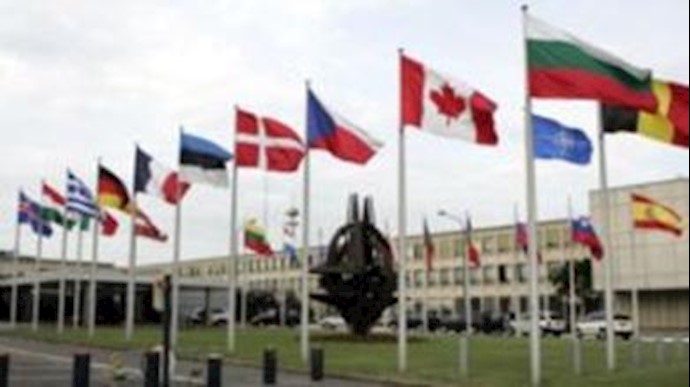
VOA, June 25, 2012 – The North Atlantic Treaty Organization will hold urgent high-level consultations Tuesday on Syria shooting down of a Turkish plane on Friday. Turkey invoked NATO’s Article Four, which empowers any member to call a meeting if its “territorial integrity, political independence or security” is threatened.
Article Four is not invoked very often. But it is a lesser call to action than invoking Article Five, which would define the shoot down as an attack on all of NATO and would suggest an imminent military response.
Turkey and Europe expert Fadi Hakura at London’s Chatham House research center says the Turkish government wants to be seen as taking tough action and earning the support of its allies, without starting a war.
“Article Four is not like Article Five,” said Hakura. “Article Four is essentially a form of consultation between the NATO allies. And that’s what Turkey really is looking for at this stage. What I don’t think Turkey is contemplating is any kind of direct military confrontation between Turkey and Syria. It’s more of a public relations exercise rather than a substantive discussion or a substantive response.”
At a European Union meeting in Luxembourg involving many of the countries that will attend Tuesday’s NATO meeting in Brussels, the EU’s foreign policy chief Catherine Ashton called for a limited response to the shoot down.
“I spoke with the Turkish foreign minister specifically about this. We are very concerned about what’s happened. And we will be obviously looking to Turkey to be restrained in its response,” she said.
At the same meeting, European Union foreign ministers condemned the shoot down and agreed on a slight increase on economic sanctions against Syria.
But British Foreign Secretary William Hague downplayed talk of a military response, saying that his country and others will be seeking more EU and United Nations sanctions on Syria in the coming weeks.
“I don’t think it illustrates a different phase in the Syrian crisis,” he said. “I think we continue to be in a great danger of a collapse, of intensifying conflict. So it’s very important that we increase the pressure on the [Bashar al-]Assad regime with additional sanctions.”
Turkey reported on Monday that several more senior Syrian military officers had entered its territory and defected to the opposition’s military force.
But at Britain’s Maplecroft risk assessment company, Senior Analyst Anthony Skinner says this is not a major turning point in the crisis.
“If you think about the strategic considerations on the ground, nothing has changed,” he said. “If there’s an initiative, and I doubt this initiative would exist, to actually drive for intervention in Syria, the implications of such an intervention would be very severe. So this is just part of an overall response, a political response.”
Analysts say it would be impossible to get China and Russia to agree at the U.N. Security Council to authorize the use of force, and that any military action could still trigger a regional conflict potentially involving Iran, Saudi Arabia and Israel. They say that these are among the reasons NATO has not launched a Syria military operation since the uprising there began more than a year ago.
But experts say the shoot down of the Turkish plane could affect the conflict by convincing Turkey and other countries to provide more help to the Syrian opposition, possibly including intelligence and weapons.