
Exerpts from a Wall Street Journal article
By: ALI A. NABHAN and MATT BRADLEY
Updated May 19, 2014
BAGHDAD —A coalition led by Maliki won the most seats in the country’s first parliamentary elections since U.S. troops left in 2011, setting the stage for a lengthy period of political wrangling amid the worst violence since the civil war.
The result left many Iraqis wondering whether another four years under Maliki, a Shiite Muslim, would deepen the sectarian rancor and extend a political stalemate that has left the government adrift. Western diplomats and analysts say that further instability would also add to the region’s political maelstrom; Syria’s civil war has spilled over into Iraq.
To form a government, Maliki faces the likelihood of months-long negotiations with former allies—many of whom now consider him a political enemy. Following the 2010 polls, lawmakers took nearly 10 months to form a government. 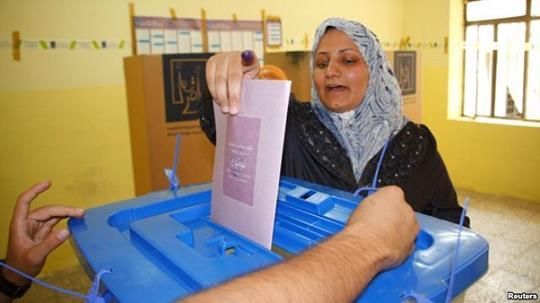
But while the 2010 elections unfolded during a period of relative calm, the coming talks will take place amid heightened levels of violence. More than 7,800 Iraqi civilians were killed in 2013—the most civilian deaths since the nearly 18,000 killed in 2007 at the height of the sectarian conflict, according to the United Nations. At least 2,300 were killed so far this year.
Lengthy political talks could complicate efforts to contain a conflict in the Sunni-majority western province of Anbar.
If Maliki feels the need to demonstrate to potential coalition partners that he is tough on terror, he could decide to launch an aggressive clampdown, said Ali, a move that could inflame the violence.
“Certainly the security conditions this time will be impacted by the political negotiations“, said Ahmed Ali, an Iraq expert at the Washington-based Institute for the Study of War. “There is a possibility of destabilization, particularly if Maliki uses the results to twist the arms of the other political groups.”
The talks are likely to be fierce. Maliki entered the April 30 vote with few friends even among other Shiites who emerged as runners-up.
Other Shiite blocks regard Maliki with hostility, accusing him of dominating power and leading a corrupt government for the past eight years, charges he denies.
U.S. lawmakers and military officials, too, have voiced frustration over Maliki‘s failure to reach out to Sunni groups and many blamed him for exacerbating tensions contributing to the rise in deadly violence and for creating fertile ground for al Qaeda-aligned groups to thrive.
The Obama administration reacted Monday by saying the country’s leaders should move quickly to form a new government “that is supported by all Iraq i communities.”
Given Shiite anger, the prime minister would probably first reach out to his Sunni Arab and Kurdish allies, say some political analysts. If he can cobble together an alliance with them he will be better positioned to tempt Shiite politicians to join him to gain the 165 seats he needs to form a government, Mr. Ali said.
Even then, Maliki may have to accept limits on his now expansive political power. Some Shiite politicians are already talking about giving Maliki a third term on the condition that he devolve some of his authority to his coalition partners.