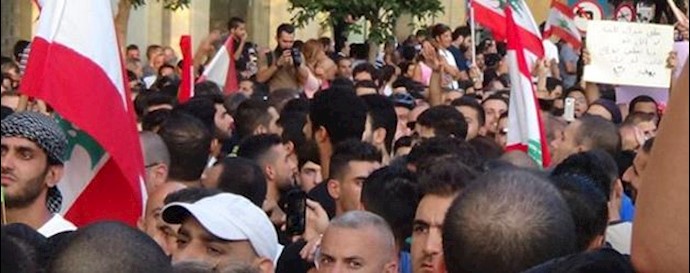
The following is an article published in the CNN website on Monday, August 24th on the recent demonstrations seen in Beirut, Lebanon.
How can a protest about trash piling up lead to an uprising that threatens the future of Lebanon?
That’s exactly what’s happening in the capital city, Beirut, where streets filled with putrid garbage have turned into a battlefield.
Protesters hurled rocks and firecrackers at police. Officers launched tear gas and water cannons as fires raged in the streets. After two days of violence Saturday and Sunday, dozens of people have been hospitalized.
Organizers decided to take a break from the protest Monday to re-evaluate their approach, but vowed to continue demonstrating later this week.
The furor, of course, isn’t just about heaps of uncollected trash. That’s just the tipping point.
So what do the protesters want?
“People want to topple the regime!” many of the protesters chanted Sunday.
Demonstrator Karma Hamady elaborated: “This protest is about a government that can no longer sustain the basic needs of its people.”
Violence, anarchy rocks Beirut amid protests
And that goes far beyond trash collection.
“We are here today against sectarianism of the Lebanese government, our parliament of thieves that stole from the people’s pockets, forcing our youth to emigrate,” said a protester who gave only his first name, Mohammed, to CNN. “We are here to protest against lack of jobs, poverty and hunger.”
The protest was organized by a group called “You Stink” — a reference not just to the trash, but to the demonstrators’ view of the government.
The government hasn’t managed to organize trash collection as it’s grappling with a variety of other problems: deteriorating water and electricity systems, accusations of corruption and the parliament’s inability to decide on a president after 15 months.