

Oil’s outlook just keeps getting worse.
On Friday, analysts at Goldman Sachs added to the dour projections for crude by saying the potential for oil prices to fall near $20 a barrel is “becoming greater as storage continues to fill.”
Goldman Sachs says the global-oil market will remain in a supply surplus until the fourth quarter of 2016, according to its Friday research note.
The ominous Goldman note helped tip Brent crude, and West Texas Intermediate oil trading on the New York Mercantile Exchange, sharply lower Friday.
Brent crude LCOV5, -1.49% shed 75 cents, or 1.5%, to $48.14 a barrel on the ICE Futures exchange, leaving it down 3% for the week. October WTI crude CLV5, -2.48% lost $1.29, or 2.8%, to settle at $44.63 a barrel to post a 3.1% weekly decline.
That Goldman’s dire $20-a-barrel worst-case prediction is targeted at Brent oil—the international benchmark—bodes ill for the U.S. benchmark, WTI, which typically trades at levels lower than Brent.
But Goldman isn’t the only drag on crude-oil prices. Here are some of the other key reasons for oil’s latest tumble:
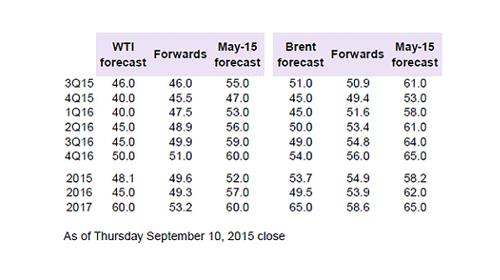
ICE, Goldman Sachs Global Investment ResearchGoldman Sach’s oil-price forecasts.
Lower price forecasts
Lower oil-price forecasts seem to have become the norm as the global glut of supplies persists.
Helping push oil down is Goldman Sachs’s decision to cut its 2016 forecast for Brent crude to $49.50 a barrel from a previous forecast of $62. The investment bank cited Iran’s potential to ramp up production next year as well as surprisingly high supply from the Organization of the Petroleum Exporting Countries.
It also lowered its 2016 WTI oil-price forecast to $45, from $57 previously.
Earlier this week, the U.S. Energy Information Administration also issued lower price forecasts on WTI and Brent for this year and next.
OPEC inaction
To the oil market, it almost seems like OPEC isn’t even trying to help stem the flow of oil or the drop in prices.
Despite increasing calls from oil producers, including Venezuela, OPEC hasn’t announced any plants to hold an emergency meeting. Its next scheduled meeting is set for December.
Venezuela had asked the cartel to consider a coordination with non-OPEC Russia. But analysts have said that Saudi Arabia, the group’s largest oil producer, has made it clear that it will not lower output as itfights for market share.
In recent years, the shale boom and increased production from the U.S. has “greatly reduced OPEC’s [ability to dominate] world oil markets,” said Charles Perry, chief executive officer of energy-consulting firm Perry Management.
In a monthly report issued in late August, OPEC said there is “no quick fix” for the low oil-price environment. The cartel’s next monthly oil-market report will be released Monday.
“Bottom line, we do not expect OPEC to cut at the December meeting and non-OPEC production will not fall fast enough for OPEC to change before next summer,” said James Williams, energy economist at WTRG Economics.
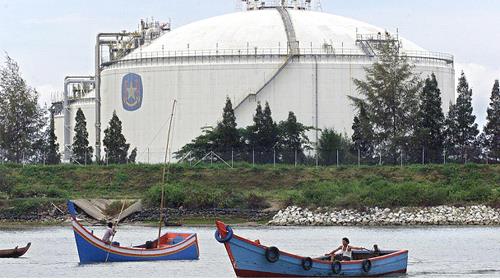
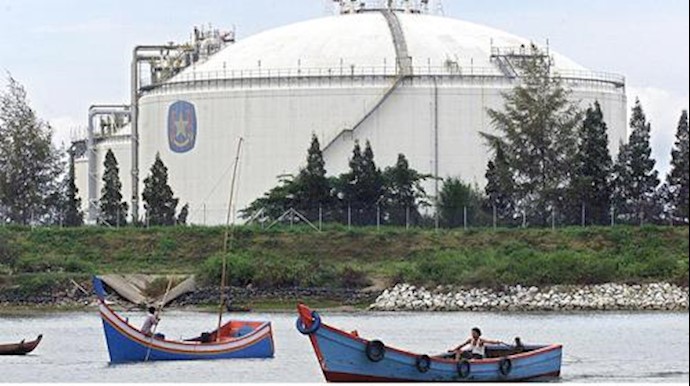
Oil tanks belonging to Indonesia’s state energy firm Pertamina.
Indonesian and Iranian oil
OPEC must also deal with the fact that more oil will be coming to the global market, which will further exacerbate the glut of supplies.
The cartel told Indonesia this week that the country may rejoin OPEC as a member when the cartel next meets in December.
“In the short term, Indonesia will likely produce the same amount of oil whether it is a member of OPEC or not, although this could change if the country is able to attract more investment as an OPEC member,” Colin Cieszynski, chief market strategist at CMC Markets said after the news.Indonesia’s oil production was estimated at around 930,000 barrels a day in 2013.
Meanwhile, Iranian production will be another issue for OPEC to contend with.
Iran’s nuclear deal is making progress toward U.S. government approval. There are some doubts about Iran’s ability to ramp up crude output, but the oil market appears content, for now, to expect that Iran will eventually add somewhere around one million barrels a day to the world market
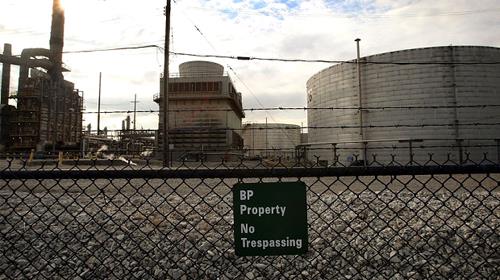
BP’s Whiting, Ind. refinery experienced an unexpected outage earlier this year.
U.S. refinery maintenance
With the summer-driving season over, demand for gasoline declines and U.S. refinery maintenance for the Fall season kicks in.
Surprise outages at various refineries this year already caused spikes in U.S. gasoline prices at the pump and increases in crude inventories.
“Occasionally, when a plant faces unexpected major maintenance on a certain unit, they will sometimes expand it to take on all of their other routine maintenance while they are down, which will be needed for the next few months,” said Perry. “This unexpected major maintenance can occur anytime during the year.”
For the week ended Sept. 4, the EIA reported a drop of 1.9% in refinery utilization as well as bigger-than-expected increase of 2.6 million barrels in crude-oil supplies.
The refinery slow down due to routine maintenance, turnarounds, and end-of-summer driving “will decrease demand for crude,” said Perry.
However, he pointed out that “in general, the market knows these are coming every fall and have mostly discounted them.”
“Their impact on the market for crude is nothing like a big refinery, unexpected calamity would be (such as a hurricane or explosion),” he said.
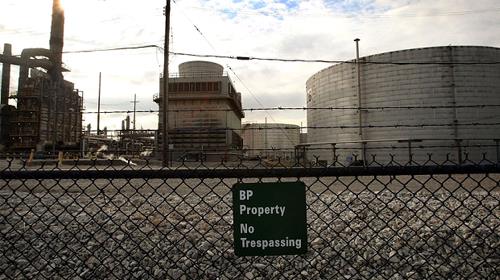
BP’s Whiting, Ind. refinery experienced an unexpected outage earlier this year.
U.S. refinery maintenance
With the summer-driving season over, demand for gasoline declines and U.S. refinery maintenance for the Fall season kicks in.
Surprise outages at various refineries this year already caused spikes in U.S. gasoline prices at the pump and increases in crude inventories.
“Occasionally, when a plant faces unexpected major maintenance on a certain unit, they will sometimes expand it to take on all of their other routine maintenance while they are down, which will be needed for the next few months,” said Perry. “This unexpected major maintenance can occur anytime during the year.”
For the week ended Sept. 4, the EIA reported a drop of 1.9% in refinery utilization as well as bigger-than-expected increase of 2.6 million barrels in crude-oil supplies.
The refinery slow down due to routine maintenance, turnarounds, and end-of-summer driving “will decrease demand for crude,” said Perry.
However, he pointed out that “in general, the market knows these are coming every fall and have mostly discounted them.”
“Their impact on the market for crude is nothing like a big refinery, unexpected calamity would be (such as a hurricane or explosion),” he said.