
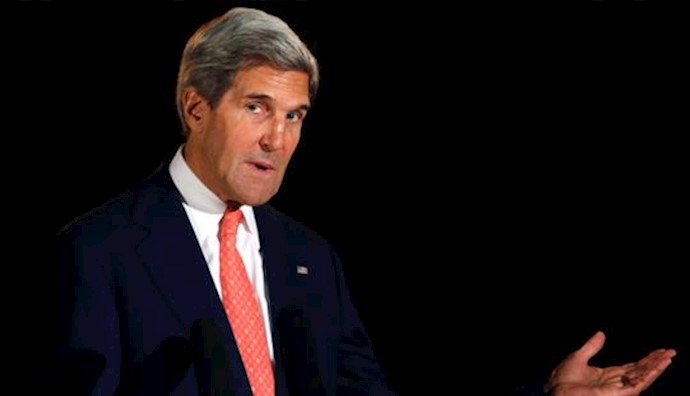
Reuters, Jeddah, 11 Sep 2014 – U.S. Secretary of State John Kerry pressed Arab leaders on Thursday to back President Barack Obama’s new military drive against Islamic State, calling for tighter curbs on funding for militants and fewer extremist messages in Arab media.
Meeting Arab leaders in the Saudi city of Jeddah a day after Obama announced his plans to strike fighters in Iraq and Syria, Kerry also sought permission to make more use of bases in the region and fly more warplanes overhead.
In a hopeful sign of reaching across the sectarian divide that has spread war across the Middle East and fed Islamic State’s militancy, Sunni Saudi Arabia said it might open an embassy in Shi’ite-ruled Iraq after decades of mutual suspicion.
The Saudis, who support other Sunni armed movements in Syria but consider Islamic State a terrorist group, have also promised to help Obama’s campaign by providing training camps for moderate Syrian Sunni fighters.
Obama declared on Wednesday that he would lead an alliance to root out Islamic State in both Syria and Iraq, plunging the United States into two conflicts in which nearly every country in the Middle East has a stake.
The region has been galvanised since June when Islamic State fighters, already in control of much of Syria, swept through northern Iraq, seizing cities, slaughtering prisoners, and proclaiming a “caliphate” that would rule over all Muslims.
The White House says the group is a threat to the West as well, attracting fighters from around the world who could return to carry out attacks at home.
Islamic State is a Sunni group that embraces a radical vision of a Middle East ruled along 7th century precepts. Its fighters are battling a Shi’ite-led government in Iraq and a Syrian government led by Assad, a follower of an offshoot of Shi’ite Islam. But they are also fighting against more moderate Sunnis in Syria and against Kurds on both side of the frontier.
An alliance against Islamic State is bound to require cooperation from countries that consider each other bitter enemies. Washington itself supports the Shi’ite-led government in Iraq but opposes Assad in Syria; it is allied to Sunni Arab states and hostile to Iran.
The meeting in Jeddah was attended by Arab countries and non-Arab Sunni power Turkey, which have stood together against Syria’s Assad.
A State Department official travelling with Kerry said the top U.S. diplomat would the ask allies to accept a bigger U.S. military presence in their airspace and regional bases: “We may need enhanced basing and overflights … there’s going to be a meeting soon of defence ministers to work on these details.”
Kerry would also urge regional television news outlets, particularly Qatari-owned Al Jazeera and Saudi-owned Al Arabiya, to air anti-extremist messages. Governments in the region would be urged to press mosques to preach against Islamic State.
“They need to get at the clerics because the clerics can get at the mosques in the neighbourhood and they have to expose ISIL for what it is,” the official told reporters, using the acronym for Islamic State in Iraq and the Levant, a previous name for the group, which is also sometimes referred to as ISIS.
Washington also wants more efforts to stop the flow of money to the group by tackling oil smuggling and cracking down on contributions from private donors, the official said.
TRAINING CAMPS
Saudi Arabia has agreed to host training camps for moderate Syrian rebels who are part of Obama’s broad strategy to combat the militants. The richest Sunni Arab state and Washington’s oldest Arab ally outlawed Islamic State this year but is worried that the focus on the group will distract from what it sees as a bigger regional threat stemming from Shi’ite Iran.
Riyadh has long pressed Washington to take a bigger role in aiding moderate Syrian Sunni rebels it sees as the best hope of tackling both Islamic State and the regional ambitions of Iran.