BAGHDAD- The Washington Post – August 9, 2015 – Iraq’s prime minister announced on Sunday a series of drastic anti-corruption measures after weeks of protests against poor government services threatened to challenge his rule.
In statements posted to his official Facebook and Twitter accounts, Prime Minister Haider al-Abadi said his government would change the way ministers are selected, end the expensive security details of senior officials, and reopen graft cases under the supervision of a high-level commission.
The most dramatic step was Abadi’s pledge to immediately abolish the post of his predecessor and political rival, Nouri al-Maliki. Maliki currently serves as one of the country’s vice presidents.
But it was unclear on Sunday if Abadi would need a constitutional amendment to eliminate the position. Some of the measures, Iraqi legal experts said, would need approval from both the cabinet and parliament. Iraqi media reported Sunday that the cabinet endorsed the decrees. The speaker of parliament, Salim al-Jubouri, also said Sunday that he supports the prime minister’s announcement.
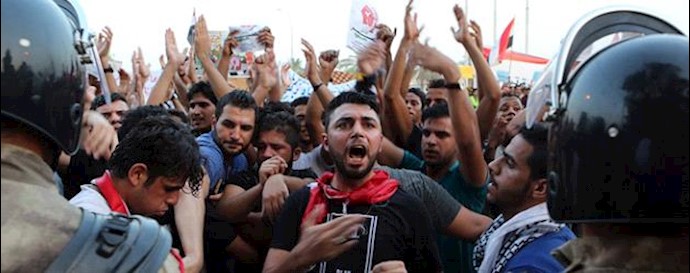
Many Iraqis blame former premier Maliki for the rampant corruption that has plagued the country’s political life since the 2003 U.S. invasion installed a new system of government. On Friday, tens of thousands of Iraqis demonstrated across the country and in the capital, Baghdad, against dishonest leaders they say have plundered public wealth and neglected the country’s war-battered infrastructure.
The protests came amid a searing heat wave that saw temperatures rise to than 120 degrees Fahrenheit or more in the past several weeks. The heat has been particularly unbearable with the country’s limited power supply, allowing Iraqis electricity only a few hours a day to run fans or air conditioners.
The country’s powerful Shiite militias — whose political influence has grown as they overtake the Iraqi army in the fight against the Islamic State — also threw their weight behind Friday’s protests. Their participation presented an unusual challenge to Abadi from his own Shiite constituency.
The demonstrations also prompted the office of the influential Shiite religious leader Ayatollah Ali Sistani to urge Abadi to implement more sweeping reforms. He said on Friday that Abadi had not done enough to fight corruption within the Iraqi state.
Iraq is currently embroiled in a battle with Islamic State militants who have seized wide swathes of the country and displaced more than 3 million. In July, more than 1,300 Iraqis were killed because of the violence, the United Nations said.