
The New York Times, Baghdad, March 15, 2010 — Partial election results released Monday suggested a sharp and divisive shift in power in Iraq, with a secular candidate challenging Prime Minister Nuri Kamal al-Maliki and old alliances fracturing against a surge of dissident movements.
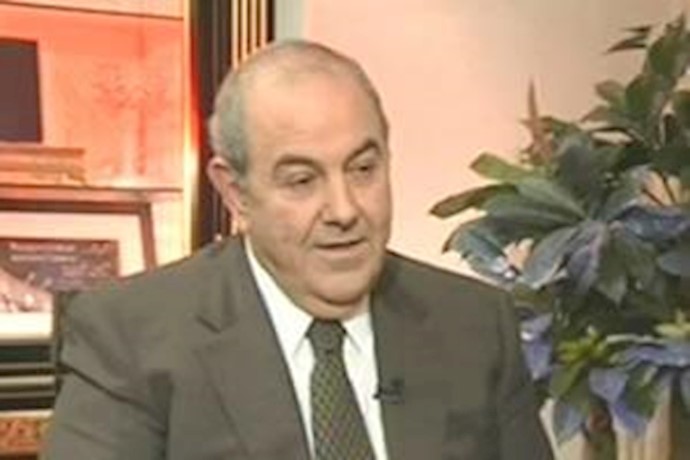
Ayad Allawi, a secular Shiite and former prime minister, scored gains in Sunni areas.
The results were not yet conclusive, and given the complicated formula for allotting seats, the relative strengths of the major coalitions could change. But an updated tally of last week’s parliamentary voting suggested a new equation of leadership that hewed to an older arithmetic.
Traditional Kurdish and Shiite Arab alliances were confronted with movements that contested their claims to leadership, in particular the followers of the radical clericMoktada al-Sadr, who fought the Americans twice in 2004. Sunni Arab voters were newly emboldened in an election in which they forcefully took part under the banner of a secular alliance.
But in many ways, the vote solidified ethnic and sectarian divisions unleashed by the American-led invasion in 2003. Despite a conscious effort by most parties to appeal to nationalist sentiments, people still voted along the lines of identity. Those demarcations of Sunni Arab, Shiite Arab or Kurd have bedeviled attempts to solve the country’s most pressing issues, including borders disputed between Arabs and Kurds and the power of the federal government in a country still haunted by decades of dictatorship.
“Before the election, we hoped that we would cross the sectarian lines,” said Sami al-Askari, an ally of Mr. Maliki and a candidate in Baghdad. “Personally, I’m disappointed. As a nation, as a people, we haven’t crossed that line yet, and I’m sorry to say that.”
The tally released Monday represented about two-thirds of the votes cast in the March 7 election for a 325-member Parliament. The process has proved chaotic so far, with accusations of fraud by leading parties, divisions among highly politicized electoral officials and chaos in disclosing the results, which had been expected last week.
On Monday night, pandemonium erupted again, as officials repeatedly delayed the release of the partial count, then closed their offices before the complete tally was made public.
Western officials have acknowledged the partisan disputes inside the election headquarters, but played down irregularities that might deprive the election of legitimacy.
“We haven’t seen a single piece of evidence of widespread fraud,” said one official, speaking anonymously because of the delicacy of the issue.
In the broadest strokes, the results confirmed some expectations before the election, a milestone in American plans to withdraw all but 50,000 troops by August. Mr. Maliki was winning significantly in six of Iraq’s nine southern provinces, populated by the country’s Shiite majority. The coalition led by Ayad Allawi, a secular Shiite and former prime minister who has emerged as a default leader for Sunnis, scored gains in Iraq’s Sunni provinces, sometimes overwhelmingly.
Baghdad, with 70 seats in Parliament, emerged as a crucial test. Mr. Maliki was winning a plurality, though Mr. Allawi’s slate was running a relatively close second.
“The decisive region is Baghdad,” said Mr. Askari, the candidate allied with Mr. Maliki.
Many expected Mr. Maliki to win a plurality, as his party did in last year’s provincial elections. For the prime minister, though, any margin of victory will prove crucial in giving him a mandate to lead negotiations with rival coalitions, whose leaders include some who fear Mr. Maliki’s authoritarian tendencies or dislike him personally. Mr. Sadr’s followers, for instance, vehemently oppose his return.
“It looked like he would come first, it still does, but maybe not with a big enough lead to guarantee the prime ministership,” said a Western diplomat who was not authorized to speak on the record.
Western officials described Mr. Allawi’s race with Mr. Maliki as “neck and neck.” The returns suggest a striking comeback for Mr. Allawi, a figure seen in political circles as high-handed and aloof. As a member of Parliament, he seldom, if ever, showed up for a session.
Many have read his strong showing as a victory for a cross-sectarian alliance that hewed to a nationalist line. But the results released on Monday show that his coalition had only moderate gains in the Shiite south, scoring a distant third in most provinces there. That has made for one of the election’s greatest paradoxes: a secular Shiite heading the Sunni bloc in Parliament.
It also points to the greatest difficulty Mr. Allawi will face: balancing the demands of his new constituency with the necessities of forging an alliance to lead the government. An ally on his list has insisted that the presidency go to a Sunni Arab rather than to a Kurd. Many of the powerful candidates on his list, known as Iraqiya, are also adamantly opposed to concessions to Kurds along disputed borders.
Iraq Sees Hints Of Change As Voting Fog Dissipates
RELATED ARTICLES